| Title |
Navajo Lake and Cedar City water supply |
| Description |
Reports, meeting minutes and correspondence on Navajo Lake and on Cedar City's interest in tapping it for their water supply |
| Subject |
Water resources development--Utah--Kane County; Water-supply--Utah--Cedar City; Water resources development--Utah--Iron County; Water-supply--Utah--Iron County |
| Contributor |
Wilson, Milton Theurer, 1898-; Thomas, H. E. (Harold Edgar), 1906-; Ashcroft, Theron M.; Lowman, Jack G.; Adams, Clamont B. |
| Alternate Title |
Hydrology and hydrogeology of Navajo Lake, Kane County, Utah; Geologic map of the Navajo Lake region, Garffield, Iron, and Kane counties, Utah [cartographic material]; Effect of basalt eruptions on drainage, Navajo Lake region, Garffield, Iron, and Kane counties, Utah [cartographic material]; Sinks and closed depressions in the Navajo Lake region, Garffield, Iron, and Kane counties, Utah; Progress report, investigation of the water resources of Navajo Lake area near Hatch, Utah; Brief report of a study of Cedar City culinary water supply made during 1948 |
| Additional Information |
Includes: Hydrology and hydrogeology of Navajo Lake, Kane County, Utah / by M. T. Wilson and H. E. Thomas (USGS Professional Paper 417-C, published 1964; Geologic map of the Navajo Lake region, Garffield, Iron, and Kane counties, Utah [cartographic material]; Effect of basalt eruptions on drainage, Navajo Lake region, Garffield, Iron, and Kane counties, Utah [cartographic material]; Sinks and closed depressions in the Navajo Lake region, Garffield, Iron, and Kane counties, Utah [cartographic material]; Progress report, investigation of the water resources of Navajo Lake area near Hatch, Utah / USGS Salt Lake District, January 1955; A brief report of a study of Cedar City culinary water supply made during 1948 / T.M. Ashcroft and J. G. Lowman Engineer's report on the culinary water used by Cedar City Corporation for the year 1960 / Clamont B. Adams, 1961; Application to appropriate water for municipal purposes [Cedar City, seeking water tributary to Deep Creek, Virgin River drainage, dated 1951]; Minutes of Cedar City Committee of the Utah Water and Power Board, meeting of Aug. 26, 1953; Cooperative agreement for investigation of water resources [between USGS and Cedar City re Navajo Lake] |
| Spatial Coverage |
Navajo Lake (Utah); Cascade Spring (Kane County, Utah); Virgin River; Duck Creek (Kane County, Utah); Asay Creek (Utah); Deep Creek (Iron County, Utah); Virgin River Watershed |
| Collection Number and Name |
Accn0823 bx 30 fd 5; John S. Boyden papers |
| Rights Management |
Digital Image Copyright 2009, University of Utah. All Rights Reserved. |
| Holding Institution |
J. Willard Marriott Library, University of Utah |
| Date |
1948; 1951; 1953; 1954; 1955; 1961; 1964 |
| Digitization Specifications |
Original scanned on Epson Expression 10000 XL and saved as 400 ppi TIFF. Display image generated in CONTENTdm. |
| Publisher |
Digitized by J. Willard Marriott Library, University of Utah |
| Type |
Text |
| ARK |
ark:/87278/s6df6q4g |
| Setname |
wwdl_neh |
| ID |
1147845 |
| Reference URL |
https://collections.lib.utah.edu/ark:/87278/s6df6q4g |
| Title |
Page 12 |
| Setname |
wwdl_neh |
| ID |
1147732 |
| OCR Text |
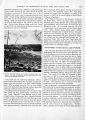
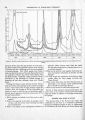
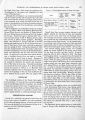
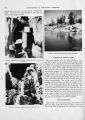
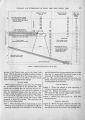
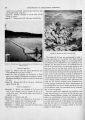
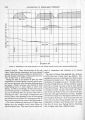
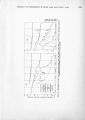
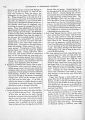
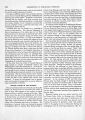
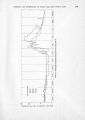
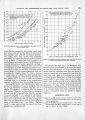
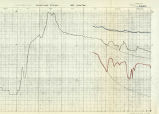
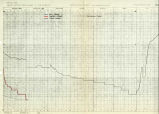
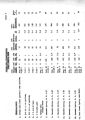
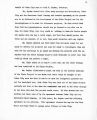
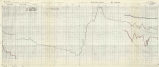
Show C8 (sinks were numbered consecutively based on size, the largest being 1, fig. 9). August 13. Release increased to 7.9 cfs with 4.7 cfs going to sink 2. August 17. Release shut off; sink area drained dry. CONTRIBUTIONS TO STREAM-BASIN HYDROLOGY FIGURE 8.-Navajo Lake dike, showing spillway with flashboards and gaging stations. Third test, August 18-26 August 18. Water with 0.65 pound fluorescein dye was released at 11:05 p.m. to sink 1. August 20. Rate of release was increased; at 12:15 p.m., a new charge of fluorescein was placed in sink 2. Maximum discharge in order to cover both sinks was 8.3 cfs. August 26. Release shut off at 5:10 p.m. Sink area again drained dry. Fourth test, September 3-7 September 3. Water was released at 11:00 a.m., to sink 3 and charged with 1.0 pound of dye as it reached the sink. During the night some water escaped to sink 1. September 4. Release shut off. September 5. Water was released at 11:45 p.m. to sink 2 and charged with 1.0 pound of dye. September 7. Release shut off at 4:25 p.m. September 8. Release gate was open for water users, the water going to sink 1. FIGURE 9.-.Largest sink hole in Navajo Lake. The results of all tests are summarized in table 2. It was noted that (1) the outflow from both Cascade and Duck Creek Springs began to increase long before the released water (identified by dye) appeared at the springs; (2) the time of travel (of increased flow as well as of the dyed water) was generally greater in the later tests than in the first ones, which was to be expected because the quantity released was less and seasonal accumulation of ground water had partly drained away; and (3) the immediate increase in discharge of both springs, also shown by the hydrographs (fig. 10), was generally about half as great as the rate of release to the Navajo Sinks; however, when allowance was made for the normal recession curve, increased flow in both springs accounted for about three-quarters of the released flow, and over a longer period of time all of the released water was accounted for by increased flow in the two springs. Previous reports had suggested the possibility that water entering sinks in one part of the sink area was feeding Cascade Spring, whereas that entering other sinks was contributing to Duck Creek Spring. In the tests made September 3-7, water released to the different sink areas increased the discharge of both springs (see fig. 10), and it is concluded that the individual sinks feed a reservoir in common, which in turn discharges to both springs. |
| Reference URL |
https://collections.lib.utah.edu/ark:/87278/s6df6q4g/1147732 |