| OCR Text |
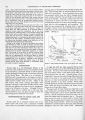
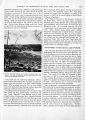
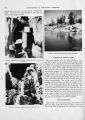
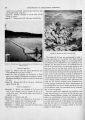
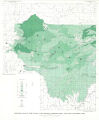
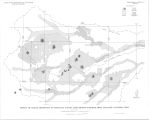
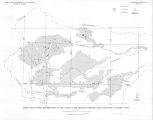
Show C20 CONTRIBUTIONS TO STREAM-BASIN HYDROLOGY Although most of the surface drainage of the plateau has been developed as part of the Sevier River system, the streams most active in modification of the plateau are those that rise along its west and south edges. These streams are whittling away at the area of the plateau and reducing the altitude of its highest points. The erosion by Coal Creek along the west margin of the plateau has created the spectacular Cedar Breaks, and tributaries of the Virgin River have formed cliffs of similar magnitude' along the plateau's south edge. Both streams are heavily laden with sediment, particularly during summer cloudburst-type storms. The Sevier River is by no means a clear stream, but it is far less effective in erosion, chiefly because it is working under a severe handicap in gradient. It flows more than 60 miles from the plateau crest to reach an altitude 6,000 feet above sea level. By contrast, Coal Creek and the tributaries of the Virgin River flow only about 12 miles to reach the same altitude. DISTRIBUTION OF BASALT FLOWS Within the drainage basins of Asay and Mammoth Creeks there are 20 volcanic cones, and many of these retain their summit craters. The highest and westernmost of these cones reaches an altitude of 10,670 feet and projects about 500 feet above the lava plain that surrounds it. Other cones are generally 150-500 feet high, and their summit altitudes, like the general plateau surface, are progressively lower eastward. Seventeen of these cones are located along three lines that trend generally northeastward parallel to the Black Ledge fault. Nine of the cones are along the present topographic divide between the Mammoth and Asay Creek basins, and it is likely that this divide was created in large part by the eruptions. Flows of scoriaceous lava, from these craters and probably also from fissures whose positions are no longer apparent, form overlapping sheets that together have added 300-1,000 feet to the height of the plateau at some locations. In many places the ends and sides of individual flows are clearly discernible, and their surfaces are unmodified except for accumulation of blocks produced by frost action. Because of the meager soil development on the more recent lava flows, the outcrops are capable of rapid absorption of water from snowmelt or intense rainstorms. Thus the basalt undoubtedly yields more water per unit of area to springs and to runoff from the plateau than does the Wasatch Formation. The southwesternmost volcanic cone in the Asay Creek basin is about half a mile northeast of the Navajo Sinks, is close to the highway and is thus a convenient source of road metal. Lava has flowed into and blocked the valley south of this cone, thus creating Navajo Lake. Outpouring of basalt from a cone about 7 miles to the east also blocked this valley east of the Duck Creek Sinks. Although the solution of limestone and develop-" ment of underground drainage along this valley may well have begun prior to the eruption of basalt (see pi. 2), subsurface channels became the exclusive method of outflow once the valley was blocked by the basalt. Thus the basalt is a controlling factor in the present pattern of outflow from Navajo Lake. Although in these two places, the lava appears to have given the water no alternative to going underground, there are other places where surface drainage has continued in spite of lava obstacles, even though alternate underground courses are also available. Thus Midway Creek, rising in Cedar Breaks National Monument, has a broad alluvial valley north of Navajo Lake. I t then cuts across basalt that has blocked the valley, skirts the southern edge of the lava flow, cuts across the lava that forms the blockade for Navajo Lake, and then enters Duck Creek at the lower end of Dry Valley. Duck Creek at this location follows the edge of the lava for about 1 mile and then cuts back across the lava flow before reaching Duck Creek Spring. Ordinarily these channels have water only during maximum snowmelt or intense rainstorms, and therefore less than 30 days a year. There are sinks in the broad headwater valley of Midway Creek that absorb water from the creek only at high stages; it is reported that Roaring Spring (along the north edge of and above Navajo Lake) flows at such times. This is to be expected, because ephemeral springs should flow during periods of greatest abundance of water. Some water from sinks along Midway Creek undoubtedly drains into Navajo Lake, but the same can be said for water from many other sinks in the plateau north of the lake. SOLUTION OF LIMESTONE The Wasatch Formation is dominantly limestone and is sufficiently soluble that cavities and honeycomb texture are commonplace. Sinkholes are numerous on the plateau, chiefly in areas of limestone outcrop, but there are also many small depressions in alluvium and in volcanic rocks that are presumably underlain at shallow depth by limestone. Many of the topographic depressions in the lava are alined with sinks in limestone. Some sinks are alined along faults; others apparently along fracture patterns in the limestone. Most of them are in the western half of the plateau block where land-surface altitude exceeds 8,500 feet. Sinks are especially numerous within an area 6 miles north of Navajo Lake. Although some surface water reaches Duck Creek from Dry Lake, a large sinkhole in the lowest |