| Title |
Navajo Lake and Cedar City water supply |
| Description |
Reports, meeting minutes and correspondence on Navajo Lake and on Cedar City's interest in tapping it for their water supply |
| Subject |
Water resources development--Utah--Kane County; Water-supply--Utah--Cedar City; Water resources development--Utah--Iron County; Water-supply--Utah--Iron County |
| Contributor |
Wilson, Milton Theurer, 1898-; Thomas, H. E. (Harold Edgar), 1906-; Ashcroft, Theron M.; Lowman, Jack G.; Adams, Clamont B. |
| Alternate Title |
Hydrology and hydrogeology of Navajo Lake, Kane County, Utah; Geologic map of the Navajo Lake region, Garffield, Iron, and Kane counties, Utah [cartographic material]; Effect of basalt eruptions on drainage, Navajo Lake region, Garffield, Iron, and Kane counties, Utah [cartographic material]; Sinks and closed depressions in the Navajo Lake region, Garffield, Iron, and Kane counties, Utah; Progress report, investigation of the water resources of Navajo Lake area near Hatch, Utah; Brief report of a study of Cedar City culinary water supply made during 1948 |
| Additional Information |
Includes: Hydrology and hydrogeology of Navajo Lake, Kane County, Utah / by M. T. Wilson and H. E. Thomas (USGS Professional Paper 417-C, published 1964; Geologic map of the Navajo Lake region, Garffield, Iron, and Kane counties, Utah [cartographic material]; Effect of basalt eruptions on drainage, Navajo Lake region, Garffield, Iron, and Kane counties, Utah [cartographic material]; Sinks and closed depressions in the Navajo Lake region, Garffield, Iron, and Kane counties, Utah [cartographic material]; Progress report, investigation of the water resources of Navajo Lake area near Hatch, Utah / USGS Salt Lake District, January 1955; A brief report of a study of Cedar City culinary water supply made during 1948 / T.M. Ashcroft and J. G. Lowman Engineer's report on the culinary water used by Cedar City Corporation for the year 1960 / Clamont B. Adams, 1961; Application to appropriate water for municipal purposes [Cedar City, seeking water tributary to Deep Creek, Virgin River drainage, dated 1951]; Minutes of Cedar City Committee of the Utah Water and Power Board, meeting of Aug. 26, 1953; Cooperative agreement for investigation of water resources [between USGS and Cedar City re Navajo Lake] |
| Spatial Coverage |
Navajo Lake (Utah); Cascade Spring (Kane County, Utah); Virgin River; Duck Creek (Kane County, Utah); Asay Creek (Utah); Deep Creek (Iron County, Utah); Virgin River Watershed |
| Collection Number and Name |
Accn0823 bx 30 fd 5; John S. Boyden papers |
| Rights Management |
Digital Image Copyright 2009, University of Utah. All Rights Reserved. |
| Holding Institution |
J. Willard Marriott Library, University of Utah |
| Date |
1948; 1951; 1953; 1954; 1955; 1961; 1964 |
| Digitization Specifications |
Original scanned on Epson Expression 10000 XL and saved as 400 ppi TIFF. Display image generated in CONTENTdm. |
| Publisher |
Digitized by J. Willard Marriott Library, University of Utah |
| Type |
Text |
| ARK |
ark:/87278/s6df6q4g |
| Setname |
wwdl_neh |
| ID |
1147845 |
| Reference URL |
https://collections.lib.utah.edu/ark:/87278/s6df6q4g |
| Title |
Page 26 |
| Setname |
wwdl_neh |
| ID |
1147746 |
| OCR Text |
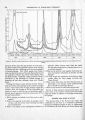
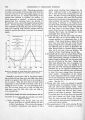
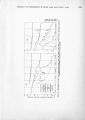
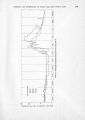
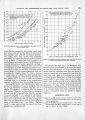
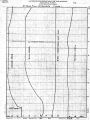
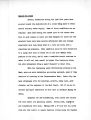
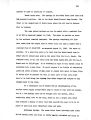
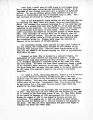
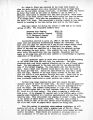
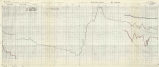
Show C22 CONTRIBUTIONS TO STREAM-BASIN HYDROLOGY for our lifetime, if stream erosion were the only method by which it could be captured or drained. I t is quite a different matter when one finds a channel, such as that to Cascade Spring, already established and capturing part of the outflow. Experience with surface channels, and the rapidity with which an entire river may be diverted into a channel started by a rivulet, leads us to wonder whether we are witnesses to a process that may be completed within a relatively short time, even as reckoned in human history. Available data are not enough for a quantitative answer to this question. The principal arguments in favor of maintenance of the status quo are: (1) Both outlets are known to have been in operation and to have drained the lake completely during low-water years for at least the past century; (2) high-water stages of the lake as defined by wave action and vegetative cover indicate that ground-water channels draining the lake have not changed materially for several centuries; (3) the overall gradient from the Navajo Sinks to Cascade Spring is no steeper than that to Duck Creek Spring; (4) Cascade Spring issues from a point near the base of the lowest limestone in the Wasatch Formation, so that the gradient can be increased only slightly by solution of limestone near the outlet; (5) although Duck Creek Spring also is in no position to lower its outlet appreciably, most of its water comes from sources other than the Navajo Sinks, and this water may assist in the enlargement of channels from the sinks. On the other hand, the orifice of Cascade Spring is large enough to indicate considerable solution and deepening since water first issued from it. As to the history of long-continued flow from both outlets, we do not have records to show whether the proportion of flow to Cascade Spring has remained constant or has increased over the years. Nor do we have records to show whether the flow from the sinks to both springs has increased, so that the lake is now drained more rapidly than formerly. In short, the environment here is geologically so favorable for change that we cannot safely assume immutability of Nature. GROUND WATER IN THE PLATEAU The unconsolidated sediments beneath and along the borders of Navajo Lake are saturated with water, so much so that water appears at the surface in several places and flows in shallow channels to the lake. Elsewhere, even in the part of the lakebed east of the dike at Navajo Lake, our present information gives no assurance as to the depth at which a permanent groundwater body might be found, or whether there are such bodies within reasonable depth below the plateau. The occurrences of ground water seen during the present investigation (flow in channels from Navajo Sinks to Duck Creek Springs and from Duck Creek Sinks to Lower Asay Springs; water of entirely different quality emerging from nearby Upper Asay Springs; and water flowing northward from springs into Navajo Lake and also southward from Navajo Lake to Cascade Springs and other springs in the Virgin River basin) indicate circulation in solution channels, rather than a continuous body of saturated sediments. No wells have been drilled on the Markagunt Plateau, but on the Paunsaugunt Plateau (which includes Bryce Canyon National Park) east of the Sevier fault, wells have tapped small supplies of water in several discontinuous zones of the Wasatch Formation, some perched high above others. Even on that plateau, wells are not numerous enough or deep enough to demonstrate the position or even the existence of a main water table, below which all permeable rocks are saturated. Several springs that constitute the orifices of demonstrated channels provide indirect evidence of the existence of ground-water storage beneath the plateau. Cascade Spring continues to flow for months after all inflow to the Navajo Sinks has ceased. Duck Creek Spring frequently discharges more water than its proportionate share of the water entering the sinks and does not cease flowing with cessation of flow to Navajo Sinks. Lower Asay Spring also discharges more water than the quantity that enters the channel at Duck Creek Sinks. All these springs obviously yield water that does not come from Navajo Lake or directly from other sinks but represents instead discharge from groundwater reservoirs. During the period of the investigation (1954-58), the discharge of Asay Creek at the gaging station below the springs declined to a minimum of 14 cfs during the extended periods when there was no observed outflow from Navajo Lake (that is, no water entering Navajo Sinks) nor appreciable surface-water flow into other sinks, and therefore when the streamflow was derived principally from ground-water reservoirs. In the summers of 1957 and 1958 when Navajo Lake was high enough to discharge continuously into the sinks, the minimum flow of Asay Creek was two or three times as great. Thus in the hydro-graph for this stream one can discriminate components of flow resulting from regulation by ground-water reservoirs and components resulting from regulation by Navajo Lake. Mammoth Spring lacks any surface reservoir such as Navajo Lake within its drainage area; although there are several small lakes near its headwaters, the flow is necessarily derived solely from ground water. During the period of operation (July 1954-August 1957) of the gaging station at Mammoth Spring, the hydrograph had the following components (fig. 13) : |
| Reference URL |
https://collections.lib.utah.edu/ark:/87278/s6df6q4g/1147746 |