| OCR Text |
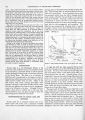
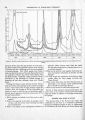
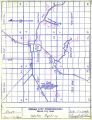
Show CONTRIBUTIONS TO STREAM-BASIN HYDROLOGY HYDROLOGY AND HYDROGEOLOGY OF NAVAJO LAKE, UTAH By M. T. WILSON and H. E. THOMAS ABSTRACT Navajo Lake, whose entire outflow disappears underground, is on the high Markagunt Plateau where the average annual precipitation is more than 30 inches. It nestles among the headwaters of several streams that flow into arid regions where competition for municipal, industrial, and irrigation water supplies is very keen. Several proposals for additional development and use of the water of Navajo Lake have led to controversies and raised questions in regard to the total water supply and its disposition, and to the effect of the proposed projects on existing water rights. This report summarizes the results of an investigation of the water supply of Navajo Lake and the present disposition of that supply. Navajo Lake is in the northwest corner of Kane County in southwestern Utah in a closed basin, which is bounded on the north and east by tributaries of the Sevier River in the Great Basin and on the south and west by tributaries of the Virgin River in the Colorado River basin. The lake was formed by a lava flow that cut off the natural surface drainage of Duck Creek, a headwater tributary of the Sevier River. The lake receives subterranean inflow from an area appreciably larger than that of the topographic basin in which it lies. It is unique in that large quantities of surface water escape from its eastern end through a sink area by underground channels or aquifers to feed springs in both adjoining basins. A north-south dike about 17 feet high has been constructed across the lake; the dike separates the western three-fourths from the sink area and creates a permanent lake on the west side for fish propagation and recreation. When the dike is under water during parts of high-water years, overflow from the west side reaches the sink area; also, some of the water stored in the lake can be discharged through the dike to the sink area. Cascade Spring in the Colorado River basin is on a steep slope only a mile south of the sink area, and Duck Creek Spring in the Sevier River basin is about 3 miles to the east. Several gaging stations were installed during the fall of 1953 and the summer of 1954 to measure the contents of the lake both east and west of the dike, the discharge of surrounding springs, and the intake capacity of the sinks. Detailed tests were made during the summers of 1954 and 1955 by releasing measured rates of discharge, ranging from 3.4 to 20 cubic feet per second, to the sink area and separately to individual sinks. The direction and rate of ground-water movement were determined during these tests on the basis of correlation of spring discharges, water temperatures, dissolved mineral content, and use of sodium fluorescein as a water-coloring tracer. The discharge of Cascade Spring increased 1 hour after water was released to the sink area and the discharge of Duck Creek Spring increased 12 hours later. Fluorescein dye placed in the sinks appeared at Cascade Spring within 8% hours and at Duck Creek Spring in 53 hours. All the water entering Navajo Sinks eventually discharged from Cascade and Duck Creek Springs when sufficient time was allowed to drain the added storage from the ground-water reservoir. The apportionment was 60 percent to Duck Creek Spring and 40 percent to Cascade Spring. Water issuing from Duck Creek Spring flows about 2% miles eastward and enters Duck Creek Sinks. During August 1954, water released to Duck Creek Sinks caused an increased flow from Lower Asay Spring in 9 hours, and fluorescein dye showed a travel time of 68 hours. Lower Asay Spring is a major contributor to the base flow of the Sevier River. The annual inflow to Navajo Lake including precipitation directly on the lake during the period 1954-58 ranged from 14 percent (1955, 1956) to 283 percent (1958) of the long-term average. These variations are greater than the contemporaneous variations of streamflow in the adjoining basins, because the lake represents the residue from its contributing area after ground-water reservoirs or aquifers have been filled. Additional development of the lake supply would require considerable holdover storage in order to equalize the large year-to-year variations, and this could have a significant effect on seasonal and annual distribution of flow in both the Sevier and Virgin River basins. In the geologic history of the region, the earliest event of significance to the hydrology of Navajo Lake was the deposition of the Wasatch Formation in the Eocene Epoch, which includes a high proportion of fresh-water limestone. Vulcanism, probably during the Miocene, covered these sedimentary rocks with silicic flows and tuffs over a wide area, but if these volcanic rocks extended as far south as Navajo Lake they have since disappeared by erosion. Shortly after this volcanic activity, or perhaps during its later stages, there were the beginnings of major structural changes-chiefly by block faulting-throughout the extensive Colorado Plateau region. One of these blocks, elevated sharply along faults on the west and tilted slightly toward the east, is the block whose surface now forms the Markagunt Plateau. Although the uplift of this block probably began in mid-Tertiary, the plateau did not attain its present altitude until quite recently, geologically speaking. Erosion has been a dominant geologic process ever since uplift of the plateau: rapid headward erosion of the steep south and west edges by tributaries of the Virgin River; more sedate development of broad, shallow valleys down the gentle eastward gradient of the plateau surface by tributaries of the Sevier River; and probably some solution and development of caves and underground channels in the limestone. Renewed volcanic activity during the Pleistocene Epoch produced numerous cones and flows of basalt in the Navajo Lake CI |