| Title |
Navajo Lake and Cedar City water supply |
| Description |
Reports, meeting minutes and correspondence on Navajo Lake and on Cedar City's interest in tapping it for their water supply |
| Subject |
Water resources development--Utah--Kane County; Water-supply--Utah--Cedar City; Water resources development--Utah--Iron County; Water-supply--Utah--Iron County |
| Contributor |
Wilson, Milton Theurer, 1898-; Thomas, H. E. (Harold Edgar), 1906-; Ashcroft, Theron M.; Lowman, Jack G.; Adams, Clamont B. |
| Alternate Title |
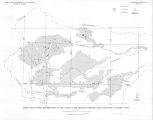
Hydrology and hydrogeology of Navajo Lake, Kane County, Utah; Geologic map of the Navajo Lake region, Garffield, Iron, and Kane counties, Utah [cartographic material]; Effect of basalt eruptions on drainage, Navajo Lake region, Garffield, Iron, and Kane counties, Utah [cartographic material]; Sinks and closed depressions in the Navajo Lake region, Garffield, Iron, and Kane counties, Utah; Progress report, investigation of the water resources of Navajo Lake area near Hatch, Utah; Brief report of a study of Cedar City culinary water supply made during 1948 |
| Additional Information |
Includes: Hydrology and hydrogeology of Navajo Lake, Kane County, Utah / by M. T. Wilson and H. E. Thomas (USGS Professional Paper 417-C, published 1964; Geologic map of the Navajo Lake region, Garffield, Iron, and Kane counties, Utah [cartographic material]; Effect of basalt eruptions on drainage, Navajo Lake region, Garffield, Iron, and Kane counties, Utah [cartographic material]; Sinks and closed depressions in the Navajo Lake region, Garffield, Iron, and Kane counties, Utah [cartographic material]; Progress report, investigation of the water resources of Navajo Lake area near Hatch, Utah / USGS Salt Lake District, January 1955; A brief report of a study of Cedar City culinary water supply made during 1948 / T.M. Ashcroft and J. G. Lowman Engineer's report on the culinary water used by Cedar City Corporation for the year 1960 / Clamont B. Adams, 1961; Application to appropriate water for municipal purposes [Cedar City, seeking water tributary to Deep Creek, Virgin River drainage, dated 1951]; Minutes of Cedar City Committee of the Utah Water and Power Board, meeting of Aug. 26, 1953; Cooperative agreement for investigation of water resources [between USGS and Cedar City re Navajo Lake] |
| Spatial Coverage |
Navajo Lake (Utah); Cascade Spring (Kane County, Utah); Virgin River; Duck Creek (Kane County, Utah); Asay Creek (Utah); Deep Creek (Iron County, Utah); Virgin River Watershed |
| Collection Number and Name |
Accn0823 bx 30 fd 5; John S. Boyden papers |
| Rights Management |
Digital Image Copyright 2009, University of Utah. All Rights Reserved. |
| Holding Institution |
J. Willard Marriott Library, University of Utah |
| Date |
1948; 1951; 1953; 1954; 1955; 1961; 1964 |
| Digitization Specifications |
Original scanned on Epson Expression 10000 XL and saved as 400 ppi TIFF. Display image generated in CONTENTdm. |
| Publisher |
Digitized by J. Willard Marriott Library, University of Utah |
| Type |
Text |
| ARK |
ark:/87278/s6df6q4g |
| Setname |
wwdl_neh |
| ID |
1147845 |
| Reference URL |
https://collections.lib.utah.edu/ark:/87278/s6df6q4g |
| Title |
Page 18 |
| Setname |
wwdl_neh |
| ID |
1147738 |
| OCR Text |
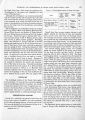
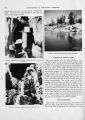
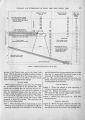
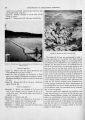
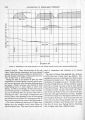
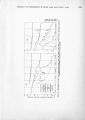
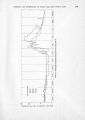
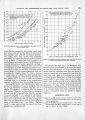
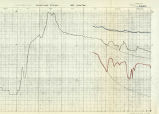
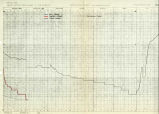
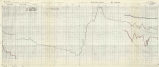
Show C14 CONTRIBUTIONS TO STREAM-BASIN HYDROLOGY Spring and 60 percent to Duck Creek Spring, as shown in the test of August 2-7 when all the sinks were covered by water and also in the hydrograph for both years 1954 and 1955 (fig. 12). When increased flow to the sink area is of short duration, such as July 15-17 and 24-27,1955 (fig. 12B), the difference in time of travel from the sink area to the respective springs and the normal recession curves must be considered when evaluating the amount of increased flow for each spring. When these adjustments are made, the apportionment of increase is consistent with that shown for longer periods of time. The discharge of both Cascade Spring and Duck Creek Spring increased considerably more than the release to the sink area for the periods August 11-20 and 24-30, 1955. This increased flow was caused by precipitation in the basin and shows that both springs receive water from other sources than Navajo Sinks. This subject is discussed further under the heading, "Other sources of water in major springs." Precipitation at Cedar Breaks during August 9-18 was 3.07 inches and August 22-25, 2.61 inches. During high-water years when there were several months of continuous flow into the Navajo Sinks and when there was little or no contribution directly from rainfall or snowmelt, the proportional discharge of Cascade Spring was as follows: July-September 1957, 43 percent; June-September 1958, 40 percent. 6. Regulation of outflow from Navajo Lake by existing structures, which provide for release of controlled storage water to the sink area during the irrigation season, does not materially change the proportions of water going to Cascade and Duck Creek Springs; however, the seasonal distribution can be changed by the amount of controlled storage water (1,378 acre-ft) between the spillway crest and the outlet pipe. If the dike is raised in the future to a higher elevation to provide additional controlled storage, the seasonal distribution could be changed materially. OTHER SOURCES OF WATER IN MAJOR SPRINGS 7. Cascade Spring receives water other than that flowing to it from the Navajo Sinks. After cessation of flow from the lake into the sinks, Cascade Spring has continued to flow for periods of 95-125 days at a rate of less than 3 cfs in the first month and less than 1 cfs in subsequent months-a small increment that is probably derived by seepage from the lake and from the ridge that intervenes between lake and spring. Cascade Spring was dry for periods of 50-160 days in each of the winters of 1955-57. Cascade Spring also receives water directly from snowmelt and from rain upon the ridge separating it from Navajo Lake. The peak discharge in both 1957 and 1958 occurred 15-30 days before Navajo Lake reached its maximum stage but at the time of maximum melting of snow. At other times also the spring discharge has increased during periods of snowmelt or rainstorms, and the contemporaneous rise in lake level was insufficient to account for the discharge as originating from the sinks alone. 8. Duck Creek Spring, likewise, receives water from other sources than Navajo Sinks. This is shown when the sinks receive no water for extended periods, yet the spring discharge does not decline below about 0.5 cfs. Records also show that in each year the maximum monthly discharge of Duck Creek Spring has exceeded the total amount of water entering the Navajo Sinks during that month. The surface drainage area above Duck Creek Spring is six times as large as that tributary to the Navajo Sinks. 9. The water issuing from Duck Creek Spring flows eastward about 2% miles and then enters the Duck Creek Sinks, which have adequate intake capacity for the greatest flow (226 cfs) ever measured in Duck Creek. Since 1954 the discharge of Asay Creek below Lower Asay Spring has ranged from 13 cfs, when the entire flow was from Upper and Lower Asay Springs, to 419 cfs, which included overland runoff from melting, snow. Although the water entering the Duck Creek Sinks contributes to the water of Lower Asay Spring, it is not the only water discharged by that spring. Upper Asay Spring is about 2,000 feet upstream from and 25 feet higher than Lower Asay Spring. Its flow is less than one-fourth (18 percent during the fall of 1953) of the flow of Lower Asay Spring and was not seen to be affected by the artificial release of water or of fluorescein into the Duck Creek Sinks. 10. Mammoth Spring is 10 miles northeast of Navajo Lake and separated therefrom by a major topographic divide; its orifice is about 900 feet lower than the Navajo Sinks. The artificial release of water and of dye into the Navajo Sinks and Duck Creek Sinks had no observed effect upon the water discharged at Mammoth Spring. The discharge of Mammoth Spring is ordinarily more than |
| Reference URL |
https://collections.lib.utah.edu/ark:/87278/s6df6q4g/1147738 |