| Title |
Bill Pastore, Salt Lake City, Utah: an interview by Jason Hardy, September 20th, 2006: part of the Saving the legacy project |
| Alternative Title |
Bill Pastore, Saving the legacy: an oral history of Utah's World War II veterans, ACCN 2070, American West Center, University of Utah |
| Creator |
Pastore, Bill, 1925- |
| Contributor |
Hardy, Jason; University of Utah. American West Center |
| Publisher |
Digitized by J. Willard Marriott Library, University of Utah |
| Date |
2006-09-22 |
| Date Digital |
2015-12-16 |
| Access Rights |
I acknowledge and agree that all information I obtain as a result of accessing any oral history provided by the University of Utah's Marriott Library shall be used only for historical or scholarly or academic research purposes, and not for commercial purposes. I understand that any other use of the materials is not authorized by the University of Utah and may exceed the scope of permission granted to the University of Utah by the interviewer or interviewee. I may request permission for other uses, in writing to Special Collections at the Marriott Library, which the University of Utah may choose grant, in its sole discretion. I agree to defend, indemnify and hold the University of Utah and its Marriott Library harmless for and against any actions or claims that relate to my improper use of materials provided by the University of Utah. |
| Spatial Coverage |
Bougainville Island, Papua New Guinea; Guam; Mariana Islands; Iwo Jima, Japan; Korea |
| Subject |
Pastore, Bill, 1925- --Interviews; Veterans--United States--Biography; World War, 1939-1945--Personal narratives, American; World War, 1939-1945--Military operations, American; World War, 1939-1945--Campaigns--Pacific Area--Personal narratives, American; Iwo Jima, Battle of, Japan, 1945--Personal narratives, American; Marines--Biography; Korean War, 1950-1953--Personal narratives, American |
| Keywords |
Snipers; Scouts |
| Description |
Transcript (145 pages) of an interview by Jason Hardy with Bill Pastore on September 20, 2006. Part of the "Saving the Legacy" Oral History Project |
| Collection Number and Name |
Accn2070, Saving the Legacy oral history project, 2001-2010 |
| Abstract |
Pastore (b. 1925) enlisted in the Marine Corps in 1943. He served in the Pacific in World War II and in Korea. He recounts his experiences in detail. Interviewed by Jason Hardy. 145 pages. |
| Type |
Text |
| Genre |
oral histories (literary works) |
| Format |
application/pdf |
| Extent |
145 pages |
| Language |
eng |
| Rights |
 |
| Scanning Technician |
Mazi Rakhsha |
| Conversion Specifications |
Original scanned with Kirtas 2400 and saved as 400 ppi uncompressed TIFF. PDF generated by Adobe Acrobat Pro X for CONTENTdm display |
| ARK |
ark:/87278/s6516194 |
| Topic |
Personal narratives--American; Veterans; World War (1939-1945); Iwo Jima, Battle of (Japan : 1945); Korean War (1950-1953) |
| Setname |
uum_slohp |
| ID |
1029397 |
| Reference URL |
https://collections.lib.utah.edu/ark:/87278/s6516194 |
| Title |
Page 74 |
| Format |
application/pdf |
| Setname |
uum_slohp |
| ID |
1029324 |
| OCR Text |
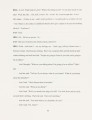
Show and watch until you saw a Chinese patrol. Then you'd cut out and maneuver them. You'd try to mo e arow1d them orne ways so that you could - and we carried concussion grenades- not frags, just concussion. They knock you out. The object was you'd throw these concussion grenades and knock them out, then these two big husky guys run down and grab the Chinese and take off running with them. JAS: Take them where? BILL: Well, back for interrogation. It was, "Whoever had the most bodies was the winner." Well, I must have gone out on twenty of those patrols and we never took anybody because the Chinese were doing the same thing. Well, I wasn't going to get myself into a position where they could use concussion grenades on me and I'd lose one of my men. Well, they felt the same way, you know. They're no different than we are. You'd be sitting there watching, you'd look like this and there you'd see a guy using his binoculars on you so you'd both start moving. You know what he was doing. He knew what you were doing. So, you'd move where you weren't going to be in trouble of being taken by one of these guys. Then you'd come back and say, "Well, we didn't see anybody." Then at night we were still fifty percent alert but the Chinese built sleeping holes on the reverse slope. The forward slope is here and we're here; they had fighting holes here but on the reverse slope they built sleeping holes. JAS: On the other side of the ridge line. BILL: Yeah. And they built real, heavy bunkers; they'd be bomb proof, most of them, if 73 |
| Reference URL |
https://collections.lib.utah.edu/ark:/87278/s6516194/1029324 |