| Title |
Bill Pastore, Salt Lake City, Utah: an interview by Jason Hardy, September 20th, 2006: part of the Saving the legacy project |
| Alternative Title |
Bill Pastore, Saving the legacy: an oral history of Utah's World War II veterans, ACCN 2070, American West Center, University of Utah |
| Creator |
Pastore, Bill, 1925- |
| Contributor |
Hardy, Jason; University of Utah. American West Center |
| Publisher |
Digitized by J. Willard Marriott Library, University of Utah |
| Date |
2006-09-22 |
| Date Digital |
2015-12-16 |
| Access Rights |
I acknowledge and agree that all information I obtain as a result of accessing any oral history provided by the University of Utah's Marriott Library shall be used only for historical or scholarly or academic research purposes, and not for commercial purposes. I understand that any other use of the materials is not authorized by the University of Utah and may exceed the scope of permission granted to the University of Utah by the interviewer or interviewee. I may request permission for other uses, in writing to Special Collections at the Marriott Library, which the University of Utah may choose grant, in its sole discretion. I agree to defend, indemnify and hold the University of Utah and its Marriott Library harmless for and against any actions or claims that relate to my improper use of materials provided by the University of Utah. |
| Spatial Coverage |
Bougainville Island, Papua New Guinea; Guam; Mariana Islands; Iwo Jima, Japan; Korea |
| Subject |
Pastore, Bill, 1925- --Interviews; Veterans--United States--Biography; World War, 1939-1945--Personal narratives, American; World War, 1939-1945--Military operations, American; World War, 1939-1945--Campaigns--Pacific Area--Personal narratives, American; Iwo Jima, Battle of, Japan, 1945--Personal narratives, American; Marines--Biography; Korean War, 1950-1953--Personal narratives, American |
| Keywords |
Snipers; Scouts |
| Description |
Transcript (145 pages) of an interview by Jason Hardy with Bill Pastore on September 20, 2006. Part of the "Saving the Legacy" Oral History Project |
| Collection Number and Name |
Accn2070, Saving the Legacy oral history project, 2001-2010 |
| Abstract |
Pastore (b. 1925) enlisted in the Marine Corps in 1943. He served in the Pacific in World War II and in Korea. He recounts his experiences in detail. Interviewed by Jason Hardy. 145 pages. |
| Type |
Text |
| Genre |
oral histories (literary works) |
| Format |
application/pdf |
| Extent |
145 pages |
| Language |
eng |
| Rights |
 |
| Scanning Technician |
Mazi Rakhsha |
| Conversion Specifications |
Original scanned with Kirtas 2400 and saved as 400 ppi uncompressed TIFF. PDF generated by Adobe Acrobat Pro X for CONTENTdm display |
| ARK |
ark:/87278/s6516194 |
| Topic |
Personal narratives--American; Veterans; World War (1939-1945); Iwo Jima, Battle of (Japan : 1945); Korean War (1950-1953) |
| Setname |
uum_slohp |
| ID |
1029397 |
| Reference URL |
https://collections.lib.utah.edu/ark:/87278/s6516194 |
| Title |
Page 11 |
| Format |
application/pdf |
| Setname |
uum_slohp |
| ID |
1029261 |
| OCR Text |
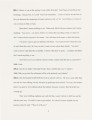
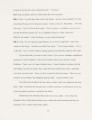
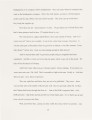
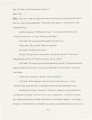
Show called 'silent contempt": if an officer said something to you andy u 1 ok d t him with a contemptuous look" you could be court martialed. JAS: Wow. BILL: If you used more than four squares of toilet paper, that was a court martial ffen . Now they usually didn't push that because - but, yeah. Then there was the hands on: the drill instructors were allowed to hit. And Sparks', my drill instructor's favorite trick, was to take your sea bag (now, that's everything you own in that sea bag, all your uniforms, everything) and hold it above your head. And he'd walk up and hit you in the gut just as hard as he could hit you. And you better not drop that sea bag! But then after the Second World War they come out with the Unified Code of Military Justice, which is a much better, much better system. Then, it was: you went up for court martial and you could almost guarantee being convicted. They didn't take you up there unless they had you. And it isn't like you see in the movies, you know. But now, the Unified Code of Military Justice is better. And there 's no more segregation so it' s - you know, just because a person's skin is a different color than yours doesn't mean they can't fight, or won't fight. JAS: Right. BILL: Okay, what's next? JAS: Did you know, did you have an inkling of where you would get orders after boot camp? 10 |
| Reference URL |
https://collections.lib.utah.edu/ark:/87278/s6516194/1029261 |