| Title |
Bill Pastore, Salt Lake City, Utah: an interview by Jason Hardy, September 20th, 2006: part of the Saving the legacy project |
| Alternative Title |
Bill Pastore, Saving the legacy: an oral history of Utah's World War II veterans, ACCN 2070, American West Center, University of Utah |
| Creator |
Pastore, Bill, 1925- |
| Contributor |
Hardy, Jason; University of Utah. American West Center |
| Publisher |
Digitized by J. Willard Marriott Library, University of Utah |
| Date |
2006-09-22 |
| Date Digital |
2015-12-16 |
| Access Rights |
I acknowledge and agree that all information I obtain as a result of accessing any oral history provided by the University of Utah's Marriott Library shall be used only for historical or scholarly or academic research purposes, and not for commercial purposes. I understand that any other use of the materials is not authorized by the University of Utah and may exceed the scope of permission granted to the University of Utah by the interviewer or interviewee. I may request permission for other uses, in writing to Special Collections at the Marriott Library, which the University of Utah may choose grant, in its sole discretion. I agree to defend, indemnify and hold the University of Utah and its Marriott Library harmless for and against any actions or claims that relate to my improper use of materials provided by the University of Utah. |
| Spatial Coverage |
Bougainville Island, Papua New Guinea; Guam; Mariana Islands; Iwo Jima, Japan; Korea |
| Subject |
Pastore, Bill, 1925- --Interviews; Veterans--United States--Biography; World War, 1939-1945--Personal narratives, American; World War, 1939-1945--Military operations, American; World War, 1939-1945--Campaigns--Pacific Area--Personal narratives, American; Iwo Jima, Battle of, Japan, 1945--Personal narratives, American; Marines--Biography; Korean War, 1950-1953--Personal narratives, American |
| Keywords |
Snipers; Scouts |
| Description |
Transcript (145 pages) of an interview by Jason Hardy with Bill Pastore on September 20, 2006. Part of the "Saving the Legacy" Oral History Project |
| Collection Number and Name |
Accn2070, Saving the Legacy oral history project, 2001-2010 |
| Abstract |
Pastore (b. 1925) enlisted in the Marine Corps in 1943. He served in the Pacific in World War II and in Korea. He recounts his experiences in detail. Interviewed by Jason Hardy. 145 pages. |
| Type |
Text |
| Genre |
oral histories (literary works) |
| Format |
application/pdf |
| Extent |
145 pages |
| Language |
eng |
| Rights |
 |
| Scanning Technician |
Mazi Rakhsha |
| Conversion Specifications |
Original scanned with Kirtas 2400 and saved as 400 ppi uncompressed TIFF. PDF generated by Adobe Acrobat Pro X for CONTENTdm display |
| ARK |
ark:/87278/s6516194 |
| Topic |
Personal narratives--American; Veterans; World War (1939-1945); Iwo Jima, Battle of (Japan : 1945); Korean War (1950-1953) |
| Setname |
uum_slohp |
| ID |
1029397 |
| Reference URL |
https://collections.lib.utah.edu/ark:/87278/s6516194 |
| Title |
Page 58 |
| Format |
application/pdf |
| Setname |
uum_slohp |
| ID |
1029308 |
| OCR Text |
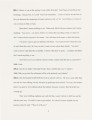
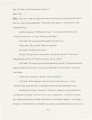
Show said "Pa tore I want you to take a fire team and see what th h 11' g ing n ut th r . There's people moving. They aren't trying to come in. I want to know what' going on." So I said, "Aye aye, sir." So we went down one side of the rail line and here was ... Oh God, there must have been twenty or thirty marines and British commandos laying around wounded and some dead. And dead Chinese. And those at the top said the Chinese had brought them down to there, that they didn't have medical supplies (the Chinese). Those poor guys, they didn't' have nothing. 100 rounds of ammunition - that's what they were given. 100 rounds of ammunition and a sack of millet! JAS: I know millet, yeah. BILL: Yeah, it's ground rice. You mix it with water and, God, it's horrible! I've eaten it. But anyway, they said, "They sent us down here and we'll fire these red flares when they bring more of us in. And if you don't shoot at them, they'll bring this ... " So I went back and told China Red and he called the battalion. The first time we went out we took a whole platoon out, all armed and everything. Put them on stretchers and brought them in. The next night, red flare went up so they sent the stretcher bearers and a fire team out. About four nights in a row we did it. Finally, they were just sending stretcher bearers out. You could look out at the mountains - you could get a silhouette - and you could see the Chinese up there. They knew what you were doing but they said, "You can pick them up. You don't 57 |
| Reference URL |
https://collections.lib.utah.edu/ark:/87278/s6516194/1029308 |