| OCR Text |
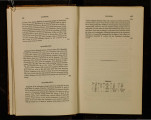
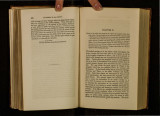
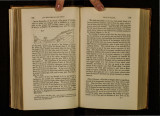
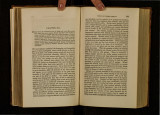
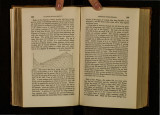
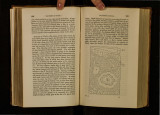
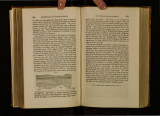
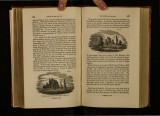
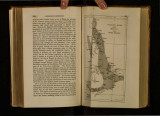
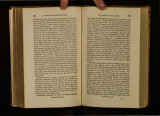
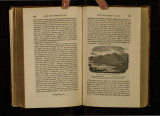
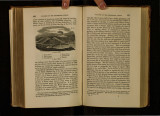
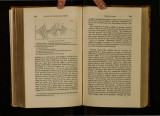
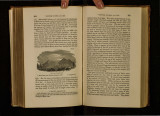
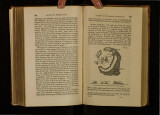
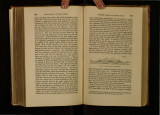
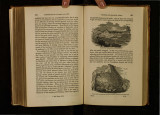
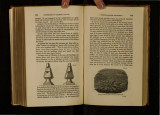
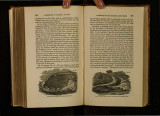
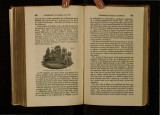
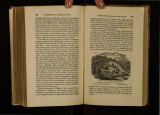
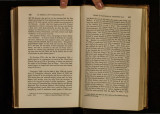
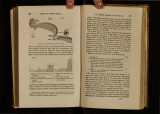
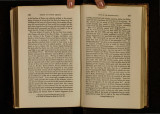
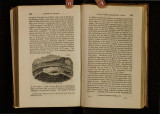
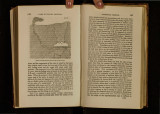
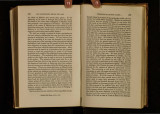
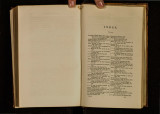
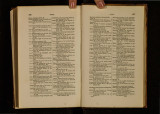
Show 4 66 {;AUSi<~S OF VOLCANIC ERUPTIONS, s. .p poud ~ecUon tt/t'lte ltlblm-anean 1'114f1IO1 r and P1 P t qf'B Gty1er in l ce/a"d. f the water is raised by the latent water' a~d 1he tet~P:~~~~e ~he lower part of the cavity is fil!ed heat evo ve ' un 1 ' d t'h upper with steam under high · 1 b T g water an e 1 h wtt 1 Ol mT he expansi.v e 1~ 0rce of the steam becomes, at eng.t , pressure. h b T water is forced up the fissure or ptpe so great, that t ~ 01 mg . . ns over the rim of the E B and a considerable quantity .~u. . min the b . ' When the pressure is thus dimtmshed, the stea D . ' asm. . A ands until all the water IS '•upper part of ~he ~~vi~ e::p the steam, being the lighter of , driven to~' w en} t 11S ap\h 'reat velocity, as on the opening r the two flmds, rus les up wbl '1 g If the pipe be choked up f h 1 of a steam- 01 er. . 1 10 t e va ve. £ few minutes a great mcrease : artificially with ksto~es, ev£e~ i~~sa prevented fr~m escaping in a . , of. heat mus~ ta e P ace, t~at the water is made to boil up in a , latent form m steam, so . . d th. brings on an eruption. t.few mmutes, an Is t her of large subterranean N 'f suppose a grea num h c· cavi~: ~t t~: depth of several miles below the surface of t e HYDROSTATIC PRESSURE. 4G7 eart.h, wherein r_neltcd lava accumulates, and that water penetratmg- to these IS converted into steam, this steam, together with other g-ases generated by the decomposition of melted rocks, ~ay press upon the lava and force it up the duct of a volcano, m the same manner as it drives a column of water up the pipe of a Gey~e1·. But the weight of the lava being immense, the hydrostatic pressure exerted on the sides and roofs of such large cavitie~ and fissures may well be supposed to occasion not merely shght tremors, such as agitate the ground before an eruption of the Geyser, but violent earthquakes. Sometimes the lateral pressure of the lower extremity of the high column of lava may cause the more yielding strata to give way, and to fold themselves in numerous convolutions, so as to occupy less space, and thereby give relief, for a time, to the fused and dilated matter. Sometimes, on the contrary, a weight equal to that of the vertical column of lava, pressing on every part of the roof, may heave up the superincumbent mass, and force lava into every fissure which, on consolidation, may support the arch, and cause the land above to be permanently elevated. On the other hand, subsidences may fo1low the condensation of vapour when cold water descends through fissures, or when heat is lost by the cooling down of lava. That lava should often break out from the side or base, rather than from the summit of a lofty cone like Etna, has always been attributed to the immense hydrostatic pressure which the sides of the mountain undergo, before the lava can rise to the crater. This conclusion is too obvious not to have met with a general reception; yet how trifling must this pressure be when compared to that which the same column imparts to the reservoirs of aeriform fluids and melted rock, at the depth of many miles or leagues below the surface ! If earthquakes be derived from the expansion by heat of elastic fluids and melted rock, it is perfectly natural that they should terminate, either when a volcanic vent permits a portion of the pent up vapours or lava to escape, or when the earth has been so fissured that the vapour is condensed by its admission into cooler regions, or by its coming in contact with water • Or relief may be obtained when Java and gaseous fluids have, by distending the strata, made more room for themselves, so that the weight of the superincumbent mass is sufficient to 2H2 |