| OCR Text |
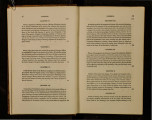
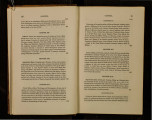
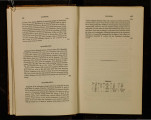
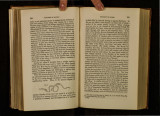
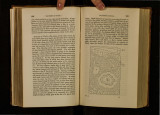
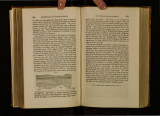
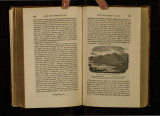
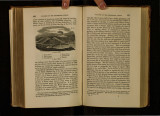
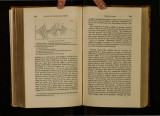
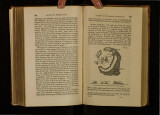
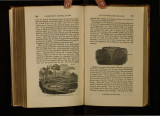
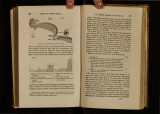
Show 254 STRATIFICATION OF DErOSlTS IN DELTAS. two deltas are converging, the intermediate space is often, for reasons before explained, alternately the receptacle of different sediment derived from the converging streams. The one is, perhaps, charged with calcareous, the other with argillaceous matter ; or one may sweep down sand and pebbles, the other impalpable mud. These differences may be repeated with considerable regularity, until a thickness of hundreds of feet of alternating beds is accumulated. An examination of the strata of shell-marl now forming in the Scotch lakes, or of the sediment termed "warp,'' which subsides from the muddy water of the Humber, and other rivers, shows that recent deposits are often composed of a great number of extremely thin layers, either even or slightly undulating, and parallel to the planes of stratification. Sometimes, however, the laminre in modern strata are disposed diagonally at a considerable angle, which appears to take place where there are conflicting movements in the waters. In January, 18~9, I visited, in company with Professor L.A. Necker, of Geneva, the confluence of the Rhone and Arve, when those rivers were very low, and were cutting channels through the vast heaps of debris thrown down from the waters of the Arve, in the preceding spring. One of the sand·banks which had formed, in the spring of 189l8, where the opposing currents of the two rivers neutralized each other, and caused a retardation in the motion, had been undermined ; and the following is an exact representa· tion of the arrangement of laminre exposed in a vertical section. The length of the portion here seen is about twelve feet, and No.6. the height five. The strata A A consist of irregular alternations of pebbles and sand in undulating beds: below these are seams of very fine sand, B B, some as thin as paper, others about a CONCLUDING REMARKS ON DELTAS. 255 quarter of an inch thick 'fl layers of fine O'reenish-gt:e lde strat~ c c are composed of • • 0 Y san as thm a s the mc1med beds will be seen t b' 1. c s p~per. orne of at their lower extremity the . 0 l' e t ~ICker at their upper, others siderable. These layer~ mu l~c ~nation of some being very conother by lateral apposition s ba~ accumulated one on the was very gradually increasin'O' prod~ ?'.wh~en ?ne of the rivers 1 . o or 1mm1s mg m vel · t l t 1e pomt o.f greatest retardati' on cause d by thel. ro ci y, fsl'o t. l at currents shifted slowly allo · h d' con 1ctmg d . ' wmg t e se Iment to b th own m successive layers on a 1 . e rown nomenon is exhibited in older :t~!t~~f b~~k. The same phetreat of them we shall end a ages; and when we ' cavour more fulJ t ·n origin of such a structure. Y 0 I ustrate the . We may now conclude our remarks on d 1 . Imperfect as is our information of th 1 e tas, fbservmg that, undergone within the last three th e c 1;nges w Iich they have cient to show how constant . t oulsan years, they are suffi-k . an m ere 1ange of se d 1 d . ta mg place on the face of our lobe a a~ an Is alone, many flourishing inland to~vns ~nd In tl.1e Mediterranean of ports, now stand where the sea r~ll .a still gre~ter number when civilized nations first . ed Its waves smce the era grew up m Europe If 1 compare with equal accur h . · we cou d the islands and continent:cy t e ~nci~t and actual state of all millions of our race are n ' we s ou probably discover that deep seas prevailed . owl.supported by lands situated where In ear 1er ages In d. . yet occupied by man 1 d . · many Istncts not where the anchor o~c: ank .ammals and forests now abound fi d san mto the oozy b tt W n 'on inquiry, that inroads f o om. e shall siderable; and when to tl . 0 the o~ean have been no less con~ causes, we add analoO' lehsc revolutiOns produced by aqueous 1 oous c anges wrought b . we Slall, perhaps, acknowled c . . y Igneous agency, a great philosopher of anti . f tl~e JUStice of the conclusion of land and sea on our 1 b qm ~' ~ en he declared that the whole g o e periOdiCally changed places '~. • See an account of the Aristotelian system, p. 16, an/e. |