| OCR Text |
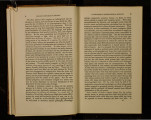
Show \ 6 INSTITUTES OF MENU • It is then declared that there has been a long succession of manwantaras, or periods, each of the duration of many thou-sand ages, and- '' There are creations also, and destructions of worlds !nnu- , merable: the Being, supremely exalted, performs all this with as much ease as if in sport, again and again for the sake of conferring happiness -if..'." The compilation of the ordinances of Menu was not all the work of one author nor of one period, and to this circumstance some of the remarkable inequalities of style and matter are probably attributable. There are many passages, however, wherein the attributes and acts of the " Infinite and Incomprehensible Being" are spoken of with much grandeur of concepti?n and sublimity of.diction, as some of the passages above ~1ted,, though sufficiently m~sterious, may serve to exempl1fy. rhere are at the same t1me such puerile conceits and monstrous absurdities in the same cosmoO'ony that some • b ' may Impute to me~e ~ccident any slight approximation to truth, or apparent co~nc1dence between the oriental dogmas and observed facts. Th1s pretended revelation however was not P':'\ely an effort of the unassisted imagin;tion, nor 'invented ~It 1out re.gard to the. opinions and observations of naturalists. fher~ are m~roduced Into the same chapter, certain astronomical theories, evidently derived from observation and reasoning. Thus for instance, i~ is declared that, at the North Pole the year was divided into a long day and night, and that ~heir long day was the northern, and thei"r night the southern cour:;e of the sun;* and to the inhabitants of the moon it is said one day is equal in length to one month of mortals t, If 'such stat~rnents cannot be resolved into mere conjectures, we have no r1ght to refer, to mere chance, the prevailinO' notion that the earth and .its inhabitants had formerly under~one a s~ccession of revolu~J~ns and catastrophes, interrupted by Jon intervals of tranqmlllty. g Now there are two sources in which such a theory may * Institutes f H' d L t l ~ .111. oo aw, or the Ordinances of Menu, from the Sanscrit rans ated by Su Wlllmm Jones, 1796. ' t Mtmu Instit. c. i. 66 and 67. ORIENTAL COSMOGONY, 7 have originated. The marks of former convulsions on every part of the surface of our planet are obvious and striking. The remains of marine animals imbedded in the solid strata are so abundant, that they may be expected to force themselves on the observation of every people who have made some progress in refinement; and especially where one class of men are expressly set apart from the rest for study and contemplation. If these appearances are once recognized, it seems natural that the mind should co~e to the conclusion, not only of mighty changes in past ages, but of alternate periods of repose and disorder-of repose when the fossil animals lived, grew, and mul.tiplied-of disorder, when the strata wherein they were buned became transferred from the sea to the interior of continents, and entered into high mountain chains. Those modern writers, who are disposed to disparage the former intellectual advancement and civilization of eastern nations, might concede some foundation of observed facts for the curious theories now u~der consideration, without ind~lging in exaggerated opimons of the progress of science; especially as universal catas~ rophes of th~ wor~d, and exterminations of organic beings, m the sense m winch they were understood by the Brahmin, are untenable doctrines. We know that the Egyptian priests were aware, not only that the soil beneath the plains of the Nile, but that also the hills bounding the great valley, contained marine shells; and it could hardly have escaped the observation of Eastern philosophers, that some soils were filled with fossil remains, since so many national works ·were executed on a magnificent scale by oriental monarchs in very remote eras. Great canals and tanks required extensive excavations; and we know that in more recent times (the fourteenth century of our era) the removal of soil necessary for such undertakings, brought to light geological phenomena, which attracted the attention of a people less civilized than were many of the older nations of the East*. . "' Th~s circumstance i!! mentioned in a Persian MS. copy of the historian Ferishta, m the hbrary of the East India Company, relating to the rise and progress of the Mahomedan Empire in India, and procured from the library of Tippoo Sultaun in 1799; and has been recently referrecl to at some length by Dr. Buckland.-(Geol. Trans. ·2d Series, vol. ii. part iii. p. 389.)-lt is stated that, in the year 762, (or 1360 of our era) the king employee! fifty thousand labourers in cutting through a. |