| OCR Text |
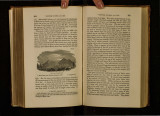
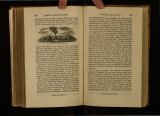
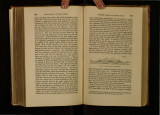
Show 272 LOSS OF LAND ON TilE SUFFOLK COAST. eddy, and the Holm Sand is a bank caused by the meeting of currents, where, as usual, sediment subsides. 'l'he channel called Lowestoff Roads is about a mile broad, and the depth varies from twenty to fifty-nine feet at low water. On one side, the current has hollowed out of the Holm Sand a deep curve, called the Hook, and on the other side precisely opposite, is the projecting point of the Ness*. As the points and bends of a river correspond to each other, sand-bars being thrown up at each point, and the greatest depth being where tl1e river is wearing into the bend, so we find here a shoal increasing at the Ness, and deep water preserved in the Hook. We cannot doubt that, at a modern period in the history of this coast, the high cliff's on which Lowestoff stands, were once continuous across the space where the roadstead now is, and where we have stated the present depth to be fifty-nine feet at low water. By the mean of thirty-eight observations, it has been found that the difference of high and low tide at Lowestoff' is only five feet eight inche:; t-a remarkably slight oscillation for our eastern coast, and which naturally suggests the inquiry whether, at other points where there are inland cliffs, the rise of the tides is below their average level. The sea undermines the high cliff's a few miles north of Lowestoff, near Corton; as al~o two miles south of the same town, at Pakefield, a village which has been in part swept away during the present century. From thence to Dunwich the destruction is constant. At the distance of two hundred and fifty yards from the wasting cliff at Pakefield, the sea is sixteen feet deep at low water, and in the roadstead beyond, hyentyfour feet. Of the gradual destruction of Dunwich, once the most considerable sea-port On this coast, we have many authentic records. Gardner, in his History of that borough, published in 1754, shows, by reference to documents beginning with Doomsday Book, that the cliffs at Dunwich, Southwold, Eastern, and Pakefield, have been always subject to w~ar away. At Dunwich, in particular, two tracts of land wh.ICh had been taxed in the eleventh century, in the time of Kmg "' See Plan of proposed Canal at Lowestoff, by Cubitt and Tlo\ylor, 1826. t These observations were made by Mr. R. C. Taylor. DESTRUCTION OF Dl1NWICil BY 1'IIE SEA. 273 Ed ward the Confessor' are men t'1 0nec1, m· t h e Conqueror's sur-vey, made but a few years afterwards ash . b d d b th Th ·' avmg een evoure y e sea. e losses, at a subsequent period, of a monastery -at another of several churches-afterwards of the old portthen of four hundred houses at once-of the church of St ~eonard, the hi.gh road, town-hall, gaol, and many other build~ m. gs, adre hm ent.i oned, with the dates when they p en.s h e d • It IS state t at, m th~ sixteenth century, not one quarter of the town was left standmg; yet the inhabitants retreating inland the name was preserved, as has been the case with many th ' t l h . . o er por s w 1en t etr ancient site has been blotted out. 'rhere ~s, however, a church, of considerable antiquity, still standmg, th~ last of twelve mentioned in some records. In 1740, the la!m.g open of tl.Je churchyard of St. Nicholas and St. Francis, m the sea cliffs, is well described by Gardner, with the coffins and skeletons exposed to view ,-some 1 in 011 the beach, and rocked y g In cradle of the rude imperious surge. Of these cemeteries, no remains can now be seen R 1 sa "th t . . . • ay a so ys, a ancient wntmgs make mention of a wood a mile and a half to the east of Dunwich, the site of which must at present be so far wi~hin the sea*." This city, once so :flourishIng and populous, Is now a small village, with about twenty houses and one hundred inhabitants. 'l'here is an old tradition, " that the tailors sat in their shops at Dunwich, and saw the ships in Yarmouth Bay·" but ~hen we consider how far the coast at Lowestoff' Ness p~ojects etween these places, we cannot give credit to the tale which n;ve~~heless, proves how much the inroads of the sea in time~ ~ 0h prompted men of lively imagination to indulge a taste JOr t e marvellous. Gardner.' s d escn· p t1' 011 of t h e cemeteries laid open by the ~avBes re.mmds us of the scene which has been so well depicted mY' hte lw ick -~' and of wh I' c h numerous points on our coast th 1g lahve suggested the idea. On the ver.Q'e of a cliff. which aned sea as t m d ermm· e d ' are represented th.e.... unshaken' tower western end of an abbey. The eastern aisle is gone, Vot, I, * Consequences of the Deluge, Phys. Theol. Discourses. t History of British Birds, vol. ii., p. 220, Ed. 1821. T |