| OCR Text |
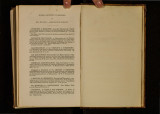
Show so CAUSES OF ERROR IN the su b terranean mov ements were once far more energetic tha. n · · We know that one earthquake may rmse m our own Urnes. . h · h f the coast of Chili for a hundred miles to the average eJg t o b fi ~ t A r·epetition of two thousand shocks of equal a out ve 1ee • • d d '1 · 1 · }1v1o ence m1g t produce a mountain cham one hun re m11 esf I ong, an d ten thousand feet hiOo 'h, No.w , shouldb one on· yo these convulsions happen in a century, It woul~. e consistent with the order of events experienced by the Ch1han~ from the earliest times; but if the whole of them were to occur m the next hundred years, the entire district must be depopulated, scarcely any animals or plants could survive, ~nd the surface would be one confused heap of ruin and desolation. . One consequence of undervaluing ~rea~ly the. quanttty of past time is the apparent coinci~ence which It occasiOns ~f events necessarily disconnected, or wlu~h are so unusual, that It would. be inconsistent with all calculatton of chances to suppose them to happen at one and the same time.. ~hen the. unlooked for association of such rare phenomena IS w1tnessed m the present course of nature, it scarcely ever fails to excite a suspicion of the preternatural in those minds which are not firmly. convinced of the uniform agency of· secondary causes ;-as If the death of some individual in whose fate they are interested, happens to be accompanied by the appearance of a luminous meteor, or a comet, or the shock of an earthquake. It would be only necessary to multiply such coincidences indefinitely, and the mind of every philosopher would be disturbed. ~ow it would be difficult to exaggerate the number of physical events, many of them most rare and unconnected in the~r nature, which were imagined by the Woodwardian hypothesis to have happened in the course of a few months; and nu~le· rous other examples might be found of popular geol?giCal . theories, which require us. to imagine that a long successiOn of events happened in a brief and almost momentary period. The sources of prejudice hitherto considered may be deemed as in a great degree peculiar to the infancy of the science, but others are common to the first cultivators of geology and to ourselves, and are all singularly calculated to produce the same deception, and to strengthen our belief that the course of nature in the earlier ages differed widely from that now esta~ blished. Although we cannot fully explain all these circum~ GEOLOGICAL TIIEORlES. 8L stances, without assuming some things as proved, which .it will be the object of another part of this work to demonstrate, we must briefly allude to them in this place. The first and greatest difficulty, then, consists in our habitual unconsciousness that our position as observers is essentially unfavourable, when we endeavour to estimate the ma()'nitude of the h . b c anges now m progress. In consequence of our inattention to this subject, we are liable to the greatest mistakes in contrasting the present with former states of the globe. We inhabit about a fonrt~1 part of the surface ; and that portion is almost exclusively the theatre of decay and not of reproduction. We know, indeed, that new deposits are annually formed in seas and lakes, and that every year some new igneous rocks at·e produced in the bowels of the earth, but we cannot watch the progress of their formation; and, as they are only present to our minds by the aid of reflection, it requires an effort both of the reason and the imagination to appreciate duly their importance. It is, therefore, not surprising that we imperfectly estimate the result of operations invisible to us; and that, when analogous results of some former epoch are presented to our inspection, we cannot recognise the analogy. He who has ob~erved the quarrying of stone from a rock, and has seen it shipped for some distant port, and then endeavours to conceive what kind of edifice will be raised by the materials, is in the same predicament as a geologist, who, while he is confined to the land, sees the decomposition of rocks, and the transportation of ~atter by rivers to the sea, and then endeavours to picture to lumself the new strata which Nature is building beneath the waters. ·Nor is his position less unfavourable when, beholding a volcanic eruption, he tries to conceive what changes the co~ umn of lava has produced, in its passage upwards, on the Intersected strata; or what form the melted matter may assume at great depths on cooling down; or what may be the extent of the subterranean rivers and reservoirs of liquid matter far beneath the surface. It shoulcl, therefore be remembered that the t as k I.I ?posed on those who study the' earth's history ' requires no.ordmary share of discretion, for we are precluded from collating the corresponding parts of a system existing at two different periods. If we were inhabitants of another element-if the great ocean were our domain, instead of the narrow limits of the land, our difficulties would be considerably lessened; VoL, I. G |