| OCR Text |
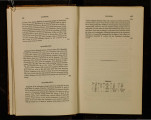
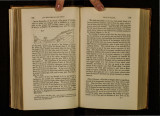
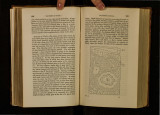
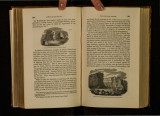
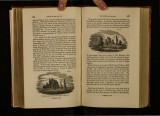
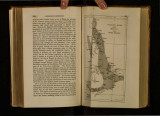
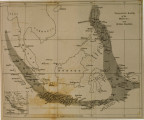
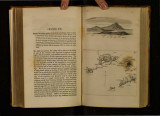
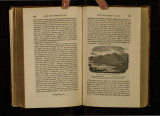
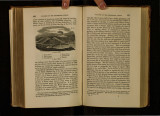
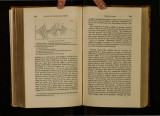
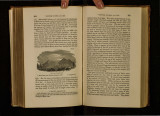
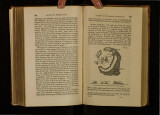
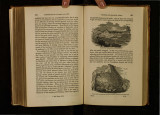
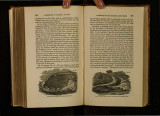
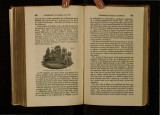
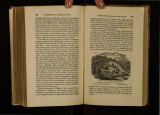
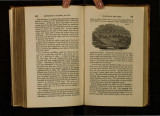
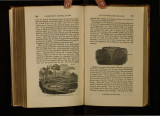
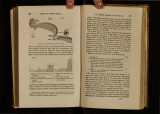
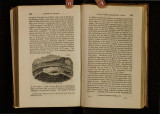
Show 426 .' EARTHQUAKE IN CALABRIA, A.D. 1783, Near Seminara, an extensive olive-ground and orchard were hurled to a distance of two hundred feet, into a valley sixty feet in depth. At the same time a deep chasm was riven in another part of the high plateau from which the orchard had 'been detached, and the river immediately entered the fissure, leaving its former bed completely dry. A small inhabited house, standing on the mass of earth carried down into the valley, went along with it entire, and without injury to the inhabitants. The olive-trees, also, continued to grow on the land which had slid into the valley, and bore the same year an abunuant crop of fruit. ' Two tracts of land on which a great part of the town of Polistena stood, consisting of some hundreds of houses, were detached into a contiguous ravine, and nearly across it about half a mile from their original site; and, what is most extraordinary, several of the inhabitants were dug out from the ruins alive, and unhurt. 'rwo tenements, near Mileto, called the Macini and Vati-cano, about a mile long, and half a mile broad, were carried for a mile down a valley. A thatched cottage, together with large olive and mulberry~trees, most of which remained erect, were carried uninjured to this extraordinary distance. According to Hamilton, the surface removed had been long undermined by rivulets, which were afterwards in full view on the bare spot deserted by the tenements. The earthquake seems to have opened a passage in the adjoining argillaceous hills, by which water charged with loose soil had suddenly taken its course into the subterranean channels of the rivulets immediately under the tenements, so that the entire piece of ground was floated off. Another example of subsi· dence, where the edifices were not destroyed, is mentioned by Grimaldi, as having taken place in the city of Catanzaro, the capital of the province of that name. The houses in the quarter called San Giuseppe subsided with the ground to various depths from two to four feet, but the buildings re-mained uninjured. . It would be tedious, and our space would not permit us, to follow the different authors through their local details of ~and· ~ips produced in numerous minor valleys; but they are htghly interesting, as showing to how great an e:xtent the power of FORMATION OF NEW LAKES. 427 rivers to widen valleys d soil towards the sea i~' tn to dcarry away large portions of '' ncreasc where earthquakes are of No.27. • ' LalllbllJ>• Mtlr Clnqt~qf,·olllll, cau•ed by lite tarll&quake qJ' 1783. fperiOd~Ical occurrence. Among other territories that of c· ro. n 1 was oc rreatl y convu1 s ec] ' vari.o us portion' s of s 'l mbq u. e-ir aiseIId ao· r su.n k, a(n d innumerabl e fi ssures travers.m g t.he01 couenmtryg n a rrectwns see cut No. ~7), Along the fl k f v 11 · 1 · d' · an s o a small a. ey m t 11S tstnct there appears to have been 1 unmterrupted ·line of landslips. an a most Vivenzio states, that near Sitizzano a valley was I filled t 1 1 · . very near y up o a eve wltl~ the htgh grounds on each side b l enormous masses detached from the boundary 11I'll ' dy t 1e do · t h s, au cast wn m o t e course of two streams. By this barrier a lak ~as ~ormcd of great depth, about two miles long and a mil: roa . The same author mentions that upon the whole th we~e fifty l~k.es occasioned during the convulsions a~d e~e asstgns locahhes to all of these • The g overnrnent 's urveyores ~nu~erated two hundred and fifteen lakes, but they included m Nt us number many small and insignificant ponds earS L 'd · h . b · uci. o, among other places, the soil is described as avmg een " d1ss I d " 1 1 d 0 ve ' so t 1at arge torrents of m d · ated all the low d . u mun~ tl . groun s, hke lava. Just emerging from ns mud, the tops only of trees and of the ruins of farm-houses wer.e seen . Two mi' Ie s f rom L aureana the swampy soil in two, ravmes became filled with calcareous matter, which oozed out |