| OCR Text |
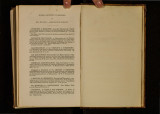
Show THEORY OF 152 . . f l d . d tl serve to attes t the conttcor m. ty of an 1 were formmg, an ley 1 . h nders the rarity o sue 1 inhabited by large 1I er b'l VO ra ' w uc . re On the contrary, the ·thy of attentiOn. V exceptions more wm . f animals in the upper a1 number of skeletons of exis m.~ ed to be referrible to the d'Arno, which are usually .conbsl der occur in a deposit which th Subapcnmne e s, l f same age as e. . . l d lake surrounded by o ty was formed entirely m an m an ' mountains. f . ldest tertiary formations in • i! • mber o our 0 d The lOICnor me 1 1 t' clay has hitherto prove 11 t med t 1e p as 1c ' . England, usua Y cr ·r . mains as our ancient coal . f mammllerous I e ' d . . as destitute o bl ce between these eposits 1s strata; an d t 1ll ·S poi nt of resem. anb ecause the h.g m.t e, m· t1 le ·tl of observatiOn, . d the more WOI 1Y . 1 ther are exclusively compose d th coal m t 1e 0 ' d one case, an ~ tl London clay we have procure · 1 1 ts From 1c of terrestna P an · · . f testacea but the only bones £ h dred spec1es o ' three or our un 1 tl e of reptiles and fish. On com-of vertebrated animas are Jots f these strata with those of our . h . ft re the con ten so . d parmg, t e1 e 0 ' 1 d order of precedence mverte . oolitic series, we find t Je supposfe cks mammalia, both of the · nt system o ro ' . In the more ancie . d whereas in the newer, 1f d h been recocrmze ' land an se~, ave . b o criterion nature has made a negative evidence IS to e our. e move~ent and no animals d · t d of a progress1 v , ' . retrogra e, m~ ea 1 f anization than reptiles are dis-more exalted m the sea e o org coverable. f drumanous animal has ever yet Not a single ?one£ o ·~s~~: and their absence has appeared, been discovered m a osst ' th idea that the type of l · t to countenance e . to some geo ogis s, bl' the human came last m . · t nearly resem mg orgamzat10n mos ~ 1 perhaps anterior to t1 1a t f t' and was scarce Y . the order o crea wn,. l . 'nt is quite inconclusiVe, B th vidence on t ns pm of man. ut ~ e t of the details of the various classes for we k~ow no:hmg, as y~ 'h inhabited the land up to the conof the ammal kmgdom whlfc h ndai·y strata. and when a . . f 1 t 0 t e seco ' 1 . sohdatwn o t Je newes t' ere l·n pro~rress, the c I-f h t f ·y forma 1ons w o large part o . t e er Ial b f h a tropical character . t have een o sue mate does not appeai o ' d l t of the tribe of apes, £ . the eve opmen as seems necessary OI B . d . t must not be forgotten, monkeys, and allied genera. . ehsl es, 1 • baqueous deposits that almost all the animals whlC occur m su SUCCESSIVE DEVELOPMENT, 153 are such as frequent marshes, rivers, or the borders of lakes, as the rhinoceros, tapir, hippopotamus, ox, deer, pig, and others. On the other hand, species which live in trees arc extremely rare in a fossil state, and we have no data as yet for determining how great a rlumber of the one kind we ought to find; before we have a right to expect a single individual of the other. If, therefore', we are led to infer, from the presence of crocodiles and turtles in the London clay, and from the cocoanuts and spices found in the isle of Sheppey, that at the period when our older tertiary strata were formed, the climate was hot enough for the quadrumanous tribe, we nevertheless could not hope to discover any of their skeletons until we had made considerable progress in ascertaining what were the contemporary Pachydermata; and not one of these, as we have already remarked, has been discovered as yet in any strata of this epoch in England 'A<. It is, therefore, clear, that there is no foundation in geological facts, for the popular theory · of the successive development of the animal and vegetable world, from the simplest to the most perfect forms ; and we shall now proceed to consider another question, whether the recent origin of man lends any support to the same doctrine, or how far the influence of man may be considered as such a deviation from the analogy of the order of things previously established, as to weaken our confidence in the uniformity of the course of nature. "\V e need not dwell on the proofs of the low antiquity of our species, for it is not controverted by any geologist ; indeed, the real difficulty which we experience consists in tracing back the signs of man's existence on the earth to that comparatively modern period when species, now his contemporaries, began to predominate. If there be a difference of opinion respecting the occurrence in certain deposits of the remains of man and his works, it is always in reference to strata confessedly of the most modern order; and * ~he only exception of which I have heard is the tooth of an Anoplothcrium, mentioned by Dr. Buckland as having been found in the collection of Mr. Allan, labelleu "Binstcad, Isle of Wight." The quarries of Binstead are entirely in the lo~or fresh-~ater formation, and such is undoubtedly the geological position in Which we m1ght look for the bones of such au animal. My friend Mr. Allan has ~h.ewn.me this tooth, to which, unforttwately, none of the matrix is attache<l, so that lt 19 ~till open to a captious sceptic to suspect that a Parisian fossil was so ticketed by m1stuke. |