| OCR Text |
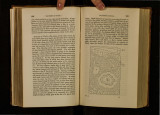
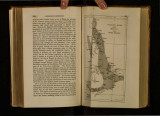
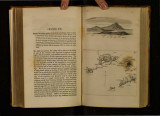
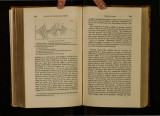
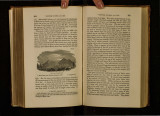
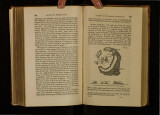
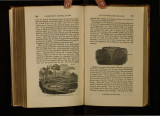
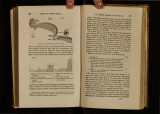
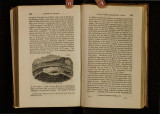
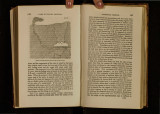
Show 342 STRUCTURE OF TilE CONE OF VESUVIUS, culty recognise the termination of any one stratum, but usually supposes it continuous with some other, which at a short distance may lie precisely in the same plane. The slight undulationg, moreover, produced by inequalities on the s,ides of the hill on which the successive layers were moulded, assists the deception. As countless beds of sand and scorire constitute the greater part of the whole mass, these may sometimes mantle continuously round the whole cone; and even lava-streams may be of considerable breadth when first they overflow, since in some eruptions a considerable part of the upper portion of the cone breaks down at once, and may form a sheet extending as far as the space which the eye usually takes in in a single section. The high inclination of some of the beds, and the firm union of the particles even where there is evidently no cement, is another striking feature in the volcanic tuffs and breccias, which seems at first not very easy of explanation. But the last great eruption afforded ample illustration of the manner in which these strata are formed. Fragments of lava, scorire, pumice, and sand, when they fall at slight distances from the summit, are only half cooled down from a state of fusion, and are afterwards acted upon by the beat from within, and by fumerolcs or small crevices in the cone through which hot vapours are disengaged. Thus heated, the ejected fragments cohere together strongly; and the whole mass acquires such consistency in a few days, that fragments cannot be detached without a smart blow of the hammer. At the same time sand and scorire, ejected to a greater distance, remain incoherent*. The inclined strata before mentioned, which dip outwards in all directions from the axis of the cone of Vesuvius, are intersected by veins or dikes of compact lava, for the most part in vertical position. In 189l8, these were seen to be about seven in number, some of them not less than four or five hundred feet in height, and thinning out before they reached the uppermost part of the cone. Being l~arder than the. ~eds through which they pass, they have resisted decompos1t1on, and stand out in relieft. • Monticelli and Covelli, Storia di Fenon. del Vesuv., en 1821-2-3. t When I visited Vesuvius in November, 1828, I was prevented from desc~n~; ing into the crater by the constant ejections then thrown out. I o~ly got ~tg £ uf three of the dikes, but Signor Mo~ticelli had previously had drawmgs ma 8 0 DIKES IN VESUVIUS, liOW FORMED, 343 b ~~el~ll~an be nofdoubt that these dikes have been produced dy ~ h ~~~up 0 . open fissures with liquid lava· but of the ate o t eir ormation we know nothing farther th~n that the are all subsequent to the year 79 d . 1 . . Y 1 I , an , Ie atively speakmcr t 1at t 1ey are more modern than all tl 1 d · . 0 . 1e avas an sconre whiCh' they mtersect. A considerable numb f h not traversed by them, must' have be crdo tt el upper str~ta, 'f h d'k en ue o ater eruptiOns 1 t e 1 es were £lled from below Th t tl h 1 · 1 1 · · • a 1e cart quakes w nc 1 a most mvanably precede eruption . . · h . S OCCaSIOn rents In t e mass 1s well known·' and ' in 189l9l , th r.c e mon tl1 s b e.teo re the lava flowed out, open fissures evolvincr h t • ' 0 o vapours, were numerous. It IS clear that such rents must be injected with melted matter when the column of lava rises so that th . . f th d'k · '] ' e or1gm o e 1 es Is easi y explained as also the g t I'd' d 11 • ' rea so 1 tty an crysta me nature of the rock composincr them h' l 1 b ~ d b 1 . o , w 1c 1 1as een orme y ava coohng down slowly under great pressure . In the ann:xed diag~am (No.l3.) it will be seen that, ~n the stde of Vesuvius oppo~Ite to that where a portion of the ancient cone of S?mma (~) Still remains, is a projection (b) called the Pedamentma, which ~orne have supposed to be part of the circumference of the ancient crater broken down towards the and over the edge o~ which the lavas of the modern Vesu~::: have P.oured; the axis of the present cone of Vesuvius b . a~c~rdmg to Visconti, precisely equidistant from the escarp::~~ o omma .and the Pedamentina. But it has been ob' ected (Clnd .not Without reason) to this hypothesis that if the ~Ped me. n.t m ~ an d th e escarpment of Somma were' the remains of thae- ~:tgmf crater, that crater must have been many miles in t~:me::r, and m.ore enormous than almost any one known on g ~e. It Is, therefore, more probable that the ancient mountam was higher than Vesuvius (which, comparatively the whole, which he showed Th . . t~e cone which is encircled b m~ e ven~s whtch I saw were on that side of tloned, an eruption be t [h omma. In the March of the year before menejected matter had fillc~:n a e bottom. of the deep gulf formed in 1822. The the same operatt'ott pineal rly one-third of the original abyss inN ovember and bottom in almost conwt'a s s1 o w y. c. ontm' um. g, a s.m g1 e black cone being seen a't the till the throat of V m~a .actiVIty. It is clear that these ejections may continue M esuvms IS filled up in th r. Scrope has referred tb f e same manner as before 1822; and to this cause. l found, in ~8~~qt~~n\occurrence of volcanic cones without craters the cone, and evolving m h h 't e ava of 1822 not yet cool on the north side of uc ea and vapour from Cl'evices. |