| OCR Text |
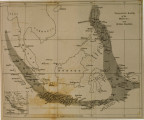
Show I I 70 SMITH'S MAP OF ENGLAND. high antiquity attributed by Hutton to our present conti?ents, and particularly to seck ou.t some cause for t~e excavati~n of valleys more speedy and violent than ~he act1~n of ordmary rivers. Hutton had said, that the erosiOn of r1vers, and such floods as occur in the usual course of nature, might progressively, if time be allowed, hollow out great valleys, but he had also observed, " that on our continents there is no spot on which a river may not formerly have run i'f.'." De Luc generally reasoned ao·ainst him as if he had said, that the existing rivers flowing at their present levels had caused all these inequalities of the earth's surface; and Playfair, in his zeal to prove how much De Luc underrated the force of running water, did not sufficiently expose his misstatement of the Huttonian proposition. But we must defer the full consideration of this controverted question for the present. While the tenets of the rival schools of Freyberg and Edinburgh were warmly espoused by devoted partisans, the labours of an individual, unassisted by the advantages of wealth or station in society, were almost unheeded. Mr. William Smith, an English surveyor, published his " Tabular View of the British Strata" in 1790, wherein he proposed a classification of the secondary formations in the west of England. Although be had not communicated with 'Verner, it appeared by thi~ work that he had arrived at the same views respecting the laws of superposition of stratified rocks ; that he was aware that the order of succession of different groups was never inverted ; and that they might be identified at very distant points by their peculiar organized fossils. From the time of the appearance of the " Tabular View," he laboured to construct a geological map of the whole of England, and, with the greatest disinterestedness of mind, comm'\nicated the results of his investigations to all who desired information, giving such publicity to his original views, as to enable his contemporaries almost to compete with him in the race. The execution of his map was completed in 1815, and remains a lasting monument of original talent and extraordinary perseverance, for he had explored the whole country on foot without the guidance of previous observers, or the aid of fellow-labour- * Theory of the Earth, vol. ii. p. 296; and Playfair's" Illustrations," note 16, P• 352. SMITII-GEOLOGICAL SOCIETY. 71 ers, and had succeeded in throwing into natural divisions the whole complicated series of British rocks *. D'Aubuisson a distinguished pupil of Werner, paid a just tribute of praise' to this remarkable performance, observing that " what many cele .. brated mi~eralogists had only accomplished for a small part of Germany 111 the course of half a century, had been effected by a single individual for the whole of England." We have now arrived at the era of ]ivinO' authors and shall b . . b ' rmg to a conclusiOn our sketch of the progress of opinion in geology. The contention of the rival factions of the V u.lcanists and Neptunists had been carried to such a height, that these names had bec~m~ terms ~f reproach, and the two parties baa been less occupied 111 searchmg for truth, than for such arguments as migh.t strengthen their own cause, or serve to annoy their antagomsts: A new school at last arose who professed the strictest neutrality, and the utmost indifference to the systems of W ~rner and Hutton, and who were resolved diligently to devote ~heir labours to observation. The reaction, provoked by the mtemperance of the conflicting parties, now produced a tendency to extreme caution. Speculative views were discountenanced a?d through fear of exposing themselves to the suspicion of ~ bias. towards the dogmas of a party, some geologists became anxious to enter.tai~ no opinion ;v~atever on the causes of phenomena, and were mcl111ed to scept1c1sm even where the conclusions deducible from observed facts scarce] y admitted of reasonable doubt. But although the reluctance to theorize was carried somewhat to excess, no measure could be more salutary at such a moment than a suspension of all attempts to form what were term~d "theories of the earth." A great body of new data were required, and the Geological Society of London, founded in 1807, co~duced greatly to the attainment of this desirable end. To multiply and record observations, and patiently to await the result ~t some future period, was the object proposed by them, and 1t was their favourite maxim that the time was not •w . f h . erner. mvented a new language to express his divisions of rocks and some o IS techmcal terms , sue h as grauwac k e, gnei·s s, and others passecl ' current in every country in E S 'th d d ' t urope. m1 a opte for the most part English provincial erms often of b b Q! __ d' ar arous sound, such as gault, cornbrash clunch clay, &c. and auae them t bd' · . · . . . ' ' 1 . 0 su IVlslons of the Brlhsh senes. Many of these still retain their P ace m our scientific classifications, and attest his priority of arrangement. |