| OCR Text |
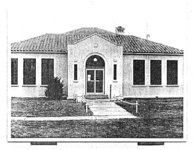
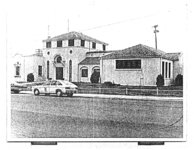
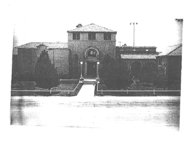
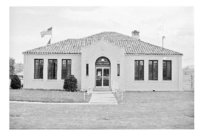
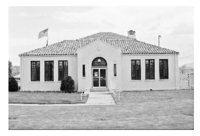
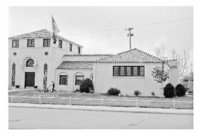
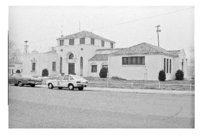
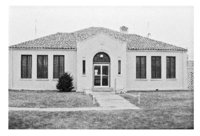
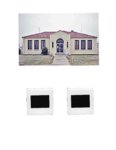
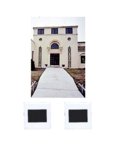
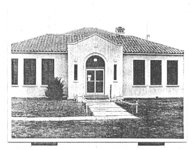
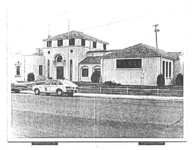
Show SEP 'o / <]98 UTAH PRESS ASSOCIATION Clipping Service (801) 328-8678 PROVO DAILY HERALD ~I\ ~~TCHINGS :i i I I ~I Contin.,ed from Cl al putchings said he put his !~ r cp1dren through school by sell/1 t jilg bird egg collections and fossils tu collectors and museums. With his skill as a taxidermist he preserved many native birds and animals. Utah's west desert and surrounding Western states yielded an extensive fossil collection of birds, fish, leaves, dinosaurs, horn corals, ferns, ammonites and crinoids. Dinosaur bones and a molar and portion of tusk from the woolly mammoth are there for visitors to see. He knew his stuff John was not a teacher, but he taught many Utahns about the state's history. He was not a geologist, but he probably knew more about the state's riches than any other Utahn. He was not an anthropologist, but he had an extraordinary knowledge of Native Americans and their lore. He wasn't a preacher, but generations of young men learned about his values in the five decades he worked in the Boy Scout program. As Hutchings' collection grew, it soon filled his home and outbuildings. He realized that if his family inherited the collection after his death, they would be forced to sell the best pieces to pay the inheritance taxes. In 1955 Hutchings, along with his wife Eunice and family, donated the entire collection to a non-profit museum corporation to be held in trust for the people of Lehi. 'T'hey specified that the board of directors was to be made up of four members of the Hutchings family and four residents of Lehi. Sterling Merrill, a son-in-law, is the current board president. Spurred by support from the Lions Club, local citizens and civic groups, a fund-raising campaign was successful in raising money to build a museum for the collection. It enabled the board to display a large por. tion of the collection, but much Sea of life: Coral is part of the extensive collection at the Hutchings Museum. of it still remained in storage. When Lehi City build a new city hall, the city turned over the Memorial Building to the museum. With the help of volunteer architects from Brigham Young University, the building was laid out to house the collection in six different areas. .' useum offers it all J ohn had an intense interest in history and a desire to preserve stories and artifacts for future generations. On display are primitive tools used to build log cabin homes, toys made for Pioneer children, and exquisite serving pieces and glassware carried across the ocean and across the plains by pioneers who settled Utah. Visitors can see candle snuffers, stagecoach footwarmers, school slates, stoves and early utensils His historical collection includes Porter Rockwell's saddle and rifl!'!, a saddle used by R.R. Moss, the only black man in Johnson's Army. Johnson was sent with his army contingent to Utah to control the Mormons. Brigham Young a llowed the army to march through Salt Lake City on the condition that it locate several miles from the city. Camp Floyd in Cedar Valley was the site, and at one time Camp Floyd was the largest settlement in the state. Historians report that the soldiers set up 13 mounds for their firing practice. The first, they said, was Brigham Young, and the other 12 the church apostles. Hutchings collected bullets, cannon balls, and many other items from old Camp Floyd. For years after Johnson's army was called back to fight in the Civil War, farmers in Cedar Va lley plowed up cannon balls, bullets and other items from the camp. One item of interest is the little hand-made silver gun used in the first murder a t Camp Floyd. After the gun was used to kill a soldier, it was thrown in a large well at the camp. Years later it was recovered by Ralph Smith, a Lehi landowner. It fired an odd-sized bullet, slightly larger than 38.5 caliber. Also in the gun collection is Butch Cassidy's rifle, damage( when he fell from a horse am repaired by Matt Warner, ~ member of Butch's gang Warner repaired the stock shortened the barrel, and usee part of a silver coin for thE sight. Guns from the Revolutionary War and Civil War are also on display. Utah's prehistoric inhabitants .are represented with fine collections from the Anazazi and Fremont cultures. Hutchings excavated a complete Indian pit house, but there wasn't room in the museum for it. Instead, a small replica has been created to demonstrate how the tribes lived. The Hutchings family has continued the collecting. Uniforms and other wartime artifacts are also on display from all the wars in which the United States has been involved, including Vietnam , Korean, World Wars I and II, and 'Desert Storm. Hutchings lived to be 88 years old, dying in 1977, eight years after the community built the first structure to house part · of his collection . |