| OCR Text |
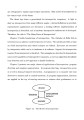
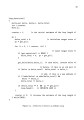
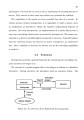
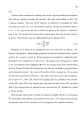
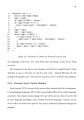
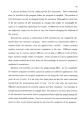
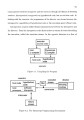
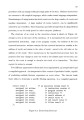
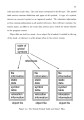
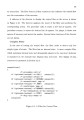
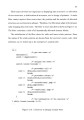
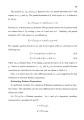
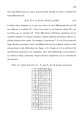
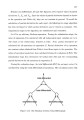
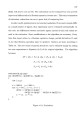
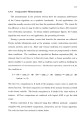
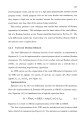
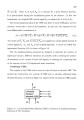
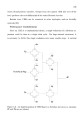
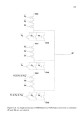
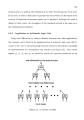
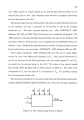
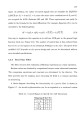
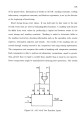
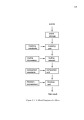
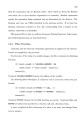
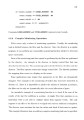
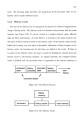
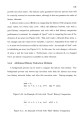
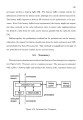
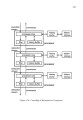
Show 122 dx and dy. Value Fx © Fy 0 Fxy is a constant for a given Boolean function. It is precalculated during the initialization phase by the director. In this new formulation, the original UBE control signal Fxy is replaced by Fx © Fy © Fxy. The second implementation of the UBE uses three 3-input NOR gates and two inverters, which take a total of 22 transistors. In this case, the equation for the total differential is transformed to: dF = dx -I- dy -f- Fy -j- dx -(- dy 4- Fx -t* dx -I- dy -}■ Fx © Fy © Fxy. (5.2) The values of Fx, Fy, and Fx © Fy © Fxy are supplied as control signals instead of control signals Fx, Fy, and Fxy in the original algorithm. A circuit in CMOS that implements Equation (5.2) is shown in Figure 5.3. The two implementations presented are designed to minimize the number of inputs and outputs. Different variations are possible, such as reducing the number of transistors at the expense of more I/O signals, or reducing the computing time at the expense of more I/O signals and more transistors. Combining UBEs The outputs of two UBEs can be used as a pair of inputs to another UBE. This enables the construction of a network of UBEs able to calculate arbitrarily large Boolean functions, as shown in Figure 5.4. Inputs of the bottommost UBEs supply i I dF universal ----------- Fx Boolean ----------- Fy element (UBE) ■*---------- Fxy i L i i dx dy Figure 5.1. A Universal Boolean Element (UBE) to Evaluate an Arbitrary Boolean Function of Two Variables |