| OCR Text |
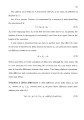
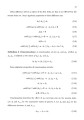
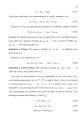
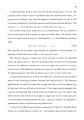
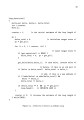
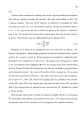
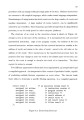
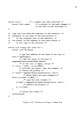
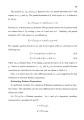
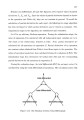
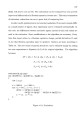
Show independent variables and proceeds to the top level operation of E. Equation (4.1) is evaluated for each operation. Because the initial value E(0) is calculated with independent variables set to 0, the total differential dx of an independent variable x is equal to its value, x = dx. The total differential dE(v) represents the difference between E(0), the initial value of expression E, and E(v). If dE(v) is equal to 0, then E(y) = E( 0), otherwise E(v) = E(0). The final value E(v) can thus be obtained by an Exclusive-OR between E (0) and dE(v)\ E(v) = E(Q)®dE(v). (4.5) The initialization stage is executed only once for each Boolean expression. After that the evaluation stage can be repeated for an arbitrary number of inputs. The three partial derivatives for each operation in expression E (Fx, Fy, and Fxy) are constant for any number of evaluation stages. They are three parameters in Equation (4.1) that specify the particular Boolean operation being evaluated. Any one of the sixteen types of Boolean operations can be specified by these partial derivatives and the initial value E( 0). 4.7.2 Description Using Equation (4.1) for the total differential, the implementation of the Unison algorithm is straightforward. It can be directly expressed in any programming language that supports bitwise Boolean operations. Using the symbol "A" to represent a Boolean AND operation and the symbol "®" to represent a Boolean Exclusive-OR operation, Equation (4.1) is expressed as: dF = (dx A Fx) © (dy A (Fy © (dx A Fxy))). (4.6) The values of Fx, Fy, and Fxy are precalculated for each Boolean operation of two input variables during the initialization stage. |