| OCR Text |
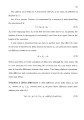
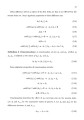
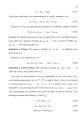
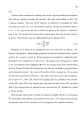
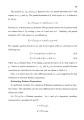
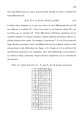
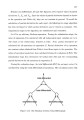
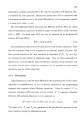
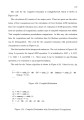
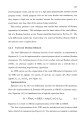
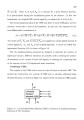
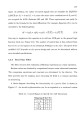
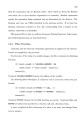
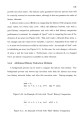
Show 98 Boolean operations in one clock cycle. In a practical application, the Unison algorithm performs with execution speed comparable to compiled evaluation while it retains the flexibility of an interpreted evaluation. 4.7.1 Background The new approach to evaluate Boolean expressions is based on the total differential of a Boolean function [41, 81]. The total differential is a part of the classical Boolean differential calculus theory. The theory has been applied in various areas of circuit design, including hazard and fault detection, Boolean function decomposition, and circuit synthesis [81]. This section describes a new application of the classical Boolean differential calculus theory to the evaluation of arbitrary Boolean expressions. A Boolean function is a mapping from one or more Boolean variables to a Boolean value. A Boolean operation denotes a binary Boolean function of two input variables. A Boolean expression denotes a combination of one or more nested Boolean operations applied to actual input values. Total Differential The total differential, dF, of a Boolean function F gives the difference in the function value as input values change. For a Boolean function F(x, y) of two input variables, x and y , the total differential is calculated from differences in input variables, dx and dy1 as: dF = Fxdx © Fydy 0 Fxydxdy. (4-1) Symbol © in Equation (4.1) represents an Exclusive-OR operation. The derivation of Equation (4.1) is presented in [81]. |