| OCR Text |
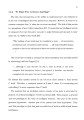
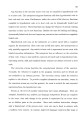
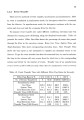
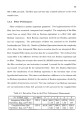
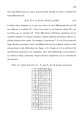
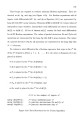
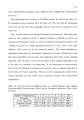
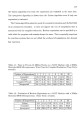
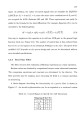
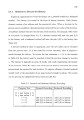
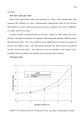
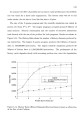
Show 460 to 630 //seconds. The filter pass rate has only a limited influence on the event transfer time. 4.4.3 Filter Performance Filter overhead is another important parameter. Two implementations of the filter have been measured: interpreted and compiled. The complexity of the filter varied from an empty filter with no Boolean expressions to a filter with eight Boolean expressions. Each Boolean expression involved one Boolean operation and one comparison. The performance of filters was measured on the Stanford benchmarks (see Table 4.3). Number of Boolean Expressions denotes the complexity of the filter. Row Interpreted Filter shows execution time for an interpreted filter. Row Compiled Filter shows execution time for a compiled filter. The overhead of an empty filter is the difference between the filter with zero Boolean expressions and no filter. Taking into account that around 81,400,000 instructions were executed, the filter overhead per one instruction is around 1 //second for the compiled filter and around 1.9 //second for the interpreted filter. Row One Boolean Expression shows the contribution of one Boolean expression to the execution time of one hypothetical instruction. This time is calculated as a difference to the column with no Boolean expressions, divided by the number of Boolean expressions, divided by the number of instructions executed. The time overhead of one Boolean expression per one instruction is from 0.21 //seconds to 0.27 //seconds for the compiled filter 83 Table 4.3. Execution Time in the Filter Performance Measurement Nr. of Bool. Exp. no filter 0 1 2 4 8 Interpreted Filter (Sec) One Bool. Exp. (10~6 Sec) 373.3 526.8 665.0 1.70 794.0 1.64 1078.9 1.70 1741.3 1.87 Compiled Filter (Sec) One Bool. Exp. (10-6 Sec) 373.3 451.6 468.7 0.21 488.8 0.23 529.5 0.24 618.0 0.27 |