| OCR Text |
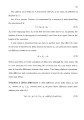
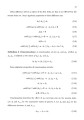
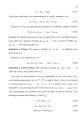
Show 2.2.3 In tro sp e c t ion Equations 2.19 and 2.20 formalize the intuitive notion that the monitoring of states is equivalent to the monitoring of steps. They provide a way to transform states to deltas and vice versa. The monitoring of states is called static monitoring. The executor is stopped and the director can examine the current state of the executor. The monitoring of deltas is called dynamic monitoring, since deltas are emitted dynamically during the execution. Without halting the executor, the director can obtain the information equivalent to information obtained in static monitoring by analyzing deltas. Although static and dynamic monitoring are theoretically equivalent, these two methods complement each other in practice. An advantage of static monitoring is the access to the entire state at each step. A disadvantage is large overhead in time, since the executor is halted after every step. An advantage of dynamic monitoring is an uninterrupted execution, since the executor is not stopped while deltas are emitted. Another advantage of dynamic monitoring is a small quantity of data to be analyzed at each step, since deltas describe changes to executor's state which cannot be large in one step. A disadvantage is that we may want to examine a part of the state that is not included in a delta. In that case, static monitoring must be used. For effective monitoring, it is thus desirable to provide both static and dynamic monitoring. Controlling means that the director can change the state of the executor. Controlling can be static or dynamic. Using static controlling, the director halts the executor before it starts to change the executor's state. In dynamic controlling, changes to the executor's state are performed dynamically during the execution. Dynamic controlling requires a multiprocessor system with a shared memory. Since the director can access the entire state of the executor, the data or the program of the executor can be changed by controlling. The executor has no 19 |