| OCR Text |
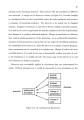
Show 1.2.1 Self-referential Systems Self-referential systems play a prominent role in the scientific heritage of twentieth century. They are the theme of two of the greatest intellectual achievements in this century. The first is the result of Godel [26] which shows that any fixed formal mathematical system is incomplete. A proof of this result involves a mathematical system that can express both propositions and metalevel propositions about the system. Metalevel propositions are propositions about propositions in this system. An extensive discussion of this result can be found in [33, 65]. Although Godel's result is negative, it is encouraging. It demonstrates that any formal system can be improved by adding new axioms to the system and that the ultimate truth in the sense of mathematical systems is impossible. Since computer programs can be viewed as formal systems, Godel's result in the realm of computer system can be loosely interpreted that any sufficiently complex system can be improved indefinitely. A sufficiently complex system is a system that is able of unsupervised learning in an unstructured environment. No such artificial systems exist today. This thesis presents the first step toward building artificial systems capable of unsupervised learning in an unstructured environment. The second result is the "halting theorem" by Turing [34, 85]. This result shows that a Turing machine cannot predict whether another Turing machine will halt or not. Since Turing machines are generic representatives of computer programs, it follows from this result that it is impossible to predict the complete behavior of a computer program just by analyzing its static program. A dynamic observation of an executing program thus reveals more about the program's behavior than it is available in its source code. 4 |