| OCR Text |
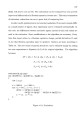
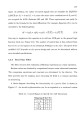
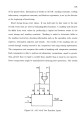
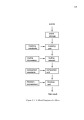
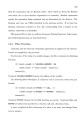
Show analyzing events, the interpreter includes a filter of events. The filter is set by the director and discards events that are not interesting for the director. Filters are discussed in Chapters 4 and 5. A useful feature of introspective computer is reverse execution. The analysis of events performed by the director takes time. By the time that the director finds an interesting event, the executor's state might already advance several states. Using reverse execution, the director can access past states of the executor. Reverse execution can be provided by recording the part of the execution stream containing the inverse trace. The inverse trace is recorded in a history stream. Details on the history stream are described in Section 5.4. 2.4 Examples Since the director can reason more powerfully about the executor than the executor itself, an introspective computer provides new capabilities not available in regular computers. This section demonstrates the power of introspective computer on a detection of an infinite loop and a resolution of a deadlock. 2.4.1 D e te c t in g A n Infinite L o op This section demonstrates a task of detecting an infinite loop that is impossible to achieve in a monolith system observing itself. De finition 6 (Infinite L o o p ) A process is in an infinite loop, if and only if two conditions are satisfied: • in a sequence o f execution states A$, A\, A 2, • • • there are two identical states: 3z, 3j, i < j : Ai = Aj, • none o f steps performed between states A{ and Aj is a Read operation. |