| OCR Text |
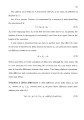
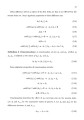
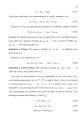
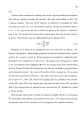
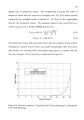
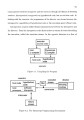
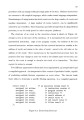
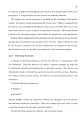
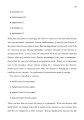
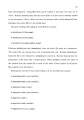
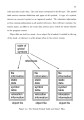
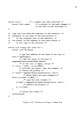
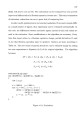
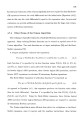
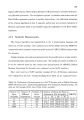
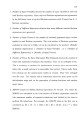
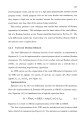
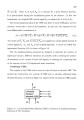
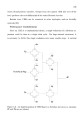
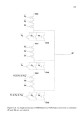
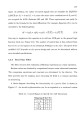
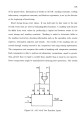
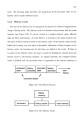
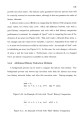
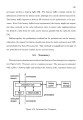
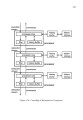
Show (wired program tools), and the use of a high speed programmable monitor (stored program tools). Stored program tools are the most flexible and satisfactory, but they impose a high cost on the monitor because the monitor must operate at a much faster rate than that of the system being monitored. This section presents a new technique that enables fast evaluation of Boolean expressions in hardware. This technique uses the same notion of the total differential of a Boolean function as the Unison algorithm described in Section 4.7. The total differential enables the construction of a universal boolean element which is the basis for more complex filters. 5.2.2 Universal Boolean Element The total differential of a Boolean function of two variables, as represented in Equation (4.1), can be implemented in a special purpose circuit to evaluate Boolean expressions. The building element of the circuit is called universal Boolean element (UBE). An arbitrary number of UBEs can be combined into a network that is capable of evaluating large Boolean expressions. An UBE carries out the computation of the total differential in Equation (4.1). An UBE uses six signals: two inputs, dx and dy, one output, dF, three control signals, Fx, Fy: and Fxy (see Figure 5.1). Implementation Equation (4.1) for the total differential includes two Exclusive-OR operations. Since the implementation of Exclusive-OR operation in CMOS is relatively expensive, Equation (4.1) is transformed into a logically equivalent form: dF = dxdyFy + dxdyFx + dxdy(Fx © Fy © Fxy). (5-1) Equation (5.1) leads to efficient implementations of the UBE in CMOS. The first implementation of the UBE uses five switches and two inverters which take a total of 14 transistors (see Figure 5.2). Two inverters are required to calculate 121 |