| OCR Text |
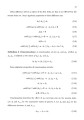
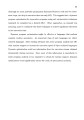
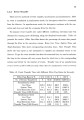
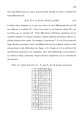
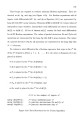
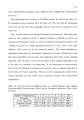
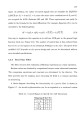
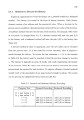
Show 4.4.2 Event Transfer There are two methods of event transfer, synchronous and asynchronous. After an event is transferred in synchronous mode, the interpreter waits for a command from the director. In asynchronous mode, the interpreter continues with the execution and does not wait for a response from the director. To measure event transfer rate under different conditions, execution time was obtained for varying rates of filtering using the Stanford benchmarks. Table 4.2 presents the results. Filter Pass Rate shows the percentage of events that passed through the filter in the execution stream. Rows User Time, System Time, and Total Execution Time show corresponding execution times. Row Transfer Time shows the time spent in the interpreter to transfer one thousand events to the director. To get the event transfer time from the measured time, we need to subtract the time in the column with zero events from the total time in the corresponding column and divide by the number of events. Transfer time of an asynchronous event is between 250 to 390 //seconds, while that of a synchronous event is between Table 4.2. Event Transfer Time with Different Filter Pass Rates (in Seconds) 82 Filter Pass Rate in % 0 % 0.01 % 1 % 100 % Nr. of Events Transferred 0 8140 813876 81387414 Asynchronous Mode User Time System Time Total Execution Time Transfer Time (1000 Events) 612.5 1.6 614.1 613.0 4.3 617.3 0.39 680.7 245.4 926.1 0.38 3153.4 18047.6 21201.0 0.25 Synchronous Mode User Time System Time Total Execution Time Transfer Time (1000 Events) 612.5 1.6 614.1 614.1 5.1 619.2 0.63 706.6 320.3 1026.9 0.51 4243.5 33885.7 38129.2 0.46 |