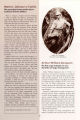
| OCR Text |
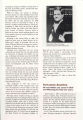
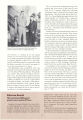
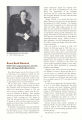
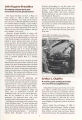
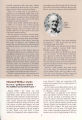
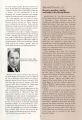
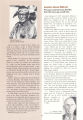
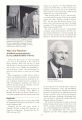
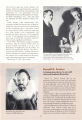
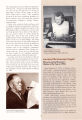
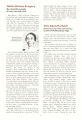
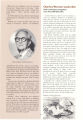
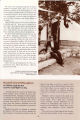
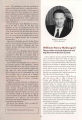
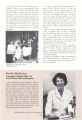
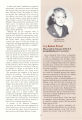
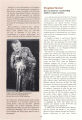
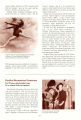
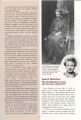
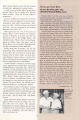
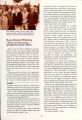
Show reporter Helen Forsberg in 1978, Virginia noted that her husband " gave up his career and has devoted.. . his life to me and my career. ' ' Virginia Tanner conducted workshops and lec-tured extensively on children's dance, and the Virginia Tanner found freedom and creativity in dance. Courtesy Special Collections, Marriott Library, University of Utah. CDT presented numerous exhibitions for teachers, students, and the general public. A performance highlight for the CDT came in 1962 when 35 of Tanner's students, ages 8 to 18, presented five concerts at the Seattle World's Fair. By the mid- 1960s the CDT enrollment totaled more than 600 students in 60 classes. During her long association with the University of Utah, Tanner helped to form the Repertory Dance Theatre ( RDT), a major modern dance company in the state, and her efforts also resulted in several Rockefeller Foundation grants to the university's dance department, the first ever awarded to a college dance program. In 1970 the CDT performed in Washington, D. C., for the White House Conference on Children. That same year, Tanner responded to a call from the National Endowment for the Arts to direct a pilot program for children's dance. This NEA- funded project consisted of four- week sem-inars in school districts in five states- Penn-sylvania, Alabama, Ohio, Oregon, and California. John Kerr, NEA director of education, called Tanner the nation's " outstanding children's dance teacher," noting that " she combines the tech-niques and training of the professional dancer with a marvelous and rare understanding of how to teach and inspire children. ' ' Virginia Tanner died on May 20, 1979, follow-ing a long illness. Her work with children lives on in the Virginia Tanner Creative Dance Program at the University of Utah which reaches hundreds of students from as young as two and a half years of age ( accompanied by a parent) to age 18 using methods pioneered by the program's founder in 1 949. Kuniko Muramatsu Terasawa For 52 years she handset type for a unique Utah newspaper. When Kuniko Muramatsu Terasawa died in Salt Lake City on August 2, 199 1, the career of a dis-tinguished newspaperwoman and one of the most active senior citizens in Utah came to a close. Her death at age 95 also marked the end of the Issei ( first- generation Japanese American) era in Utah. For 52 years, working up until the day before her death, Terasawa handset metal type bearing Japanese characters into forms for printing The Utah Nippo, a Japanese- language newspaper founded by her husband. Born on July 8, 1896, in Iida City, Naganoken, Japan, a daughter of Kintaro and Yoshi Muramat- Kuniko Terasa wa receiving one of her many awards. su, Kuniko Murainatsu marr~ edU neo Terasawa In 1921. The couple raised two daughters, Kazuko and Haruko Moryashu. The first issue of The Utah N~ ppo appeared in Salt Lake City In 1914 under her husband's d~ rec-tlon After h ~ sde ath in 1939 she carried on as reporter, editor, typesetter, and publisher. Follow ing the bombing of Pearl Harbor, the federal government forbade the publ~ shing of Japanese-language newspapers, but The Utah N~ ppo soon resumed clrculat~ on with government approval because the U S. wanted Japanese Americans to receive accurate information on official polic~ es regarding relocation, curfews, and other wartime news. In addition to publishing a newspaper, Terasawa oncerned herself with the welfare of others, espe- I c~ allyth e non- English- speakrng Issels. Noted for her " unpretentious w~ sdom and knowledge," she was sought out by vrs~ tors from Japan and con-sulted by a long line of Japanese consuls general stationed In San Francisco. Terasawa recelved both national and interna-tional recognit~ on. M atsumoto City commissioned Kamisaka Fuyoko, Japan's foremost woman au-thor, to wrlte a biography and a televis~ ons cript on the Utah publisher. As a result, Terasawa became " so famous rn Japan that her death was out in Japan's newspapers even before SL's obituary," Alice Kasai, a h~ storian of Utah's Japanese Amerlcan community, wrote. Leora Thatcher, costun As an exceptionally active senior citizen, above for her role as Ada Terasawa became a role model for others and was Lester in Tobacco Road. featured In Modern Matunty magazine, a publ~ ca- Courtesy Special Collections, tion of the American Associat~ on of Retrred Per- University of Utah, and Linda Thatcher. rF) sons ( AARP), and on the magazine's TV program. 4- When Terasawa received Japan's Order of the 1 Sacred Treasure, " Zuihosho- 5th Class," in LeOra Thatcher 1968, Judge Raymond Uno presented her with the jewel- studded medal at a celebration attended by This noted Broadway actress I many Utah dignitaries, including Calvin L. Ramp- a's0 starred On radio and TV(- ton who was then governor. The Salt Lake Chapter of the Japanese American Citizens League honored Terasawa in 1985 as the oldest contr~ butorto the local chapter. In 1987 the Avon Jose1 Bunks Center In Japan a~ arded her " M~ llion Yen" for her strong sense of mission and indomitable spirit in accompl~ sh~ nag g reat under-taklng. She contributed thls award to a scholarsh~ p fund at the University of Utah. " She was a typically proud Issei that never bel~ eved In welfare or handouts," Kasai wrote, " but.. . [ she was] sensitive to.. . mundane prob-ms .... a nd for a 95 year old who never v~ s~ tead ctor during her Iifet~ me, she has certainly earned her rest and a peace in Buddha's Nrrvana. " 1 , I! I1 ' I I Leora Thatcher was born May 12, 1894, in Logan, Utah, to Sarah Catherine Hoplans and Moses Thatcher, Jr. She attended Brigham Young tollege, Utah State Agricultural College ( USAC), and the university of utah where she studied iheatre and speech under Maud May Babcock, . graduating in 1921, She belonged to the pocieties at both Brigham Young College and ; USAC. After graduation she taught speech at LOgan High for two years. In 1923 she was invited to join the Moroni Olsen Players, a repertory touring company that gave theatrical starts to many young actors Including |