| OCR Text |
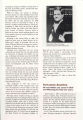
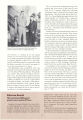
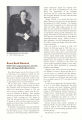
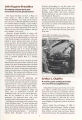
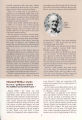
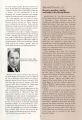
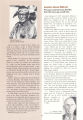
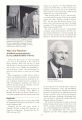
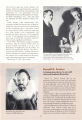
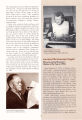
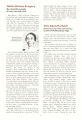
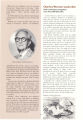
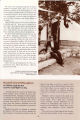
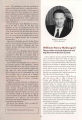
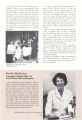
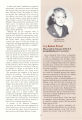
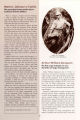
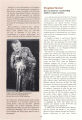
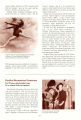
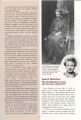
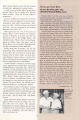
Show Nettie Grimes Gregory She cared about people of every race and creed. Born August 5, 1890, in Jackson, Tennessee, to Fosh Elliott and Ann Elizabeth Copeland Grimes, Nettie was a teacher and an accomplished musi-cian who had never ventured outside her native state until her marriage in 1914 to William Gregory. Also a native Tennessean, he had taken up permanent residence in Salt Lake City in 1913 as a railroad employee and had wooed Nettie by mail. The couple had two sons and two daughters. Nettie Gregory devo fed her life to helping others. Nettie Gregory quickly adapted to life in Utah and sought to make herself useful to the communi-ty. She was especially concerned about the lack of wholesome recreation for young people living on the city's west side. She and her husband began some activities at the Calvary Baptist Church but found that the number of young people wanting to participate exceeded the capacity of the church's facilities. The answer was obvious to the Gregorys. Their neighborhood needed its own building with adequate space for a variety of com-munity activities, including weddings, socials, and youth programs. William Gregory donated a small parcel of land, and according to Deseret News reporter Rose Mary Pederson, Nettie Gregory " recruited black women belonging to the Salt Lake Community Club and the Nimble Thimble Club to act as leaders in the fund- raising drive. " They held dinners, bake sales, and bazaars. In 1959 construction of the first civic building in Salt Lake City built by African Americans began. The project required 5 years to complete, but the idea had been in Nettie's heart for almost 20 years. At the building's dedication in November 1964 Gov. George D. Clyde was among the dignitaries present. Los Angeles educator James Laster spoke on the need to improve neighborhoods everywhere and for a larger " community of parents" to sup-port and guide children. Although Nettie had died of a stroke on July 6, 1964, those preparing to use the building recog-nized her by naming the new structure at 742 West South Temple the Nettie Gregory Center. The needs of African American youth had spurred the drive to build it, but the Gregorys always envi-sioned it as a place where people of all races and creeds would be welcome. In the words of William Gregory: " My wife and I always felt that there should be complete equality there. . . we wanted the center to serve everyone. ' ' Otto Abels Harbach He became one of the most famous lyricists of the Broadway stage. Music came into Otto Harbach's life at an early age. One of his first memories was of his mother's singing. Later, when his brothers started a small orchestra, he learned to play his father's violin and joined them. He was born in Salt Lake City on August 18, 1873, to Danish immigrant parents Adolph Hauer-bach and Sena Olsen. ( As a young man Otto dropped the u and e from his surname to " simplify matters. ") He studied at the Salt Lake Collegiate Institute ( Westminster College), where one of his classmates was the future actress Maude Adams. Encouraged by the institute principal to enroll in Knox College in Galesburg, Illinois, Harbach secured his train fare by agreeing to chaperone a shipment of sheep to Omaha. Following that adventure he had to throw away his suit because it had become " too sheepish," he said. His associa-tion with livestock was not over, however, for he tended farm animals to earn board and room. After graduating from Knox in 1895 Harbach taught at Whitman College in Walla Walla, Wash-ington, while earning a master's degree from Knox. In 1901 he moved to New York to attend Columbia University. He wanted to become a col-lege English professor, but when eye problems interfered with the required heavy reading he began a career in advertising. He also started to write plays. " No honest effort is wasted, " he said, recalling the eight years he spent working on a play that was never produced but which led to his first job- rewriting a play for a Broadway producer. From 1907 through 1936 Harbach wrote some 40 musicals, including No! No! Nanette, Rose Marie, and Desert Song. He also wrote 7 plays without music, including the popular farce Up in Mabel's Room. Leading composers of the day- Rudolf Friml , Vincent Youmans, Jerome Kern, Sigmund Romberg, and others- set Har-bach's lyrics to music. Among the more than ' iarbach wi avorit Smoke Gets in Y; , cry popular Harbach songs includc , ittle Closer," " Who," and the 1 9 ,; rTf;~$ f$";- Ytb%*: ; T* PjiJ ? *,* . V " % ~ . b ~ - 1 ; > ' ? In 1918 Harbach married Eloise Smith Dougal tf Salt Lake City. They had two sons, William an( lobert Harbach was a charte iernbe locietv of Camuosers. Authorr sis persona yes," ' the Cuddle Up ; lndian Lov~ Harbach, enthusiasm ~ ptimism : emed never to \ le, kept abreast of changing lstes in musicals, specially the trend toward a lore solid story lil with music an integral part oi ie plot. While others were grimly announcing that ie heyday of musical cpmedy was past, Harbach 2w new opportunities for playwrights and com-osers in the American public's changing tastes. : e died January 24, 1963, at age 89. Charles Warner Lockerbie Utah's bird man recognized more than 300 bird calls. Charles Warner Lockerbie was born January 7, 1879, near Mankato, Minnesota, to William and Belle Garrett Lockerbie. At age eleven he moved with his mother and sister to Salt Lake City to live with his maternal grandparents. Growing up near the Jordan River he developed an intense interest in its wildlife, especially birds. He earned a living first as a commercial photographer and later traveled widely as an expert wool buyer, but birds remained the center of his life. His formal education ended with the eighth grade; however, he continued to learn throughout his life. A Salt Lake Tribune reporter quoted him in a 1956 article as saying, " My wife has gone without new dresses just so we could have more books on birds." Most of these books- as well as his extensive field notes on birds- he later donated to the University of Utah. The depth of his study and field experience made him sought after by pro-fessional ornithologists from all parts of the United States, graduate students, and ordinary bird lovers. He wrote many articles on birds and min-eralogy, another area of expertise. In 1927 Lockerbie began to spend several after-noons or sometimes full days in the field each week. He systematically recorded what he saw in a small notebook. At the time of his death his notebooks contained some 40,000 entries and con-stituted what William H. Behle called, " an outstanding record of the kinds of birds occurring if^ the western United States, especially Utah.. . . their relative abundance, the habitats oc-cupied by the various species and the dates of ar-rival and departure of the migratory forms.'' Lockerbie was a charter member of the Utah Audubon Society, served four terms as its presi-dent, and in the 1950s was given the title of honorary president. He participated in more than 200 UAS field trips in addition to the countless ex-cursions he and his wife made to all parts of Utah. He often escorted visitors to local birding areas. Seagulls on Great Salt Lake. |