| OCR Text |
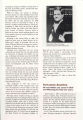
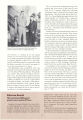
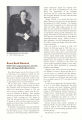
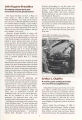
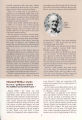
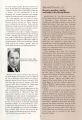
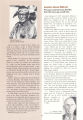
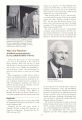
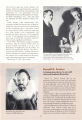
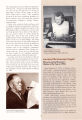
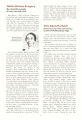
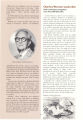
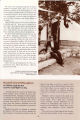
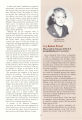
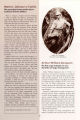
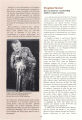
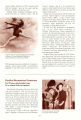
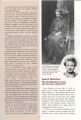
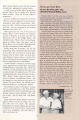
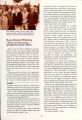
Show though virtually unknown, make the U. S. Olympic team. Some athletes trained on the ship that took them to Europe, but Richards felt that his event was not suited to shipboard practice so he just relaxed. He began intensive training in Antwerp, where the team had a layover, and continued to train until his event was called. During the competition, as the bar was moved higher, Richards required the fhll three attempts allowed to clear 6' 1 ", 6' 2", and 6' 3". When the bar was moved up to 6' 4", he later told an au-dience in Provo, he felt discouraged and chilled. But, he continued, " Then I thought of the B. Y. U., Utah and my friends there, and the old United States and made the spurt- and chill and all went over the bar in the first attempt." Richards excelled at many track and field events- including the broad jump, pole vault, shot put, discus, and the 100 and 400 meter races- and competed until 1932. During his career he set 55 records. Besides his Olympic feat, other major a-chievements included decathlon champion at the National AAU meet in San Francisco in 1915 and high point honors at the Inter- Allied World Games in Paris in 1919. Born in Parowan, Utah, on February 20, 1890, to Morgan and Margaret Adams Richards, Alma Richards attended Murdock Academy and BYU, graduated from Cornell University, and received a law degree from the University of Southern California. He served as a lieutenant in the U. S. Army during World War I. Although admitted to the California Bar, he elected to teach school rather than practice law. He died in Long Beach, California, on April 3, 1963, survived by his wif~ Lenore Griffin, a son, and three daughters. Harold Wallace Ross The founder of The New Yorker grew up in Salt Lake City. Harold Ross, creator and editor of America's most sophisticated magazine, The New Yorker, was known for his strong personality and his un-sophisticated dress and manners. Some claimed that Ross was a literary hoax, because a man who looked and acted like Harold Ross could not be the editor of America's smartest magazine. Ross was born November 6, 1892, to George and Ida Ross in Aspen, Colorado, where his father was involved in mining. When Harold was seven years old his family moved to Salt Lake City. As a freshman at West High School he worked on the school newspaper, the Red and Black. There he became acquainted with the artist John Held, Jr., who was later to become famous for his caricatures that defined the Jazz Age. While still a teenager Ross started hanging around the offices of the Telegram and Tribune. Eventually he was given a part- time job running errands for the Tel-egram's sports editor. Ross, who did not get along with his father, fre-quently ran away from home. He dropped out of high school after his freshman year to work full time for the Tribune. In the summer of 1910, at the age of 18, he left Salt Lake City, " riding the rails" and working as a " tramp reporter" for newspapers across the country. He started working for the Sacramento Union in I91 I , journeyed to Panama City, and then moved on to New Orleans and Atlanta. In 1916 he was back on the West Regiment of & my Engine France where he worked on t the newspaper of the American Expeditionary Force in World War I. When the war ended Ross settled in New York City and tried to revlve the Stars and Stripes in a publ~ cation called the Home Sector Magazine, but it was unsuccessful. He then edited the American Legion Weekly for two years ( 1921- 23) whlch was followed by a job with Judge, a humor magazine. Then he got the idea to start his own magazine. The New Yorker was conce~ ved by a group of wrlters that Ross ? ocialized with called the Thanatopsis Literary and Inside Straight Club. Th~ sg roup had or~ g~ nallmye t in Nini's, a Paris cafe, and moved to the Algonquln Hotel in New York City after the war. Most were former members of the Star and Stripes staff. Among them was a nonjournalist, Raoul Fleischrnann, one of the heirs to the Fleischmann yeast fortune. He advanced the money for the first issue of The New Yorker which appeared February 19, 1925.8wq<$ q b& kk && v$~ Fleischmann had resigned himself to losing#$%.# money on the venture, but because of the quality of $$ f& the magazine, advertisers supported it. The ~ e w & f % ! j\ Yorker was noted for its features such as " Talk of k.@~ hq% i $ the Town" and " Profiles" and for excellent$$$$ wr~ tersli ke Dorothy Parker and James Thurber. """ Ross died December 6, 1951, after an operation FR3s , b+; . on his lungs. He was survived by his wife Ariane@&;& B Allen whom he had married in 1940 and his daughter Patricia. |