| OCR Text |
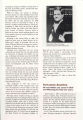
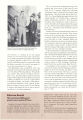
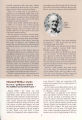
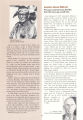
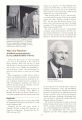
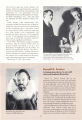
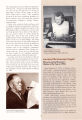
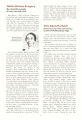
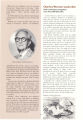
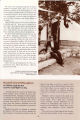
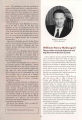
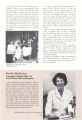
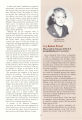
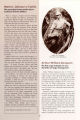
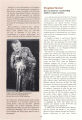
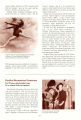
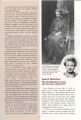
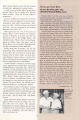
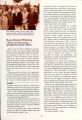
Show Sampson and James T. Jardine, the first director of the Forest Service's Office of Grazing Studies, created in 1910. They include using the kind of livestock best adapted to the range, grazing proper numbers, grazing in proper season, and good distribution of livestock. Sampson was born in Nebraska on March 27, 1884. He studied botany and plant ecology at the University of Nebraska, receiving a B. S. degree in 1906 and an M. A. degree in 1907. He then joined the Forest Service as a plant ecologist and began research on overgrazing in the Blue Mountains of Oregon. His observations were keen and led to the first of his more than 200 scientific publications just one year after he joined the Forest Service. In 1912, at Jardine's request, Sampson became the first director of the Utah Experiment Station, soon renamed the Great Basin Experiment Station. Located in the Manti National Forest near Ephraim, it was the beginning of what today is the Intermountain Research Station headquartered in Ogden. Devastating spring floods, year- around erosion, and periodic mudflows that damaged or destroyed communities and ruined lands had plagued the West for decades. Sampson's mission was to study the relationship between these disasters and overgrazing. He built several exclosures in Ephraim Canyon and adjacent drainages on the east side of the Wasatch Plateau. Log fences kept domestic livestock and most wildlife off these areas so that Sampson and two generations of scientists after him could study what happens to soil and plants when there is no grazing. From these exclosures scientists have access today to some 80 years of accumulated data. Sampson's studies covered three broad areas: production of maximum forage through artificial and natural reseeding; utilization of forests by live-stock without undue damage to plant reproduction and watershed conditions; and securing the greatest grazing efficiency per unit, including her-ding methods, water development, and poisonous plant studies. Sammy, as he was called, was almost as avid a sportsman as he was a scientist. In college he trained as a wrestler and long- distance runner. As a graduate student he had the weekly job of hiking seven miles, including a 3,000- foot elevation gain, up a mountain to change the record sheet on temperature recording instruments, and he once broke a record for sprinting to the summit of Pikes Peak. In Utah he boxed under the name " The Utah Kid." Later, he pitched horseshoes with his students at UC Berkeley. Sampson headed the Great Basin Station until 1922. During those years he also completed a doc-toral degree at George Washington University in 1917. In 1922 he left the Forest Service to teach at the University of California at Berkeley where he started the first range management courses and wrote four textbooks. Range and Pasture Man-agement ( 1923) earned him the title " father of range management" because it was the first com-prehensive text on that subject. During his long and distinguished scientific career Sampson received many awards from forestry, range, and ecological organizations. He retired in 1951 but continued his research. He died in 1967. Mattie Clark Sanford This distinguished teacher and photographer had a zest for living. At age 10 Mattie Clark wanted to leave school to become a photographer. Instead she remained in school much of her life as both a student, receiving a master's degree in zoology at age 59, and as a teacher for 45 years, retiring in 1944. Born October 30, 1878, in Salt Lake City to Lorenzo Southwell and Mary Rachel Wagstaff Clark, she attended local schools, married Frederick Charles Sanford, and raised three daughters and a son. In about 1910 Mattie Clark Sanford bought her first camera, mostly to record family activities, but her childhood fascination with the medium returned and blossomed into an avocation that would bring her local, national, and even interna-tional recognition. In 1935 she began shooting color film and used her photographs to illustrate nature study classes in the public schools. When stereo cameras became available she bought one and became an expert in the field of three- dimensional photogra-phy. The Photographic Society of America ( PSA) named her the top woman in the world in stereo photography in 1960. At its international conven-tion in Montreal, Canada, in 1964 the PSA named her a Fellow in honor of " her excellence in color and stereo photography and for her many contribu-tions to the advancement of amateur photography by teaching, lecturing, and organizational work for more than 25 years. " Sanford gave some practical advice to aspiring photographers in 1964: " Put your camera on a tripod, compose the picture just right, then keep shooting until you get it just the way you want it. It may take a lot of film- but it's worth it!" Virginia Tanner She was America's outstanding children's dance teacher. As a child growing up in Salt Lake City, Virginia Tanner loved music and movement, but the formal structure of ballet inhibited her. With her father's encouragement she danced freestyle- wearing black bloomers made by her mother- on the lawn outside the family home. The freedom to explore a child's love of movement and fantasy was followed by intensive training. This background, plus an ex-ceptional ability to communicate the joy of dance, made her the most celebrated teacher of children's dance of her time. A daughter of Henry S. and Clarice Thatcher Tanner, Virginia was born on April 25, 19 15, in Salt Lake City. She graduated from West High School and the University of Utah and also studied dance with a number of famous teachers, including Doris Humphrey of the Humphrey- Weidman School of Dance in New York. Her interest in choreography and teaching de-veloped early. During her school days she com-posed works that were performed at West High. While still a dance student in New York, she taught some of Doris Humphrey's classes at Temple Uni-versity and Bryn Mawr when the Humphrey- Weidman company was on tour. Virginia re-membered spending as little as 25 cents a day for food in New York while studying and teaching, an amount that allowed her to buy a bowl of oatmeal, an apple, and two carrots. During the 1940s Miss Virginia, as her students called her, directed the dance department of the McCune School of Music and Art in Salt Lake City. Then in 1949 she organized the Children's Dance Theatre ( CDT) , which became permanently affiliated with the University of Utah. The CDT presented its first formal concert at Kingsbury Hall on the U. campus. Doris Humphrey, who was in the audience, impressed by what she had seen, worked to secure invitations for the CDT to per-form in the East. In 1953 the children danced at the Jacob's Pillow Dance Theatre in Massa-chusetts, the American Dance Festival in Connec-ticut, and New York University's summer camp in upstate New York. Famous dancers and dance crit-ics applauded the CDT, and Tanner and her students were featured in Life, Newsweek, and Dance magazines and on national TV. In 1950 Tanner married Robert Bruce Bennett, and they became the parents of two children, Meriam ( Ginger) Bennett Zaccardi and Steven C. Bennett. Interviewed by Salt Lake Tribune |