| OCR Text |
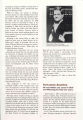
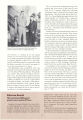
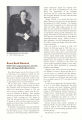
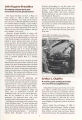
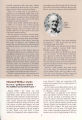
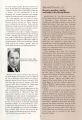
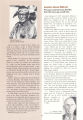
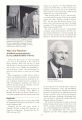
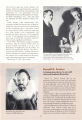
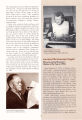
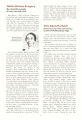
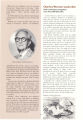
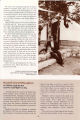
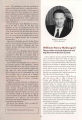
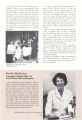
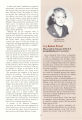
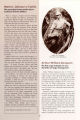
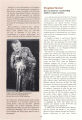
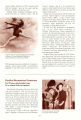
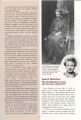
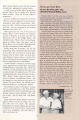
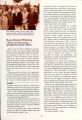
Show John Eugene Broaddus Developing national parks and monuments was his special interest. John Eugene Broaddus was born in Plano, 11- linois, January 17, 1882, to Henry Arthur and Viola Hail Broaddus. As a young man he came to Salt Lake City in 1900 and apprenticed himself to the Columbia Optical Company. A quick student, he learned the profession of making glass lenses and was soon a leading optometrist in the state. In 1906 he married Clara Louise Deighton, and they had a daughter, Viola Louise. Optometry brought Broaddus in contact with photography and the scenic wonders of Utah. As early as 1916 he was publicizing Bryce Canyon and Cedar Breaks through word and picture. His work helped to secure national park status for Bryce Canyon and Zion. He also helped to publicize the Kamas- Mirror Lake road which opened the beauty of the previously remote Uinta Mountains to visitors. Working with E. P. Pectol, Broaddus took photographs and prepared brochures for the Wayne Wonderland Club, a group of Wayne Coun-ty boosters who encouraged the federal govern-ment to establish Capitol Reef as a national monument. In 1935 Broaddus served as a member the Utah State Museum Association which, under the spon-sorship of the State Planning Board and with funds from the Utah Emergency Relief Administration, conducted an extensive archaeological and paleon-tological reconnaissance of southern Utah and the Uinta Basin. The geology and wildflowers of his adopted state also intrigued him, and he became a popular lecturer on those topics. Through his work in publicizing and photographing Utah's scenery Broaddus became a close associate and fellow adventurer of Antarctic explorer Russell G. Frazier, author Charles Kelly, and Deseret News writer Harold " Hack" Miller. In July 1937 Broaddus joined the Deseret News expedition to run the treacherous Yampa and Green rivers in northwestern Colorado and northeastern Utah. He served as official photogra-pher for the expedition as well as its chief spokesman. He publicized these wild rivers through a special radio program aired by KSL. Recalling the scenic beauty of the canyons of the Yampa, Broaddus stated: " No artist can paint and no word artist can possibly convey to the intel-ligence of the human mind the beauty and the maj-esty of what nature has given to Utah in the way of color in her deep canyon gorges.. . . " According to Charles Kelly, Broaddus " was the first en-thusiastic photographer to visit the region, and spent much time and effort in publicizing its scenic wonders." Chiefly through the joint efforts of Broaddus, Kelly, Miller, and Frazier, Dinosaur National Monument was later enlarged by Presi-dent Franklin D. Roosevelt. Broaddus was a charter member of the Salt Lake Kiwanis Club and assisted club efforts to provide recreational facilities for underprivileged boys. He also served as a member of the Utah State Fish and Game Commission. He died in Salt Lake City April 16, 1954, at the age of 72, one of the oldest licensed optometrists in the state. Left to right: Hack Miller, Henry Millecam Charles Kelly, and John Broaddus in Yampa Canyon. USHS collections. Arthur 1. Chaffin A road to scenic southeastern Utah was one of his accomplishments. Although Glen Canyon gold mining was his first love, Arthur L. Chaffin made impressive contribu-tions to his native state as a road builder and ferry operator as well as a boatman and Indian trader. His construction of a road from Hanksville to Hite, which he then linked in 1946 with the road to Blanding by building the Hite ferry, opened up the scenic delights of southeastern Utah to automotive tourism. Born in Cedar City on February 13, 1884, to Maria Jane Wade and George E. Chaffin, he began his mining career at agc 12 whcn hc joincd two older brothers on their claim just below Hansen Creek in Glen Canyon. He undoubtedly learned his rlverDanK engineering s~ i11sIr om mem, naullng heavy equlpnient up and down the river in various ~ mprov~ semdo tor and current- powered boats. While st111 a young man he was hired as a watchman at the abandoned dredge built In the 1890s In Glen Canyon by Robert Brewster Stanton. Chaftin opened a tradlng post there and dealt with Navajo Indlans. He not only survlved In this lonely and dangerous spot but prospered Chaffin's home at Hite, which he built In tne ear-ly 1930s. was a famous oaslr of fruit trees and melons that hot, weary travelers welcomed Its ~ solatlon, though, kept most vlsitors away, and Chaffin sought ways to open up that scenic corner g- e; z11717 of San Juan County to tourism. ,*,$ &%& H~ tew as named for Cass Hite, an earlier miner , s +,,$<* who had learned ot a convenient crossing of the Colorado R~ vera t that pomt from Navajo Indlans. & F*$* k:? zL2Tz, T he Dandy Cross~ nga, s H~ teca lled it, served the clenecd > reel, arrin rerry DC ," g&@ pack trams of explorers and cattlemen well I Scptc~ nbcr 17. ,146 It saw hee ., - ,- --. ... 0 :+$: enough, but even with a boat it was an inconvenient e UI anluln boom of the 1950s. ,*. 4 1, * Ty< ; &,;&? crosslng for tourlsts and impossible for automo- In 1948 Challin, nho had been marrled before ,>,+"'; , . 9 blles and had a clciughter. marlled Della Taylor L> ; a%',+? , Automotive access to Glen Canyon began in Hlclundn, a w~ do\ v cwth fi\ c daughter\ 5$. f. 2*?% 1932 when Chatfin borrowed a bulldozer from the A c l o ~ ~ of dd oom hung ovcr the f llte ferry durlng $: g2.- f ,- , * Utah Hlghway Department and carved out a road 11105t of 11s histor), for the Ru~ eau ot Rccl~ ima- ~ nfamous for 11s curves down North Wash to link tlon's dec151on to bu~ ld the Glen Canyon L) am Hanhsville and Hlte. Then ~ n 1945 state funds meant thd the c~ inyon would he tloodcd ktr above ~ ~ y bccamc avallablc to cxtcnd thc road from Hite to H~ teC hdllin loug'nt ~ nt he 1960s lo1 colnpensatlon & PA?-. ++ Blanding. For the first time, Wayne, Garfield, and ison1 ~ h ctc dcral go~ ern~ nertrotr 111s Glen Can~ on San Juan count~ esw ere llnked by an automob~ le p~ opert~ ehaut had to wttle for what he 1- cg'irded as &+ road- U- 95. Thls was not Chaffin's first road ven- far les4 th'tn the11 true worth ; 2R# ture Dur~ ng1 922- 26, whlle serving on the Waync On June 5, 1964, Chaffin's fell) made 11s l,~ st County Commission, he was instrumental ~ n secur- , run As the nates5 of Lake Powell slowly closed Ing a number of road Improvements In the area. " \ ,- OLCI h15 dr~! cn< h, onle. '~ ndf e r ~ at H~ ted colol- Chaftin's engineering sk~ llsc ame into play as he , ful 35- je, 11 cr, l In the h~ itorlo l Glen Canyon and mmered together a ferry capable of tloat~ ng ' soutlica\ terrt Utah cndcd Chaffind~ ecl In 1979 * \ d 11 I, Edward Wilbur Clyde He was a " guiding forcebehind the $ 2 billion Central Utah Proiect." Edward Wilbur " Ed" Clyde was born November 23, 19 17, in Heber City to L. Dean and ~ Ardell Buhler Clyde. He was raised with a com-prehension of the importance of land and water in semiarid Utah that a son of a farmer ( and later a cattle rancher himself) fully understands. He graduated from Brigham Young University in 1939 with a degree in speech and economics and from the University of Utah where in 1942 he earned his law degree and was honored as the top student in his class. Within a few years Clyde, a distant relative of a distinguished water engineer and gov- . rowerea e ferry and nufactured ernor, George D. Clyde, was recognized in Utah and the Intermountain West as a legal authority on natural resources. In 1941 Clyde married Betha ( Betty) Jensen, and they became the parents of four children: Steven E., Thomas E., Carolyn, and Susan. In 1949 Clyde was appointed to the National Rivers and Harbors Advisory Group to aid Con-gress and the president in developing laws to govern the nation's waterways and harbors. Short-ly after this the Utah attorney general appointed him as a special assistant attorney general to help with the colnplex legal negotiations for the Upper Colorado River Compact. His quick legal mind assured Utah of its fair share of Colorado Rivcr water. As these negotiations progressed Clyde also became involved in the legal planning for the Cen- |