| OCR Text |
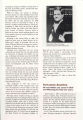
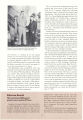
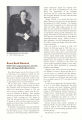
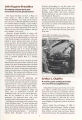
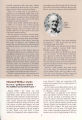
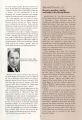
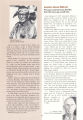
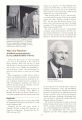
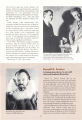
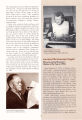
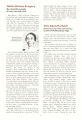
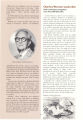
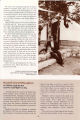
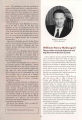
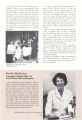
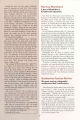
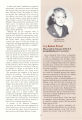
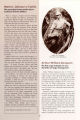
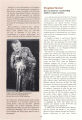
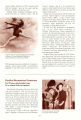
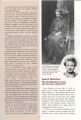
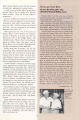
Show Maria L. Salazar y Trujillo She opened her home and her heart to dozens of foster children. Maria L. Salazar y Trujillo was born February 7, 1902, in Cebolla, New Mexico, to Katarino and Anna Maria Riberio Trujillo. On September 14, 1926, she married Jose Tobias Salazar. They even-tually made Salt Lake City therr home. After raising her own family, Salazar devoted her life to caring for numerous foster children brought to her by Catholic Charities of Salt Lake City. When interviewed by the Salt Lake Tribune in 1970, this active and concerned widow had mothered 91 chlldren since the early 1950s and was at that time caring for four foster children ranglng from 14 months to 17 years of age. On one occasion she undertook the care of a set of triplets. Over the years Salazar helped to recruit other foster mothers and accepted into her home children with behavioral problems and those hostile toward adults. " In two or three weeks though," she told a Tr~ bune reporter, " they usu-ally decide it is more fun to act like a member of the family. " Salazar's house was " always full of children," a daughter- in- law recalled in an article in the Inter-mountam Catholic. " She would have five or six cribs set up at one time. She was just very gen-erous." A friend, Florence Garcia said that Salazar took an interest in everyone. " Her home became their home," she added, and " she saw their needs even before they did sometimes. " Salazar cared for all kinds of people, adults as well as children, even when she was not feeling well. According to Garcia, she was always " cooking something or baking something for somebody. I think that gave her energy. She devoted it all to God, anyway. " Besides her dedication to children in need, Salazar was active in church and community af-fairs. She was a member of the Catholic Women's League and the Third Order of St. Francis. She was involved in the initial organization of La Morena restaurant which benefited the Early Learning Center. " She was a fantastic person," Father Reyes Rodriguez remembered, with " a heart as big as the salt flats." Salazar died January 25, 1987, survived by four sons, Filbert. Toby, Joseph, and J. Leve, a daughter, Alvelina, and dozens of foster chlldren. 6 Arthur W. Sampson. Courtesy Louise Kingsbury. Arthur William Sampson The first range ecologist, he was the father of range management. Arthur William Sampson's list of " firsts" is impressive: first person in America to be called a range ecologist, first to promote deferred and rota-tional grazing strategies, first to develop usable concepts of indicator species and plant succession for evaluating range condition, first to write a col-lege text on range management, first range ecologist hired by the Forest Service, and first di-rector of what is now called the Intermountain Re-search Station. Sampson's initial goal as a range scientist was to develop practical range evaluation methods that everyday range managers could use. His indicator species concept helped to fulfill that goal. He described four stages of plant succession on ranges that indicated, roughly, excellent, good, fair, and poor range conditions. His specific studies of the reaction of lands to grazing led to range manage-ment techniques that combat range deterioration and promote restoration. Basic principles of range management now taken for granted came from the early research of Sampson and James T. Jardine, the first director of the Forest Service's Office of Grazing Studies, created in 1910. They include using the kind of livestock best adapted to the range, grazing proper numbers, grazing in proper season, and good distribution of livestock. Sampson was born in Nebraska on March 27, 1884. He studied botany and plant ecology at the University of Nebraska, receiving a B. S. degree in 1906 and an M. A. degree in 1907. He then joined the Forest Service as a plant ecologist and began research on overgrazing in the Blue Mountains of Oregon. His observations were keen and led to the first of his more than 200 scientific publications just one year after he joined the Forest Service. In 1912, at Jardine's request, Sampson became the first director of the Utah Experiment Station, soon renamed the Great Basin Experiment Station. Located in the Manti National Forest near Ephraim, it was the beginning of what today is the Intermountain Research Station headquartered in Ogden. Devastating spring floods, year- around erosion, and periodic mudflows that damaged or destroyed communities and ruined lands had plagued the West for decades. Sampson's mission was to study the relationship between these disasters and overgrazing. He built several exclosures in Ephraim Canyon and adjacent drainages on the east side of the Wasatch Plateau. Log fences kept domestic livestock and most wildlife off these areas so that Sampson and two generations of scientists after him could study what happens to soil and plants when there is no grazing. From these exclosures scientists have access today to some 80 years of accumulated data. Sampson's studies covered three broad areas: production of maximum forage through artificial and natural reseeding; utilization of forests by live-stock without undue damage to plant reproduction and watershed conditions; and securing the greatest grazing efficiency per unit, including her-ding methods, water development, and poisonous plant studies. Sammy, as he was called, was almost as avid a sportsman as he was a scientist. In college he trained as a wrestler and long- distance runner. As a graduate student he had the weekly job of hiking seven miles, including a 3,000- foot elevation gain, up a mountain to change the record sheet on temperature recording instruments, and he once broke a record for sprinting to the summit of Pikes Peak. In Utah he boxed under the name " The Utah Kid." Later, he pitched horseshoes with his students at UC Berkeley. Sampson headed the Great Basin Station until 1922. During those years he also completed a doc-toral degree at George Washington University in 1917. In 1922 he left the Forest Service to teach at the University of California at Berkeley where he started the first range management courses and wrote four textbooks. Range and Pasture Man-agement ( 1923) earned him the title " father of range management" because it was the first com-prehensive text on that subject. During his long and distinguished scientific career Sampson received many awards from forestry, range, and ecological organizations. He retired in 1951 but continued his research. He died in 1967. Mattie Clark Sanford This distinguished teacher and photographer had a zest for living. At age 10 Mattie Clark wanted to leave school to become a photographer. Instead she remained in school much of her life as both a student, receiving a master's degree in zoology at age 59, and as a teacher for 45 years, retiring in 1944. Born October 30, 1878, in Salt Lake City to Lorenzo Southwell and Mary Rachel Wagstaff Clark, she attended local schools, married Frederick Charles Sanford, and raised three daughters and a son. In about 1910 Mattie Clark Sanford bought her first camera, mostly to record family activities, but her childhood fascination with the medium returned and blossomed into an avocation that would bring her local, national, and even interna-tional recognition. In 1935 she began shooting color film and used her photographs to illustrate nature study classes in the public schools. When stereo cameras became available she bought one and became an expert in the field of three- dimensional photogra-phy. The Photographic Society of America ( PSA) named her the top woman in the world in stereo photography in 1960. At its international conven-tion in Montreal, Canada, in 1964 the PSA named her a Fellow in honor of " her excellence in color and stereo photography and for her many contribu-tions to the advancement of amateur photography by teaching, lecturing, and organizational work for more than 25 years. " Sanford gave some practical advice to aspiring photographers in 1964: " Put your camera on a tripod, compose the picture just right, then keep shooting until you get it just the way you want it. It may take a lot of film- but it's worth it!" |