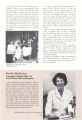
| OCR Text |
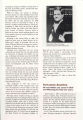
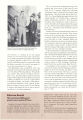
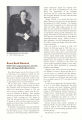
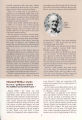
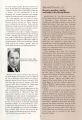
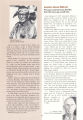
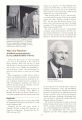
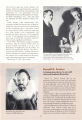
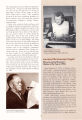
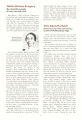
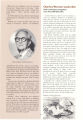
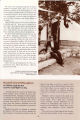
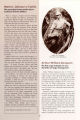
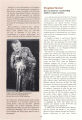
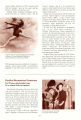
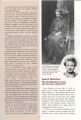
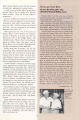
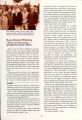
Show On leaving Salt Lake City for Boston in September 1939, he said, " It may be a trifle lonely before the two years are up, but right now it is stirring to think about. At least I'll have plenty to tell my fellow Utahns when I return." This expedition proved to be the most scientifically productive of Byrd's Antarctic visits, with much data collected on meteorology, geophysics, geology, biology, and physiology. Frazier, who carried the Utah state flag as well as a Brigham Young University banner with him to Antarctica, conducted significant research on the physiological effects of exposure to extreme cold over long periods of time. Some of this informa-tion was used to help U. S. troops during the Korean War. One of the most common early health problems Frazier encountered on the expe-dition was the loss of dental fillings. The metal contracted in the Antarctic cold and the fillings just fell out. He extracted some 50 teeth, including one of his own, before he discovered that a plastic substance used by the expedition's mapmakers could be used as a substitute filling. Besides pro-viding health care, Frazier drove a dog sled team for three months for the expedition geologists when the regular driver suffered frostbitten feet. A member of the New York Explorers Club and a fellow of the Royal Geographical Society in Lon-don, Frazier lectured widely on his adventures. After retirement from medical practice in 1951 he lived in Salt Lake City and spent much of his time writing and compiling narratives and records of his expeditions. Cancer claimed his life on January 14, 1968. Frazier plots Colorado River trip on map. USHS collections. a source of income to help her family. Her efforts won wide recognition, but, she told reporter Robert C. Blair, " it's a hard way to make pin money.. . . One season I had to dig 700 holes, each 18 inches deep. [ From]. . . some of those holes I had to haul away a wheelbarrow full of rocks to get things just right. In addition to rearing her large family " in rev-erence for God and in an atmosphere of love, syrn-pathy and understanding,'' Fugal served in the auxiliary organizations of the LDS church and in a number of civic capacities. She was especially ac-tive in the Farm Bureau, serving as a local presi-dent, a county director, and chair of the beautifica-tion committee of the Utah State Farm Bureau. The state organization gave her its Distinguished Service Award in 1939. She chaired several Red Cross drives and the state beautification committee during Utah's pioneer centennial in 1947. She also served as a member of the Utah County Planning Board and chair of the Pleasant Grove Board of Health. In 1955 she was named Utah's Mother of the Year and then won the national honor. She traveled to New York City and Washington, D. C., to receive her award and meet President Eisenhower. " This is the only place where a hungry, barefoot girl could grow up to have plenty, then fly through the clouds and land in the Waldorf- Astoria," Fugal said. in her Pleasant Grove home. USHS collections. r La vina Christensen Fugal, America i Mother of the Year, 7 955. USHS collections. At funeral services following her death on June 1, 1969, a neighbor, Merrill N. Warnick, remark-ed: " Not many women have lived as full a life as Mrs. Fugal. One of her greatest characteristics was appreciation; another was humility. Her mind always was occupied with something worthwhile. " |