| OCR Text |
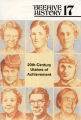
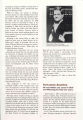
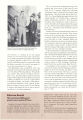
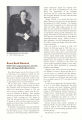
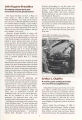
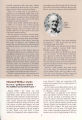
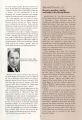
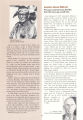
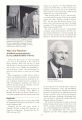
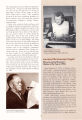
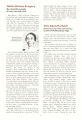
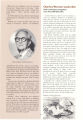
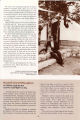
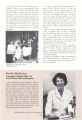
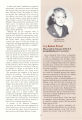
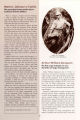
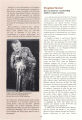
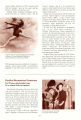
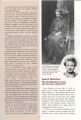
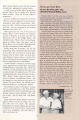
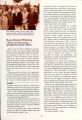
Show John Dennis Fitzgerald This noted author of young adult books created the Great Brain. John Dennis Fitzgerald was born in Price, Utah, on February 3, 1906, to Thomas and Minnie Nielsen Fitzgerald. His father had a pharmacy degree but engaged in a number of business ven-tures and served on the Price Town Council for four years. John graduated from Carbon High School and at the age of eighteen left Utah to pur-sue a career as a jazz drummer. He worked in a variety of occupations during his life, including newspaper reporter for the World- Tribune in New York City, foreign correspondent for United Press, advertising and purchasing agent, and bank auditor. He also served on Wendell Willkie's staff when Willkie was running for president. At the time his first book, Papa Married a Mor-mon ( 1955), was published, he was living in Los Angeles and working as a steel buyer. Fitzgerald had coll'aborated with his sister, Belle Fitzgerald Empey, to write this book. Her name was not in-ciuded as coauthor of the book because it was written in the first person. Papa Married a Mor-mon was very popular and was reprinted in several foreign- language editions, including Chinese. Twice chosen as a Book- of- the- Month Club selec-tion, it was also serialized in McCall's Magazine. A sequel, Mamma ' s Boarding Hbuse, appeared in 1958. Fitzgerald moved to Denver in 1960 where he tried for a short time to make his living as a full-time writer. He later reported that " I quit my job and went to a mountain cabin to make my living writing. I had to sell my jack and a tire to get back to Denver. When I got there I sold my typewriter and swore I would never write again." His wife later bought him another typewriter and he even-tually resurned writing. He had a very successful writing career, publishing more than 500 magazine articles, as well as poetry and songs and two books on writing, The Profe~~ sionSatlo ry Writer and His Art ( 1 963) and Structuring Your Novel: Fro171 B; tsIC Idea to Finished Manuscript ( 1 972). His most successful and widely read novels are the juvenile books in the Great Brain Series. They were loosely based on the adventures of his brother Thomas N. Fitzgerald. Books in this series in-clude: The Great Brain ( 1 967), More Adventures ofthe Great Brain ( 1969), Me and My Little Brain ( 197 l), The Great Brain at the Academy ( 1 972), The Great Brain Reforms ( 1973), The Return of the Great Brain ( 1974), and The Great Bri1i11D oes It Again ( 1976). The Great Brain Series has led to one of the most asked questions in Utah literature: " Where is Adenville, Utah?" Adenville is a fictional town ( Continued on Q. 12) Note: Fox is pictured on the cover. No photograph of Fitzgerald could be found. Harvey Fletcher, let?, and BYU graduate student Larry Knight with 7' x 7' speaker Fletcher designed for a gigantic musical staged in the Y stadium in 7 959. Courtesy of the Monitor ( Mountain Bell). Harvey Fletcher A brilliant research physicist, he was called the fatherof stereo. Anyone who likes movies or stereo recordings owes some of his enjoyment to the research of Harvey Fletcher. Those who can hear or speak with the help of a hearing aid or an artificial larynx also owe him a vote of thanks. An outstanding re-search physicist, teacher, and administrator, he deserved, many believe, at least part of a Nobel Prize. Born on September 1 1, 1884, in Provo, Utah, to Charles and Elizabeth Fletcher, he attended local schools. He delivered groceries to pay for his tui-tion at Brigham Young University, graduating in 1907 and beginning a teaching career there. In 1908 he married Lorena K. Chipman, and they had five sons and one daughter. Fletcher pursued doctoral studies in physics at the University of Chicago under Robert A. Millikan. He worked very closely with him on re-search that resulted in the first measurement of the Fitzgerald created by Fitzgerald, but most readers believe that the geographical setting loosely fits that of a small town in southern Utah. Fitzgerald and his wife, Joan, moved to Titusville, Florida, in about 1972 where he con-tinued his writing career. He died there May 20, 1988, at the age of 82. charge on an electron, for which Millikan alone received the Nobel Prize in 1923. Practical ap-plications of this research led to the invention by other scientists of the vacuum tube, which in turn opened up a new world of electronics. After receiving a Ph. D. in 19 1 1- the first phys-ics student at the University of Chicago to graduate summa cum laude- Fletcher returned to teach at BYU. For five years the Western Electric Com-pany of New York sent him job offers. He finally accepted in 1916 and worked for what became the Bell Laboratories until 1949. His work at Bell led directly to high- fidelity recording, sound motion pictures, the first accu-rate clinical audiometers to measure hearing, the first electronic hearing aid ( he was pleased that Thomas A. Edison wore one of his hearing aids), Harvey Fletcher Courtesy of the Monitor. the development of the artificial larynx, improved telephone transmission, sonar, and stereophonic recording and transmission. He held more than 40 patents for acoustical devices, published more than 60 major scientific works, and received dozens of awards and honors, including a Presidential Cita-tion from Harry S Truman and membership in the National Academy of Sciences. The accurate reproduction of sound so intrigued Fletcher that he devoted much of his life to it. In 1933 he created a stir when he demonstrated real-istic sound reproduction in an auditorium. The au-dience was dumbfounded- and some became frightened and left- when airplanes apparently |