| OCR Text |
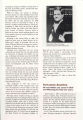
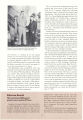
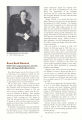
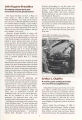
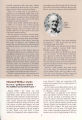
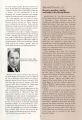
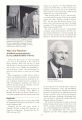
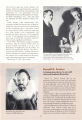
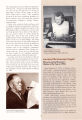
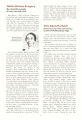
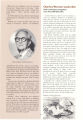
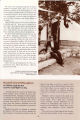
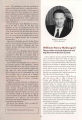
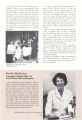
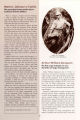
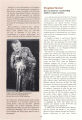
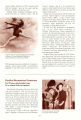
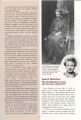
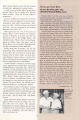
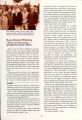
Show flew from the stage and circled overhead. The famous conductor Leopold Stokowski cooperated with him in a demonstration of stereophonic sound transmission of a live performance from the Philadelphia Orchestra in Philadelphia to Constitu-tion Hall in Washington, D. C., where the sound was separated into three channels to achieve real- ISM. Under Fletcher's able administration other researchers at Bell Labs thrived: three of them de-veloped the transistor and received the Nobel Prize for this revolutionary device, and another created the semi- conductor. Other research he supervised now helps ground crews communicate with satellites and guide spacecraft. The development of color TV and advanced medical equipment are other areas in which Bell researchers under his direction made significant contributions. From 1949 to 1952 Fletcher taught at Columbia University. Then he returned to BYU where he directed research and helped to set up a new Department of Engineering and the College of Physical and Engineering Sciences. He also re-searched musical acoustics, working well into his nineties with others to separate each component in the complex web of sound produced by the piano, organ, and string and percussion instruments. He died July 23, 198 1, after a stroke. Harvey Fletcher and Leopold Stoko wski check equipment just before 7 933 stereophonic transmission of live Philadelphia Orchestra to Washington, D. C. l m provement Era, July 7 950. Below : Frazier with sled dog. Right: Frazier, left, treats man with frostbitten toes. USHS collections. - I . . . I Left: ~ n t a k t ipce nguins. Above: Russell Frazier, left, took Utah state flag to Antarctica. USHS collections. I ! i l! :$: 1 mi- They became the parents of a son, Russell, and two daughters, Jeanne, and Mary Frances. Frazier's instinct for adventure was aroused by an offer he received to become a physician for the Utah Copper Company in Bingham. Leaving his wife behind temporarily, he made the trip to Utah on borrowed money and reported for work with a mere three dollars in his pocket. It proved to be just the kind of employment that he wanted. " I was busy twenty- four hours a day," he wrote later; " there was nothing I did not have to do, four babies a night, fractures of all descriptions, gun-shot wounds, stabbings, you name it, I did it, and loved every bit of it." Although Frazier remained a doctor in Bingham until his retirement, he became so enamoured of the scenic back country in Utah that he accepted two associates into his practice to allow himself more time for exploration. Soon he discovered the thrill of running western rivers such as the Middle Fork of the Salmon in Idaho, the Yampa, and the Colorado. His river trips led to other historical ex-plorations, including the search for the stone steps that revealed that the Dominquez- Escalante party of 1776 actually crossed the Colorado River at Padre Creek not at the Crossing of the Fathers. Frazier's greatest achievement as an explorer, though, came during 1939- 41 when he par-ticipated as the physician for Adm. Richard E. Byrd's third Antarctic expedition, for which he received a congressional medal in 1947. Frazier was selected for the post from 1,100 applicants. On leaving Salt Lake City for Boston in September 1939, he said, " It may be a trifle lonely before the two years are up, but right now it is stirring to think about. At least I'll have plenty to tell my fellow Utahns when I return." This expedition proved to be the most scientifically productive of Byrd's Antarctic visits, with much data collected on meteorology, geophysics, geology, biology, and physiology. Frazier, who carried the Utah state flag as well as a Brigham Young University banner with him to Antarctica, conducted significant research on the physiological effects of exposure to extreme cold over long periods of time. Some of this informa-tion was used to help U. S. troops during the Korean War. One of the most common early health problems Frazier encountered on the expe-dition was the loss of dental fillings. The metal contracted in the Antarctic cold and the fillings just fell out. He extracted some 50 teeth, including one of his own, before he discovered that a plastic substance used by the expedition's mapmakers could be used as a substitute filling. Besides pro-viding health care, Frazier drove a dog sled team for three months for the expedition geologists when the regular driver suffered frostbitten feet. A member of the New York Explorers Club and a fellow of the Royal Geographical Society in Lon-don, Frazier lectured widely on his adventures. After retirement from medical practice in 1951 he lived in Salt Lake City and spent much of his time writing and compiling narratives and records of his expeditions. Cancer claimed his life on January 14, 1968. Frazier plots Colorado River trip on map. USHS collections. |