| OCR Text |
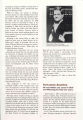
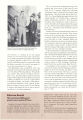
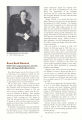
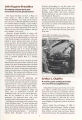
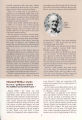
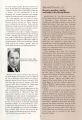
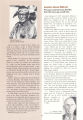
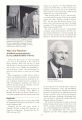
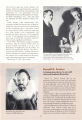
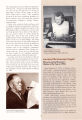
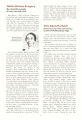
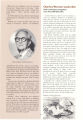
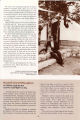
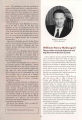
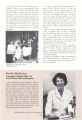
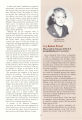
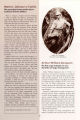
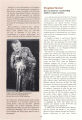
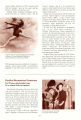
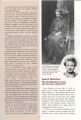
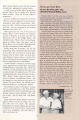
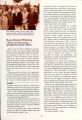
Show For many years Lockerbie organized the annual Audubon Christmas bird count, an event that docun~ ents changes in the bird populations of the United States by sending birders out to identify and enumerate bird species in the same area year after year. In Lockerbie's time the count encompassed a circle 15 miles in diameter with Temple Square as its center. Expert birding requires a keen sense of hearing, Lockerbie said, for " birds are first identified by their song." He estimated that he could distinguish more than 300 different bird calls. During his years in the field he observed Inany birds rare to Utah, including a sabine gull and a golden plover. An officer of the Utah Mineralogical Society and the Rocky Mountain Federation of Mineral Societies, Lockerbie taught a geology class in his home every Monday evening for eight years to in-terested neighborhood children and lectured ex-tensively on mineralogy. He and his wife presented an 1,100- piece mineral collection to Westminster College in 1957. Over the years they assembled some 30 rock collections and donated them to mu-seums and schools in Utah and as far away as Seoul, South Korea. Lockerbie's interest in min-erals and geology led him to study Utah mining, and he became an expert in the history of the Alta, Big Cottonwood, Park City, Mercur, and Ophir mining districts. Utah's bird man died September 20, 1963, sur-vived by his wife, Lillian May Tucker, whom he had married in 192 1. Charles Lockerbie at his tent home near Pinecrest, Emigration Canyon, 7905. USHS collections. wrote. " The significance of this feat can hardly be grasped by the mind when it is remembered that a llttle over seventy years ago the covered wagon of pioneer days took eleven months to do what the modern airplane accomplished today from dawn to dusk." Not until Charles A. Lindberg's New York to Paris flight of May 20- 21, 1927, would a man and a flying machine so rivet the attention of the public and the press. A native of Logan, Utah, Maughan was born on March 28, 1893, to Peter W. and Mary Naef Maughan. In 1917 he graduated from the Utah State Agricultural College and joined the army. As a pilot in World War 1 he shot down four German planes and rece~ ved the Distinguished Service Cross for saving the life of another pilot by fly~ ng between his crippled aircraft and an attacking German plane. After the war Maughan married Ila May Fisher ln 1919. They were later divorced, and in 1946 he married Lois Roylance. Maughan had four children: Ila May, Mary Ann, Russell Lowell Jr., and Weston Fisher. A career army man, Maughan attained the rank of colonel and remained in the service until his retirement in 1946. His cross- country flight of 1924 was not his only record- settlng ach~ evement. In 1922 he won the Pulitzer Flying Cup by setting a new world speed record. From 1930 to 1935 Maughan was air advisor to the governor- general of the Philippines. Shortly before World War 11 he was sent on a secret mis-sion to Greenland to locate strategic airfield sites that, when war came, proved valuable to the Allies. During the war he commanded one of the first air fighter units to operate out of England against Germany. Later, he was the command~ ng officer of alr force bases in Lemoore, California, and Portland, Oregon. Despite the acclarm showered on Maughan by the nation and his home state, he remained modest about his achievement. " It really wasn't anything great," he said. " It was just the result of a lot of experimentation and hard work on the part of many people connected w~ thth e air servlce, and I was fortunate enough to be the one to reap the results of all those years of labor." Maybe. But his achievements as a pilot in war and peace demonstrate that Russell Maughan was a man of great dedication and daring. He d~ edi n San Antonio, Texas, on Aprll 21, 1958, wh~ leu ndergoing surgery. William H. McDougall. USHS collections. William Henry MeDougall This journalist survived shipwreck and imprisonment to become a priest. ~ w i c eJaa panese prisoner during World War 11, nearly drowned in the Pacific when his ship was sunk, an innovative and energetic newspaperman, [ recipient of a Nie~ nanF ellowship to Hal- val- da nd a Pulitzer Prize nomination, William H. McDougall found enough adventure and achicvcment in life to satisfji almost anyone. Yet he always claimed that his greatest adventure began on May 1 1 , 1952, when he was ordained to the Catholic priesthood in Salt Lake City by Bishop Duane G. Hunt. He was a home- grown product of Utah. Born in Salt Lake City on June 3, 1909, to Frances M. Tormey and William H. McDougall, Sr., he earned a B. A. from the University of Portland and knocked about in various jobs as a miner, salesman, hunting and fishing guide, and railroad roundhouse clerk before discovering his lifelong calling as a journalist. During the five years he worked for the Salt Lake Telegram he became known for his aggressive pursuit of news and for coinrnunity improvement crusades during which he uncovered a marijuana ring in public schools, fought unsafe traffic conditions, and promoted im-provement of city parks. One of McDougall's specialties was coverage of remote stories such as the Mexican Hat range kill-ings in 1935 and airplane crashes in the moun-tains. Anticipating today's live electronic coverage of such events, he trained carrier pigeons which he used to file on- the- spot reports and photographs. |