| OCR Text |
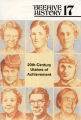
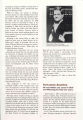
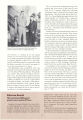
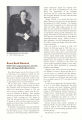
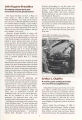
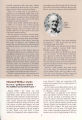
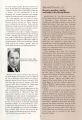
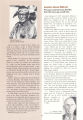
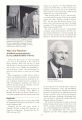
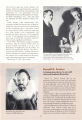
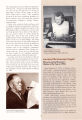
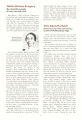
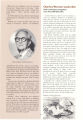
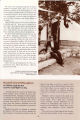
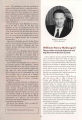
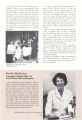
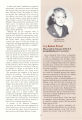
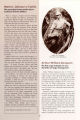
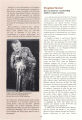
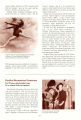
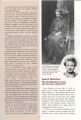
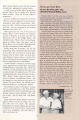
Show ;:+; Lva->?> 2$. r< d>),<"<,", s<.~'";.? 3 ,>+ . x ... ,.. ';-,*.? f: ,,,;,,,, Congress. Ivy campaigned vigorously and defused g; zz!,$:.. a>> ws.:!;;-""; :-;-; L -*:.:-. criticism that she had abandoned thc traditional & F:% T7:%?;$. ~ ~ z ~ ~ , , . , : , , r. o les of wife and mother by asserting that it was , v-*. s>$::%% e $;$$+$$; concern ovcr the future of her children that had <..: : ,, .5*.:.*<, .,.,. c,,%. 5 i,.,.. ~ yz.! c-: 7. made her politically active. Bosone won reelec- + g;,;<.: i.*: L:.!: $,.+ . *>,. *.>~, ?,.: t.-.,< 5 ..: ,::.. i. ; i tion, but 111. collected ;~ lmo* t1 7 percent of the ,2 ., :..- p .- d> : zgvo: gte F~~+~.?&+$ During the 1952 Republican National Conven-tion Icy demonstrated a spirited independence. Thc Utah delegation supported Sen. Robert A. Tafi as the GOP nominee Tor president. and Ivy found herself " a committee of one" in favor of Dwight D. Eisenhower, a late entrant in the race. Working with othcr Ikc supporter\ she was able to convince several Utah delegates to agree to switch to Eisenhower after the first ballot. When that news becan~ e lulown nationally othcr rifis in the Taft ranks appeared, and he was no longer considered a shoo- in. Ivy became assistant chair of Eisenhower's national campaign committee and took charge of the womcn. 5 division. Shc traveled across thc I I Ada Williams Quiglm She founded a clothing factory in Ogden and ran for governor in 1940. Born on December 13, 78, in Peterson, Morgan County, to Joshua Hannah Martha Green Williams, Ada attended school in Morgan County and then earned a teaching certificate from the University of Utah. She taught school in both Morgan County and Ogden. She married Edward N. Quinn, a school principal, and raised two sons and a daughter: Horace, Robert, and Kathleen. In 1926 at age 48 she founded what would become the Kathleen Quinn Garment Company in Ogden. The business began as a small apron-malung establishment that employed widows. It grew to employ some 200 union workers in a hc-tory she built at 335 28th Street, Ogden. About 1930 she opened an office and sample room in New York City and sold her clothing to both American and foreign outlets. By January 1940 the company boasted a payroll of $ 10,000 monthly, plus. salesmen's commissions, and Quinn had " arranged to rent the equipment of her plant to her employees so that they might have an interest in the business. " In 1940 Quinn, a political neophyte, announced her candidacy for governor on a platform that em-phasized jobs. Her campaign literature called for. among other things, a " revamping of the un-workable apprentice rules and regulations which prevent employing learners;"' assistance for Fhe aged and blind, teachers' retirement benefits, uni-versal military training for " all ablebodied men from 18 to 60," training for skilled jobs, economy and efficiency in government, and, with war on the horizon, " no war profits for the fellow who stays at home. " Quinn ran a distant third as an independent on a ballot dominated by well- known men- Democrat Herbert B. Maw, who won the governor's chail-, and Republican Don B. Colton. Though defeated, she provides an intriguing glimpse of a busi-nesswoman whose political ambitions were some 50 years ahead of the times. Quinn died of pneumonia on August 23, 1945. are pictured on the cover. Alma Wilford R. ichar8ds A track star from Parowan became Utah's first Olympic champion. On July 8, 1912, in Stockholm, Sweden, Utah recorded a great moment in its sports history. That's when Alma Richards sailed over a bar 6' 3" high to win first place in the running high jump at the fifth modern Olympic games. Richards was a student at Brigham Young Uni-versity when he went to Chicago to try out for and, though virtually unknown, make the U. S. Olympic team. Some athletes trained on the ship that took them to Europe, but Richards felt that his event was not suited to shipboard practice so he just relaxed. He began intensive training in Antwerp, where the team had a layover, and continued to train until his event was called. During the competition, as the bar was moved higher, Richards required the fhll three attempts allowed to clear 6' 1 ", 6' 2", and 6' 3". When the bar was moved up to 6' 4", he later told an au-dience in Provo, he felt discouraged and chilled. But, he continued, " Then I thought of the B. Y. U., Utah and my friends there, and the old United States and made the spurt- and chill and all went over the bar in the first attempt." Richards excelled at many track and field events- including the broad jump, pole vault, shot put, discus, and the 100 and 400 meter races- and competed until 1932. During his career he set 55 records. Besides his Olympic feat, other major a-chievements included decathlon champion at the National AAU meet in San Francisco in 1915 and high point honors at the Inter- Allied World Games in Paris in 1919. Born in Parowan, Utah, on February 20, 1890, to Morgan and Margaret Adams Richards, Alma Richards attended Murdock Academy and BYU, graduated from Cornell University, and received a law degree from the University of Southern California. He served as a lieutenant in the U. S. Army during World War I. Although admitted to the California Bar, he elected to teach school rather than practice law. He died in Long Beach, California, on April 3, 1963, survived by his wif~ Lenore Griffin, a son, and three daughters. Harold Wallace Ross The founder of The New Yorker grew up in Salt Lake City. Harold Ross, creator and editor of America's most sophisticated magazine, The New Yorker, was known for his strong personality and his un-sophisticated dress and manners. Some claimed that Ross was a literary hoax, because a man who looked and acted like Harold Ross could not be the editor of America's smartest magazine. Ross was born November 6, 1892, to George and Ida Ross in Aspen, Colorado, where his father was involved in mining. When Harold was seven years old his family moved to Salt Lake City. As a freshman at West High School he worked on the school newspaper, the Red and Black. There he became acquainted with the artist John Held, Jr., who was later to become famous for his caricatures that defined the Jazz Age. While still a teenager Ross started hanging around the offices of the Telegram and Tribune. Eventually he was given a part- time job running errands for the Tel-egram's sports editor. Ross, who did not get along with his father, fre-quently ran away from home. He dropped out of high school after his freshman year to work full time for the Tribune. In the summer of 1910, at the age of 18, he left Salt Lake City, " riding the rails" and working as a " tramp reporter" for newspapers across the country. He started working for the Sacramento Union in I91 I , journeyed to Panama City, and then moved on to New Orleans and Atlanta. In 1916 he was back on the West Regiment of & my Engine France where he worked on t the newspaper of the American Expeditionary Force in World War I. When the war ended Ross settled in New York City and tried to revlve the Stars and Stripes in a publ~ cation called the Home Sector Magazine, but it was unsuccessful. He then edited the American Legion Weekly for two years ( 1921- 23) whlch was followed by a job with Judge, a humor magazine. Then he got the idea to start his own magazine. The New Yorker was conce~ ved by a group of wrlters that Ross ? ocialized with called the Thanatopsis Literary and Inside Straight Club. Th~ sg roup had or~ g~ nallmye t in Nini's, a Paris cafe, and moved to the Algonquln Hotel in New York City after the war. Most were former members of the Star and Stripes staff. Among them was a nonjournalist, Raoul Fleischrnann, one of the heirs to the Fleischmann yeast fortune. He advanced the money for the first issue of The New Yorker which appeared February 19, 1925.8wq<$ q b& kk && v$~ Fleischmann had resigned himself to losing#$%.# money on the venture, but because of the quality of $$ f& the magazine, advertisers supported it. The ~ e w & f % ! j\ Yorker was noted for its features such as " Talk of k.@~ hq% i $ the Town" and " Profiles" and for excellent$$$$ wr~ tersli ke Dorothy Parker and James Thurber. """ Ross died December 6, 1951, after an operation FR3s , b+; . on his lungs. He was survived by his wife Ariane@&;& B Allen whom he had married in 1940 and his daughter Patricia. |