| OCR Text |
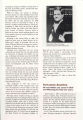
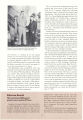
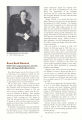
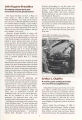
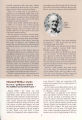
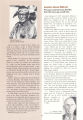
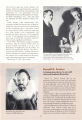
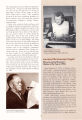
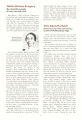
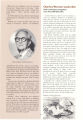
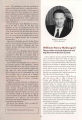
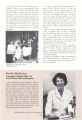
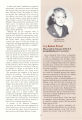
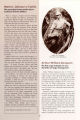
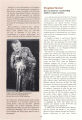
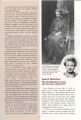
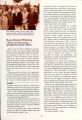
Show Maria L. Salazar y Trujillo She opened her home and her heart to dozens of foster children. Maria L. Salazar y Trujillo was born February 7, 1902, in Cebolla, New Mexico, to Katarino and Anna Maria Riberio Trujillo. On September 14, 1926, she married Jose Tobias Salazar. They even-tually made Salt Lake City therr home. After raising her own family, Salazar devoted her life to caring for numerous foster children brought to her by Catholic Charities of Salt Lake City. When interviewed by the Salt Lake Tribune in 1970, this active and concerned widow had mothered 91 chlldren since the early 1950s and was at that time caring for four foster children ranglng from 14 months to 17 years of age. On one occasion she undertook the care of a set of triplets. Over the years Salazar helped to recruit other foster mothers and accepted into her home children with behavioral problems and those hostile toward adults. " In two or three weeks though," she told a Tr~ bune reporter, " they usu-ally decide it is more fun to act like a member of the family. " Salazar's house was " always full of children," a daughter- in- law recalled in an article in the Inter-mountam Catholic. " She would have five or six cribs set up at one time. She was just very gen-erous." A friend, Florence Garcia said that Salazar took an interest in everyone. " Her home became their home," she added, and " she saw their needs even before they did sometimes. " Salazar cared for all kinds of people, adults as well as children, even when she was not feeling well. According to Garcia, she was always " cooking something or baking something for somebody. I think that gave her energy. She devoted it all to God, anyway. " Besides her dedication to children in need, Salazar was active in church and community af-fairs. She was a member of the Catholic Women's League and the Third Order of St. Francis. She was involved in the initial organization of La Morena restaurant which benefited the Early Learning Center. " She was a fantastic person," Father Reyes Rodriguez remembered, with " a heart as big as the salt flats." Salazar died January 25, 1987, survived by four sons, Filbert. Toby, Joseph, and J. Leve, a daughter, Alvelina, and dozens of foster chlldren. 6 Arthur W. Sampson. Courtesy Louise Kingsbury. Arthur William Sampson The first range ecologist, he was the father of range management. Arthur William Sampson's list of " firsts" is impressive: first person in America to be called a range ecologist, first to promote deferred and rota-tional grazing strategies, first to develop usable concepts of indicator species and plant succession for evaluating range condition, first to write a col-lege text on range management, first range ecologist hired by the Forest Service, and first di-rector of what is now called the Intermountain Re-search Station. Sampson's initial goal as a range scientist was to develop practical range evaluation methods that everyday range managers could use. His indicator species concept helped to fulfill that goal. He described four stages of plant succession on ranges that indicated, roughly, excellent, good, fair, and poor range conditions. His specific studies of the reaction of lands to grazing led to range manage-ment techniques that combat range deterioration and promote restoration. Basic principles of range management now taken for granted came from the early research of |