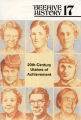
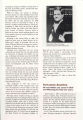
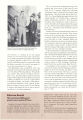
| OCR Text |
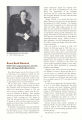
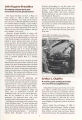
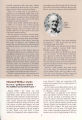
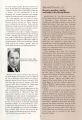
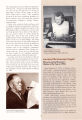
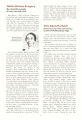
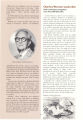
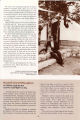
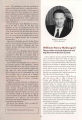
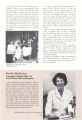
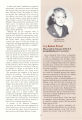
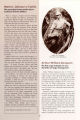
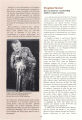
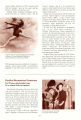
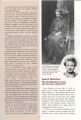
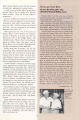
Show In 1939 the United Press sent McDougall to Shanghai, China, as a war correspondent. Always hoping to get the latest story, he delayed too long when the Japanese invaded China and was taken prisoner. Chinese friends helped him escape to Java where he continued to file stories until it, tdo, fell. He escaped on an ill- fated Dutch ship that was sunk in the Indian Ocean. Only three lifeboats had been launched for the 240 passengers and crew, and McDougall found himself in the water with only a life jacket. A strong swimmer, he reached one of the overloaded lifeboats but was refused admittance. For hours he drifted. In his desperation he turned to the Catholic faith of his youth and learned for the first time, he later reported, what prayer really is. As he drifted and prayed, he resolved to " do something for Jesus." Eventually one of the other lifeboats rescued him. Prison camp awaited him when the boat reached Sumatra, but he survived what then appeared as a lesser ordeal and returned home after the war. He wrote two books detailing his wartime experiences: Six Bells Off Java ( 1948) and By Eastern Windows ( 1949). After a year as a Nieman Fellow at Harvard, where he studied with the likes of Bernard DeVoto, McDougall entered a seminary in Wash-ington, D. C., to prepare for the priesthood. He served energetically as rector of the Cathedral of the Madeleine in Salt Lake City for 21 years and became known for his advocacy of the rights of the poor, the unborn, and the homeless. Ever a journalist, he was editor of the Inter-mountain Catholic Register during 1980- 8 1 and wrote a column of news tidbits from local parishes. Pope John XXIII recognized his years of service to church and community by elevating him to monsignor in 1963. He died on December 8, 1988, remembered by retired Bishop Federal as a man whose " rule of life was that nothing was too much trouble in lov-ing one's neighbors. " McDougall's ordination, 7 952. USHS collections. During this time she also began submitting poetry to magazines In New York. After selling Harvey Natchees some of her poems she decided to move to A hero Of World War II' York in 1929. McG~ nleyh eld an assortment o he believed in education. there, lncludlng copywriter for an advertis~ ng agency, teacher in a jun~ orh igh school In New One of the first Amer~ cansto enter Berlin in the Rochelle, and staff wrlter for Town and Country. final days of World War I1 was Harvey Natchees, a Marr~ agea nd stabll~ tyw ere extremely important Ute Ind~ an. B orn on May 26, 1920, ~ n Altonah, to her after a childhood of frequent moves and Duchecne County, to Edward and Vera Loney " never having a real home." In 1934 she met Natchees, he attended Roosevelt High School and Charles L. Hayden who worked for the Bell was reportedly ~ t sfi rst Ind~ ang raduate. On June Telephone Company during the day and 29, 1940, he marr~ ed Clara Areep at Fort jazz piano in the evenlng. She found the fact that he Duchcsne. played in a jazz band unsettling, fearing that do- In 1942 Harvey enlisted ~ n the U. S. Army and mestlc life would not be his main concern; was on hls way to France shortly after D- Day As a however, they eventually married on June 25, mcmber ot a reconnaissance battallon ~ n the 3rd 1937, and had two daughters. Armored Division, he part~ c~ pate~ dnm any battles. Noted for her light, whimsical verse, McGinley HIS valor was recogn~ zed wlth a S~ lver Star, a had, early in her career, been given some advice Bronze Star, and a Purple Heart wlth oak leaf by Kather~ neW hite, a New Yorker fiction editor: cluster. When the German cap~ talf ell to Allled " Dear Miss McGinley: We are buying your poem, forces In spring 1945, Natchees was featured in but why do you sing the same sad songs many newspapers as the first Amer~ can ~ n Berl~ n. poets sing?" She changed her style to light verse. He later took Un~ ted Press journal~ sts on a jeep McGinley's prose and verse appeared i tour of conquered territory. publ~ cat~ onHs. e r first book of verse, On the Con- Discharged from the Army In October 1945, trary, was publ~ shed in 1934, followed by seven- Natchees returned to the U~ ntah- Ouray Rescrva-teen more book She received the Pulit~ ar P r i z tlon On July 24, 1946, thls war hero and his wife, for her book of light verse Tlnles Three: Clara, rode ~ n the P~ oneer Day parade ~ n Salt Lake Verse from Three Deca City and rece~ vedth e cheers of thousands. Poenis ( 1960) in 196 1. A rancher, a member of the Ute Tribe business The strength of Ph~ lllsM cGinley's a committee, and superintendent of the tr~ be'sw ater her support of the housewife and the department, Natchecs also worked to promote cd ucation as a solution to many problems faclng h ~ s market. Her book S~ xpencem people. He d~ edon June IS, 1980, of a heart attack was written as a direct response to Betty Friedan' and was buried in the Fort Duchesne Cemetery best- selling book The Feminine Mys with military honors. whlch proposed the idea that a col woman could never find true home. Sixpence stated an Katherine Feglltsn Nutter one that McGinley's own l ~ f eha d b She came west as a telegrapher that educated women could fit ha and became Utah's cattle queen. framework of the home. Sixpence sold o 100,000 copies and remained on the When Kather~ neF enton Nutter d~ edin Salt Lake for several months. City on July 17, 1965, at age 94, the Salt Lake She wrote of herself: Tribune called her " perhaps the last of the West's few-~ utting sugar In my SOUP is the cattle queens " Whether she was the last of her think of at the moment- a breed is debatable; that she was Indeed queen of a the trade as a ' good, rel~ able wor vast cattle operation 1s unquestionable. always make a deadl~ ne I am n She was born on March 12, 1871, ~ n Ceylon, labor palnstaklngly on every plece I do. " Ohlo, to Maur~ ce and Catharine Morgan Fenton. Her last book, Saint Watching, was published In Educated at the Sisters of the Holy Cross School In 1969. After her husband d~ edin 1972, she moved South Bend, Ind~ ana, s he then came west to work from her beloved suburbs to an apartment In New as a telegrapher and eventually managed the Postal York Clty. She d~ edFe bruary 22, 1978. Telegraph Company's off~ ceIn Colorado Springs, Note: Natchees and Nutter'are pictured on the cover. a town that was boomlng because of mining actlv- ~ t y~ n n earby Cr~ ppleC reek. 22 |