| OCR Text |
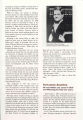
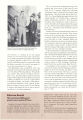
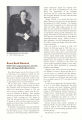
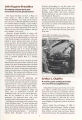
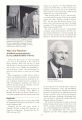
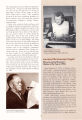
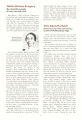
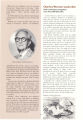
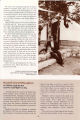
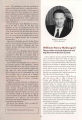
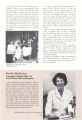
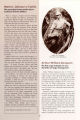
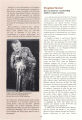
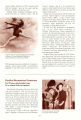
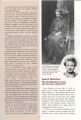
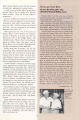
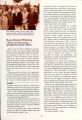
Show John Eugene Broaddus Developing national parks and monuments was his special interest. John Eugene Broaddus was born in Plano, 11- linois, January 17, 1882, to Henry Arthur and Viola Hail Broaddus. As a young man he came to Salt Lake City in 1900 and apprenticed himself to the Columbia Optical Company. A quick student, he learned the profession of making glass lenses and was soon a leading optometrist in the state. In 1906 he married Clara Louise Deighton, and they had a daughter, Viola Louise. Optometry brought Broaddus in contact with photography and the scenic wonders of Utah. As early as 1916 he was publicizing Bryce Canyon and Cedar Breaks through word and picture. His work helped to secure national park status for Bryce Canyon and Zion. He also helped to publicize the Kamas- Mirror Lake road which opened the beauty of the previously remote Uinta Mountains to visitors. Working with E. P. Pectol, Broaddus took photographs and prepared brochures for the Wayne Wonderland Club, a group of Wayne Coun-ty boosters who encouraged the federal govern-ment to establish Capitol Reef as a national monument. In 1935 Broaddus served as a member the Utah State Museum Association which, under the spon-sorship of the State Planning Board and with funds from the Utah Emergency Relief Administration, conducted an extensive archaeological and paleon-tological reconnaissance of southern Utah and the Uinta Basin. The geology and wildflowers of his adopted state also intrigued him, and he became a popular lecturer on those topics. Through his work in publicizing and photographing Utah's scenery Broaddus became a close associate and fellow adventurer of Antarctic explorer Russell G. Frazier, author Charles Kelly, and Deseret News writer Harold " Hack" Miller. In July 1937 Broaddus joined the Deseret News expedition to run the treacherous Yampa and Green rivers in northwestern Colorado and northeastern Utah. He served as official photogra-pher for the expedition as well as its chief spokesman. He publicized these wild rivers through a special radio program aired by KSL. Recalling the scenic beauty of the canyons of the Yampa, Broaddus stated: " No artist can paint and no word artist can possibly convey to the intel-ligence of the human mind the beauty and the maj-esty of what nature has given to Utah in the way of color in her deep canyon gorges.. . . " According to Charles Kelly, Broaddus " was the first en-thusiastic photographer to visit the region, and spent much time and effort in publicizing its scenic wonders." Chiefly through the joint efforts of Broaddus, Kelly, Miller, and Frazier, Dinosaur National Monument was later enlarged by Presi-dent Franklin D. Roosevelt. Broaddus was a charter member of the Salt Lake Kiwanis Club and assisted club efforts to provide recreational facilities for underprivileged boys. He also served as a member of the Utah State Fish and Game Commission. He died in Salt Lake City April 16, 1954, at the age of 72, one of the oldest licensed optometrists in the state. Left to right: Hack Miller, Henry Millecam Charles Kelly, and John Broaddus in Yampa Canyon. USHS collections. Arthur 1. Chaffin A road to scenic southeastern Utah was one of his accomplishments. Although Glen Canyon gold mining was his first love, Arthur L. Chaffin made impressive contribu-tions to his native state as a road builder and ferry operator as well as a boatman and Indian trader. His construction of a road from Hanksville to Hite, which he then linked in 1946 with the road to Blanding by building the Hite ferry, opened up the scenic delights of southeastern Utah to automotive tourism. Born in Cedar City on February 13, 1884, to Maria Jane Wade and George E. Chaffin, he began his mining career at agc 12 whcn hc joincd two older brothers on their claim just below Hansen Creek in Glen Canyon. He undoubtedly learned his |