| OCR Text |
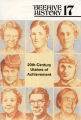
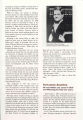
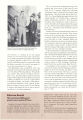
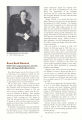
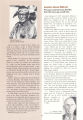
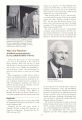
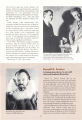
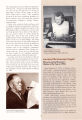
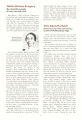
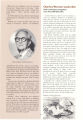
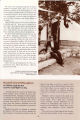
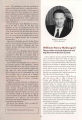
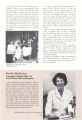
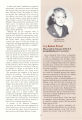
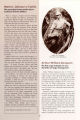
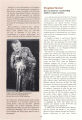
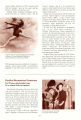
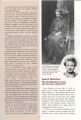
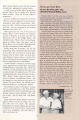
Show In 1905, when Utah's Uinta Basin was opened to homesteaders, she entered her name in the lottery and the luck of the draw gave her a homestead in Ioka, Duchesne County. She headed for Utah to see her land, but a stagecoach driver new to the Price- Myton route missed the regular overnight stop. She and another woman spent the night at Preston Nutter's ranch in Nine Mile Canyon. As William C. Barton noted in his reminiscence of the Nutter ranch, " all cattlemen keep ' open house' and any traveler is welcome to a night's lodging and his meals," a tradition later maintained at the Nutter ranch by Katherine. Although she ran the telegraph office in Colorado Springs for three more years, she also spent the time required by homestead law on her Ioka land. In traveling back and forth to Ioka, she and Preston Nutter, whose ranching operation covered large areas of Utah and Arizona, de-veloped their accidental acquaintance and married on November 28, 1908. They had two daughters, Catharine and Virginia. Katherine learned large- scale cattle ranching from her husband during the 27 years before his death. She also kept the ranch account books and wrote the checks for the business. Widowed in 1936, she became president of the Nutter ranch corporation and assumed its management. In 1949 reporter Jim Young met the 78- year- old rancher at Mounds, Emery County, at the end of the fall cattle drive. She was there at the railhead to inspect her stock before it was loaded on cattle cars for shipment to market on the Denver & Rio Grande Western Railroad, and, Young wrote, " She pronounced the condition of the grass- fat animals to be excellent." She called the life of a rancher " one demanding a great amount of self-denial from those who would follow it and was strong in her praise of the men who handle her stock.. . . She told of the heroic night- and- day struggle of the past winter to keep the cattle alive during.. . the deep snow and cold weather. " Katherine evidently never forgot her telegraphy skills. On one occasion when she was ordering railroad cattle cars, a friend recalled, " She overheard the telegrapher rattling off an order for the cars in [ Morse] code, stopped him and said, ' I ordered cattle cars, not sheep cars.' The surprised telegrapher realized she had read his message as fast as he sent it and had caught the error." A member of the American Cattleman's Association, the Utah cattle queen supported the Taylor Grazing Act, served as an early adviser to the Utah State Big Game Control Commission, and was active in the Catholic Women's League. Ivy Baker Priest. USHS collections Ivy Baker Priest She served as treasurer of the U. S. during Eisenhower's two terms. ;:+; Lva->?> 2$. r< d>),<"<,", s<.~'";.? 3 ,>+ . x ... ,.. ';-,*.? f: ,,,;,,,, Congress. Ivy campaigned vigorously and defused g; zz!,$:.. a>> ws.:!;;-""; :-;-; L -*:.:-. criticism that she had abandoned thc traditional & F:% T7:%?;$. ~ ~ z ~ ~ , , . , : , , r. o les of wife and mother by asserting that it was , v-*. s>$::%% e $;$$+$$; concern ovcr the future of her children that had <..: : ,, .5*.:.*<, .,.,. c,,%. 5 i,.,.. ~ yz.! c-: 7. made her politically active. Bosone won reelec- + g;,;<.: i.*: L:.!: $,.+ . *>,. *.>~, ?,.: t.-.,< 5 ..: ,::.. i. ; i tion, but 111. collected ;~ lmo* t1 7 percent of the ,2 ., :..- p .- d> : zgvo: gte F~~+~.?&+$ During the 1952 Republican National Conven-tion Icy demonstrated a spirited independence. Thc Utah delegation supported Sen. Robert A. Tafi as the GOP nominee Tor president. and Ivy found herself " a committee of one" in favor of Dwight D. Eisenhower, a late entrant in the race. Working with othcr Ikc supporter\ she was able to convince several Utah delegates to agree to switch to Eisenhower after the first ballot. When that news becan~ e lulown nationally othcr rifis in the Taft ranks appeared, and he was no longer considered a shoo- in. Ivy became assistant chair of Eisenhower's national campaign committee and took charge of the womcn. 5 division. Shc traveled across thc I I Ada Williams Quiglm She founded a clothing factory in Ogden and ran for governor in 1940. Born on December 13, 78, in Peterson, Morgan County, to Joshua Hannah Martha Green Williams, Ada attended school in Morgan County and then earned a teaching certificate from the University of Utah. She taught school in both Morgan County and Ogden. She married Edward N. Quinn, a school principal, and raised two sons and a daughter: Horace, Robert, and Kathleen. In 1926 at age 48 she founded what would become the Kathleen Quinn Garment Company in Ogden. The business began as a small apron-malung establishment that employed widows. It grew to employ some 200 union workers in a hc-tory she built at 335 28th Street, Ogden. About 1930 she opened an office and sample room in New York City and sold her clothing to both American and foreign outlets. By January 1940 the company boasted a payroll of $ 10,000 monthly, plus. salesmen's commissions, and Quinn had " arranged to rent the equipment of her plant to her employees so that they might have an interest in the business. " In 1940 Quinn, a political neophyte, announced her candidacy for governor on a platform that em-phasized jobs. Her campaign literature called for. among other things, a " revamping of the un-workable apprentice rules and regulations which prevent employing learners;"' assistance for Fhe aged and blind, teachers' retirement benefits, uni-versal military training for " all ablebodied men from 18 to 60," training for skilled jobs, economy and efficiency in government, and, with war on the horizon, " no war profits for the fellow who stays at home. " Quinn ran a distant third as an independent on a ballot dominated by well- known men- Democrat Herbert B. Maw, who won the governor's chail-, and Republican Don B. Colton. Though defeated, she provides an intriguing glimpse of a busi-nesswoman whose political ambitions were some 50 years ahead of the times. Quinn died of pneumonia on August 23, 1945. are pictured on the cover. Alma Wilford R. ichar8ds A track star from Parowan became Utah's first Olympic champion. On July 8, 1912, in Stockholm, Sweden, Utah recorded a great moment in its sports history. That's when Alma Richards sailed over a bar 6' 3" high to win first place in the running high jump at the fifth modern Olympic games. Richards was a student at Brigham Young Uni-versity when he went to Chicago to try out for and, |