| OCR Text |
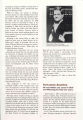
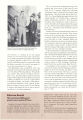
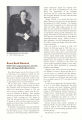
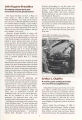
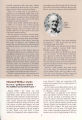
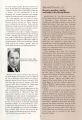
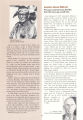
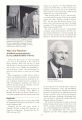
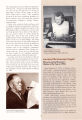
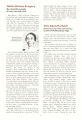
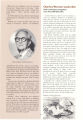
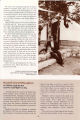
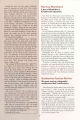
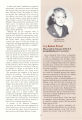
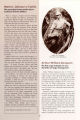
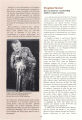
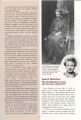
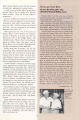
Show including the Congress of Mothers ( predecessor of the PTA), Free Public Library, and the State Fed-eration of Women's Clubs. While her father was serving in Congress Florence and her two older siblings lived in New Lyrne Station, Ohio, where they attended school. The family returned to Utah after two years when her father did not seek reelection. In 1900 Florence moved to Cleveland to study at the Women's College of Western Reserve University, graduating in 1904. Then she traveled to Berlin with her mother who spoke to the 1904 Interna-tional Council of Women. Florence stayed in Berlin for two years, mainly studying piano, to see if she wanted a career as a concert pianist, but she decided against it. Returning to the United States in 1906, she taught for three years at Laurel School, an ex-clusive girls' school in Cleveland. She also en-rolled at Western Reserve University in a master's program in political science. While there she decided to become a lawyer. Although most universities did not accept women into law school then, she was able to attend the University of Chicago Law School for one year. In Chicago she became associated with Hull House Settlement and was induced by a friend to move to New York City the following year and become a social worker for the League for the Pro-tection of Immigrants and the Henry Street Settlement. Still, the law beckoned and she enrolled in New York University Law School in the fall of 1910. At first she worked during the day and attended school in the evening, but eventually she left social work and enrolled in law school full time. She supported herself by lecturing at private schools and by working for the National College Women's Equal Suffrage League. After graduation in 1913 she moved to Cleveland. Unable to find a position with a law firm, she opened her own law office in 1914 and volunteered for the Cleveland Legal Aid Society, where she met several other idealistic young at-torneys with whom she combined law offices. Her legal career included serving as assistant county prosecutor for Cuyahoga County, Ohio, in 1919- 20; as judge for the Court of Common Pleas, Cuyahoga County, 1920; and as justice of the Supreme Court of Ohio ( the first woman elected to a court of last resort in the U. S.), 1922- 34. In 1926 she ran in the Democratic primary for United States senator but was defeated. In 1934 she was appointed to the U. S. Circuit Court of Appeals for the Sixth District by President Franklin D. Florence E. Allen. Courtesy Western Reserve HistoricalSociety. Roosevelt, the first woman to fill such a post. In 1927- 38 Allen headed a three- judge federal tribunal that decided the constitutionality of the Tennessee Valley Authority. She served for twenty- five years on the federal appellate bench, retiring in 1959 at age 75. At various times she had been considered a strong candidate for the U. S. Supreme Court. Among her legal accomplishments are several books she au-thored: This Constitution of Ours ( 1940), To Do Justly ( 1965), The Treaty as an Instrument of Legislation ( 1952), and The Ohio Woman Suf-frage Movement ( 1952). She died September 12, 1966, in White Hill, Ohio. Fortunato Anselmo He was Italian vice consul in Utah and Wyoming for forty- one years. Born October 1, 1883, in Grimaldi, Province of Cosenza, Calabria, Italy, Fortunato Anselmo im-migrated to the United States at the turn of the 20th century. He first settled in Pueblo, Colorado, and worked as a reporter for the Italian- American newspaper I1 Vindice and engaged in mercantile in-terests. Fortunato married Anna Pagano in Pueblo in 1909. They were to have three children, Annette, Gilda, and Emma. In 191 1 the Anselmos moved to Salt Lake City where Fortunato operated a wholesale imported Boxer Primo Carnera dwarfs his Salt lake City host Fortuna to Anselmo. USHS collections. food business, F. Anselmo & Co. He opened another store in Carbon County where a large num-ber of Italian immigrants had settled. He founded La Gazzetta Italiana in about 19 12 in Salt Lake, quickly establishing himself as a spokesman within the Italian community. He sold his newspaper in-terest upon being named vice consul. His appointment came on April 20, 1915, and Fortunato soon became both friend and official ad-viser to Utah and Wyoming Italians. Through the vice consul's office passed all requests for pass-ports, visas, and other papers and documents that required official approval of the Italian government in Rome. In addition, he served as a representative of the Bank of Naples, one of Italy's oldest and lar-gest financial institutions. In this capacity he han-dled the sending of money orders by local Italians to relatives and friends in Italy as well as provid-ing tickets for traveling immigrants. The vice consul involved himself actively in the political and social scene of Salt Lake City and Utah. In 1917 Anselmo lobbied the Utah State Legislature to have Columbus Day declared a legal state holiday. That effort failed, but on March 13, 19 19, Gov. Simon Bamberger signed into law a bill making October 12, Columbus Day, a legal state holiday. On Monday, October 13, 19 19, the largest Columbus Day celebration in Utah's history oc-curred. The Salt Lake Telegram labeled the parade as " one of the most pretentious pageants ever held in the city." All groups in the community enjoyed the celebration. Anselmo also involved himself deeply in the lives of the immigrants and their families. They looked to him for aid in solving many of the problems en-countered in daily life. He helped in bringing rela-tives from Italy to Utah, translated Italian into English, and acted as an adviser when legal matters were in question. One of his saddest duties took him to Castle Gate, Carbon County, in March 1924 to offer his assistance following a coal mine explosion that killed 172 men, including 22 Italians. At the Anselmo home in Salt Lake City Fortunato and Anna greeted many dignitaries and celebrities. They entertained the Italian ambassador to the Unit-ed States, Vittorio Rolandi- Ricci, in 1920; and in 1930 Italian heavyweight boxing champion Primo Carnera visited. Fortunato greeted a distinguished group of visitors in 1936, including Cardinal Eu-genio Pacelli who would become Pope Pius XII. In recognition of his consular service Anselmo received two honors from the Italian government- Knight of the Crown of Italy and Officer of the Order of the Crown of Italy. He became a natural-ized citizen of the United States in 1923 and as such was ordered by the Mussolini government to resign his post as vice consul. He was to remain until a suc-cessor could be appointed; however, since no one was named, Anselmo remained until the office was ordered to close by the U. s . government in 194 1. But in 1950 Fortunato received a reappointment and he remained as vice consul until his death on July 15, 1965. |