| OCR Text |
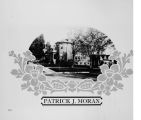
Show . PATRICK J. MORAN, 226 T he tooting sounds of a steam calliope heralded the approach of the strangest cavalcade ever to parade on Salt Lake City's Main Street. Escorted by a squad of mounted policemen and flanked by his lieutenants, Patrick J. Moran proudly led his unique pageant of huge street rollers, lumbering wagons, smoking tar and asphalt frirnaces, dirt scrapers, concrete mixers, men, horses, and mules through the business district to the City and County Building square. Pat had a fortune invested in his equipment and plant, located at the mouth of the City Creek Canyon, and he employed an army of men. It was not Pat himself who had fostered the parade idea. One of his men, justly impressed with the expensive equipment, furthered the plans that resulted in Moran Day. Held one day a year, beginning in 1912 and continuing for five years, it ranked second only to the popular Utah holiday of July 24. Moran Day took place at Lagoon resort fifteen miles north of Salt Lake City on the Bamberger Railroad. There Pat furnished wagon-loads of watermelon to the crowds. P J. Moran, Contractor, Inc., carried on one of the most extensive contracting businesses in the Intermountain country. Steam- heating plants, ventilating systems, water works, street and highway paving, and construction of sidewalks and curbing were among the varied projects of the company. n • i - W I ' m i ! ] - m nS9Bfi£ SHf jM Br 9 - ti\ M ^ fc^^^^ B ite- •• • i HL PatrickJ. Moran 227 Utah's public schools and many leading business buildings and residences were served by Moran heating systems; nearly all of Salt Lake City's sidewalks and curbing, and part of Ogden's, were contracted by Moran; the Big Cottonwood conduit, called by some the greatest work of its kind on the western slope of the Rocky Mountains, and the mammoth pipeline in Weber Canyon, said to be the largest in the world at the time, were accomplishments of the Moran company; the paving business grew to such size that it was separately incorporated under the name of Moran Paving Company. Moran's extensive use of cement prompted him to purchase the Portland Cement Company. Although Moran was born in England, he was a true Irishman, for wherever he flew the American flag the banner of Ireland also rippled its colors. Born in Yorkshire, England, January 23, 1864, he was the son of Laurence and Bridget Durkin Moran, Laurence from County Mayo and Bridget from County Sligo. Laurence Moran died when his son was six years old, and at fourteen the boy crossed the Atlantic to arrive in Baltimore. Patrick then made his way to Cincinnati, Ohio, where he apprenticed as a steamfitter. From there he went on to Chicago where he worked as a journeyman until 1887. Soon thereafter he arrived in Salt Lake City, setting up his own steam- heating and ventilating business. In 1891 Pat Moran married Dolly Shoebridge, a native of Salt Lake City, whose father was a metallurgist in the Tintic Mining District. Six children were born to them: Curtis, Edward, Patrick, Jr., Elizabeth, Margaret, and William Laurence. Pat and Dolly had just returned from Europe when they purchased the two- year- old home of Edwin Mulford, proprietor of the White House Hotel. Die home on East Brigham Street was a two- story red brick structure that met their needs very well. In 1908 a brown shingle cottage was constructed just east of the home for Dolly's mother; however, Mrs. Shoebridge died before the house was completed. The Cottage, as it came to be called, changed the family life of the Morans. As the three older boys and their friend David Keith, Jr., went off to Salisbury School in Connecticut, the Morans moved into the Cottage, a much smaller home than the Big House, as the brick home on the corner was called. White- ruffled tie- back curtains hung at the wide- silled windows, and the style of the fireplaces gave the home a countrylike quality. Perhaps Dolly, then in the early stages of a long illness, could not take the stairs in the Big House, or perhaps she felt more comfortable in the Cottage; but, whatever the reason, it was there she wished to remain. Moran 228 insisted that the Big House be kept in good condition. The home, though vacant, stood as though it were being lived in. It was cleaned regularly, the lawns and shrubs neatly maintained. When the boys were home from school it was used as a dormitory, and sometimes parties were held there. The German housekeeper took care of the home and the family as Dolly and Pat Moran. Dolly traveled widely in search of a cure for her illness. Dolly Moran traveled to various parts of the world hoping to find relief for her illness. McCoy's Livery Stable, located at the rear of the Cullen Hotel ( between Main and West Temple and Second and Third South streets) ran a carriage service. Since, in the early years, the Morans did not have the ground for a stable, they kept a horse and buggy at McCoy's to be sent up when needed. Later, additional property was purchased south of the Big House on Eleventh East after P. J. had acquired his first automobile, a Pierce Arrow, considered at that time to be the ultimate in automotive luxury. He built a garage, English in style, which also included a heating plant for the Big House, the Cottage, and the garage. But trouble was brewing. Fred C. Richmond, who lived next door, east of the Cottage, complained that the heating plant chimney was inadequate. Finally, when the Morans were out of town, Richmond had a huge industrial chimney installed on the attractive English garage and had the bill sent to Moran. Whether Pat was amused or annoyed is not known, but to avoid further problems he paid the bill and left the chimney in place. Early in P. J.' s experience with his motor vehicle, he was involved in a three- car collision in front of the Alta Club, resulting in the termination of his career as a driver. He continued to own luxurious makes of 289 automobiles, mostly Packards, and even indulged in one of the novel electrics, but he left the driving to his chauffeur. As early as 1891 Moran was elected to the territorial council, in 1892 to the city council, and in 1893 to the territorial legislature as a senator, taking an active part in the struggle for statehood. During World War I he served as a recruiting officer, was appointed by Gov. Simon Bamberger to the Council of Defense, and later directed a federal employment Wasatch School pet day with Princess Alice. 230 program locally. Whatever the need, P. J. responded as a conscientious worker, and he was called upon to raise funds for every conceivable cause. One fund- raising project that left him holding the proverbial bag turned out to be the most enjoyable of all and the longest remembered. It occurred in 1916, the year the elephant came to town. The Salt Lake Telegram had been writing articles about the importance of adding an elephant to the city zoo, then located in Liberty Park. Sells Floto Circus was coming to town, and they would sell the city an elephant for 83,500. Pat Moran was asked to raise the funds. He believed the children should contribute, since the elephant would then belong to them; so hundreds of schoolchildren each paid one dime. Other contributions were solicited and circus day arrived, but the treasury still lacked 81,000. Pat bargained, and in the end paid the remaining money out of his own pocket, the final purchase price being 83,250. The circus moved on, the city had an elephant, and the famous Princess Alice had a new home. To add to her comfort through the winter months, Pat even installed steam heat in her cage. On the annual Wasatch School pet day Pat Moran arranged for Princess Alice to be brought to the show. Dutch Schider, the trainer who came with her, led her north from the zoo up Sixth East and along Brigham Street to the school, followers gathering along the way resembling a Pied Piper procession. Princess Alice was later moved from Liberty Park with other zoo animals to the new location at the mouth of Emigration Canyon, and for many years she continued to be the greatest single attraction at Hogle Zoo until her death at eighty- two. In the meantime, Moran's financial fortunes began to decline. Beginning in 1914 there was a mild depression due to the war in Europe. Building activity all but ceased, material costs skyrocketed, and financial backing was difficult to obtain. When the United States entered the war, labor became more expensive. The equipment that had excited people was no longer on parade and stood idle, great lumbering objects with no men to make them perform. Added to Moran's troubles was his wife's illness. During Dolly's last three months she was seriously ill and finally breathed her last in September 1917 at age forty- four. In 1923 Pat Moran retired from the contracting business, selling his equipment to the city. The home he had dreamed of building further east on Brigham Street was not to be realized. But his name remained familiar to all those who trod the grand boulevard, for it appears yet on many of the sidewalks. Patrick J. Moran, contractor - and Irishman - had set his name in the concrete walks of the city he helped to beautify. 231 Big House were installed before the property was sold to individual buyers. Original quarry tile, framed in hammered metal, was used for each of the fireplaces, the stone being of a different color and texture in each case. These interesting fireplaces, the wide window sills, and the diamond- shaped lights in the windows give the home the feeling of an English cottage.* The Cottage in 1974 under the ownership of the Harold Dalglieshes. PATRICKJ. MORAN 1106 East South Temple Built 1901 Architect: John A. Headlund Original owner: Edwin Mulford Present status: apartments 1108 East South Temple Built 1907 Owners: PatrickJ. Moran, Harold Dalgliesh The Moran home was eventually divided into apartments. The Cottage, now painted green, was purchased by the Harold Dalglieshes in 1934. They made a few changes, the most significant being the trimming back of the wide eaves, the finishing of the second story, and the removing of a partition between the parlor and entrance hall to add length to the living area. Separate heating plants for the Cottage and the 232 |