| OCR Text |
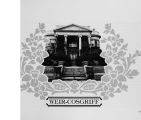
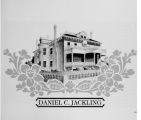
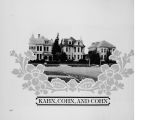
Show ' KAHN. COHN, AND COHN: 180 T he earliest Jewish immigrants to the western territories came on the heels of the gold seekers in the late 1840s. For the most part, these men were merchants, hoping for prosperous areas in which to carry on their businesses. Wherever towns were mushrooming a few merchants set up shop, often moving from one boom town to another. In contrast to immigrants who came with the wagon trains, these men usually traveled alone or with one or two companions. They were generally young and unmarried. Sometimes two brothers came together or sometimes the elder brother came first. They lived frugally, and when funds allowed they would send for a younger brother or brothers. Some returned to their homelands to marry the sweethearts they had left behind, bringing them to their adopted land. Others had to be content to send for their future wives. Salt Lake City, the stopping- off place for points west in the early 1850s, had a shortage of merchandise. Wearing apparel and household goods were almost impossible to purchase. These circumstances were quickly apparent to several perceptive and enterprising merchants, and by 1860 Jewish names were appearing on Salt Lake City's Main Street. Aside from its market potential, Salt Lake Valley had other attractions: the climate, the salt seabathing, the mineral hot springs, the theatre, and the musicals offered interesting and cultural diversions. It was a good place to establish a permanent residency. Although there had been a few temporary Jewish residents earlier, the first who remained were Nicholas S. Ransohoff, who came in 1858, and Samuel Kahn, who arrived a year later. Samuel became a partner in N. S. Ransohoff & Company, and then in 1863 he joined George Bodenberg under the firm name of Bodenberg and Kahn, distributors of groceries throughout Utah, Idaho, and Montana. In 1866 Samuel Kahn married Sarah Cohen. Later, his younger brother, Emanuel, married Sarah's sister Bodenburg and Kahn began business in 1863 on the northeast comer of First South and Main streets, Salt Lake City. 181 Emanuel Kahn and his brother, Samuel, owned a leading wholesale grocery establishment. Fanny. The Kahn brothers were born in Prussia, Samuel in 1836, and Emanuel in 1844. The exact time of Emanuel's arrival in Utah is not known, but in 1867 Samuel and Emanuel joined to form Kahn Brothers, this firm becoming the major wholesale grocery establishment in Utah. Samuel and Sarah Kahn played a leading role in the city's social activities, entertaining such well-known visitors as Vice- president Schuyler Colfax. Samuel also participated in the organization of the Young Men's Literary Association and the Liberal party. In contrast to the gregarious Samuel, Emanuel was a more reserved man. He took part in Jewish religious affairs and assisted in forming the Congregation B'nai Israel, later serving as a trustee and officer. As a member of the Wasatch Lodge No. 1 of the Masonic Order, he acted as secretary, and was the originator of the Masonic library in 1874. Die Cohns were born in Dobrzyn, Poland, Louis in 1842, and Alexander in 1843. Louis made his appearance in Salt Lake City in 1865. He had left Poland when he was seventeen years of age, spent two years in New York City and then moved to California where he opened a store. Alexander was twenty- two before coining to America, probably waiting until Louis could send for him. Alex met his brother in California, whereupon Louis moved on to Salt Lake City to establish the Cohn and Munter Store, leaving Alex to run the California store. Alex subsequently joined Louis in Salt Lake City and the two opened a dry goods store under the name of Cohn Brothers. Like the Kahn brothers the Cohns also married sisters: Carrie Lippman was married to Louis in 1876 and four years later Alex married Jennie Lippman. 182 Alexander and Louis Cohn, Polish Jews, came to Utah as young men and opened a dry goods store. Louis had interests in the Kaysville Brick Company and also in mining. When the first meeting to organize a Masonic chapter in Salt Lake City was called, Louis was one of eight members attending and became Most Worshipful Grand Master in 1874. Under Salt Lake City Mayor Robert M. Baskin, in 1892, he held the position of police and fire commissioner. Alex, like Emanuel Kahn, was the quiet and reserved brother. He also was one of the organizers of the Congregation B'nai Israel, becoming its first vice- president, and much later, in 1896, becoming president of the congregation. He was also warden of the Jewish cemetery, working conscientiously to improve the conditions of the arid sagebrush area adjacent to the city cemetery. 183 Die Kahns and the Cohns were among the merchants who believed Corinne would become the chief commercial city of Utah Territory. The railroad that would span the continent was bypassing Salt Lake City, and Corinne was ideally located as a freighting center where supplies could be hauled from the railroad north to Idaho and Montana. The most ambitious and enterprising merchants in the territory set up businesses there, at first in tents and shacks. The optimistic hope for Corinne as a business center was short- lived. Brigham Young lost no time in extending railroads both south and north from Ogden, shifting the railroad center to Ogden and leaving the Corinne merchants without the flood of business that had been anticipated. At the time of the Corinne experiences, the leaders of the Mormon church instigated the cooperative mercantile movement under the name of Zion's Cooperative Mercantile Institution, or ZCMI. The Mormon people were discouraged from dealing with non- Mormon merchants; the effect on the Jewish merchants was disastrous. Many closed their businesses, packed their belongings, and set out to find new locations. But the Cohns and the Kahns were among those who were able to carry on and later see the return of prosperity as the mining era beckoned new people to Zion. Attractive fans, gingerbread detail of the Victorian Kahn home. In the late 1880s Emanuel Kahn and the two Cohn brothers decided to build homes on Brigham Street. Architect Henry Monheim designed all three in similar styles on adjacent lots cast of the present Masonic Temple. The Kahn home, the most distinguished of the three residences, and the only one still standing, is highly characteristic of an important architectural period, the Victorian or, as it is some- 184 times called, the gingerbread era. The pressed brick house retains its original trim and character. The exciting little fans, formed in the wood trim on the porches, the corner turret, with its second- story six-sided porch, and windows with leaded square panes bordering the upper sashes, combine to make this Queen Anne home enchantingly picturesque, it Picturesque view of the corner tower, Kahn home. Roof has since been altered. EMANUEL KAHN 678 East South Temple Built prior to 1890 Architect: Henry Monheim Present status: adaptive restoration as offices ALEXANDER COHN 670 East South Temple Built prior to 1890 Architect: Henry Monheim Demolished 1975 LOUIS COHN 666 East South Temple Built prior to 1890 Architect: Henry Monheim Demolished 1975 185 |