| OCR Text |
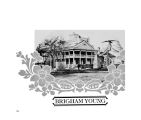
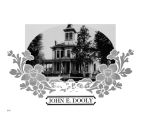
Show JOHN J. DALY, A f 75 J ohn J. Daly at fourteen stood watching the scenery slip by as the boat moved upriver and pondering the tales he had heard of the vast mountain regions where men were digging for gold. He had been born in Morris, Illinois, in 1853; the deaths of his father and mother had left him an orphan before he was thirteen, terminating his limited formal education. A year later he had started out alone to make his way in the world, and now he was working as a cabin boy on a Missouri River steamer headed for Montana. The Montana mines had begun to yield impressive amounts of gold. Already ten million dollars in gold dust had been sent eastward in its short mining history, part of it being spent to satisfy the increasing demand for heavy machinery. Up to this time very few vessels had reached Fort Benton, only four boats having made the trip prior to 1866. But now a new era of steamboating was beginning on the upper Missouri. Fort Benton was at the head of navigation. There were eighteen hundred miles between it and Fort Randall, with no other fort or outpost for protection from the hostile Sioux. Upon his arrival, John found work at one of the trading posts. For the next two years he moved from one post to another, where he frequently encountered extreme hardships. Once while working at Fort Peck his employer sent him alone to Fort Benton, a distance of over two hundred miles, to get the mail. On the return trip a severe storm overtook him, his face, hands, and feet becoming so badly frozen that for weeks he was confined to his bed. While still recovering, John was struck a harsh blow by his employer for not moving JohnJ. Daly 76 fast enough on his crippled feet. An old trader befriended him by threatening to kill the offender if he ever touched the young lad again. Daly learned many things from the old man; this was the second phase of his education. By listening to the traders and prospectors around the campfires at night, he learned of the various ores and the rock formations in which they are found. He prospected for a time in the likely spots in Montana, then in 1869 moved on to the White Pine District of Nevada. It was in that area that he mastered the fundamentals of mining. He grew in knowledge and experience until his influence was known throughout other mining camps of Nevada, and by 1876 he had acquired a comfortable sum of money. Although John had visited Salt Lake City earlier, he did not take up residence until 1876. While working as guard at the Utah Territorial PriSOn a f e w m i l e S SOUth- The artist found strong featureB , /* o Ij- T 1 r^-*. in John Daly when he created his likeness e a s t OI b a i t . Lake U l t y , for American Cartoonist Magazine, 1906. he used his free time to prospect in the mountains near Park City. He located several claims and with a few companions undertook the development of the old Jones Bonanza. Daly had made and lost considerable sums of money, so the languid Jones did not discourage him when it did not chalk up on the successful side of the ledger. He temporarily abandoned the Jones and obtained work in the Ontario, the parent of all Park City mining properties. John never gave up on the theory that the Jones was in some way connected with the Ontario, and he spent every available moment prospecting on the line between the two properties. In 1883 he organized the Daly Mining Company which eventually produced over ten million dollars. Later he organized the Daly- West, another producer of many millions. Finally, the Anchor Mine, which adjoined the Daly- West, was added to the string of properties. The Daly- Judge Company, incorporated in 1901, became owner of over twelve hundred acres of the richest mineral zone in Park City. In 1881 Eliza Margaret Benson who had come to Utah from Liverpool, became John's bride and to them were born seven children. Their home was a fanciful Victorian caricature of mansion proportions erected in the 1890s. Built of brick it featured ornamental trim of stone and wood. Although eclectic in 77 style, the design borrowed decorative motifs from the Stick Style period. A large brick carriage house was also associated with the picturesque Daly home. John Daly helped organize and was president of the First National Bank of Park City; he became director of the Commercial National Bank in Salt Lake City and vice- president and director of Utah Savings Bank. Additionally, he owned the Grand and Moxum hotels and the Independent Building. He was courteous and unassuming in manner, a wise investor and generous in his philanthropies, being a heavy contributor to the construction of the Cathedral of the Madeleine which was being built at South Temple and " B" Street across from his own fine home. He was a charter member of the Alta Club and twice served as president. His appointment to the Board of Regents of the University of Utah was a mark of his standing in the community. At age sixty- three his health began to fail, so in 1916 John and Mrs. Daly moved to Los Angeles where she was a constant and attentive companion until his death in 1927. Death came to Eliza Benson Daly on December 4, 1939, when the car in which she and her daughter were passengers was hit by another car. She was buried in Forest Lawn Cemetery, Los Angeles. & JOHN J. DALY 319 East South Temple Built ca. 1891 Architect: original unknown; Frederick A. Hale for 1899 additions Owner: John J. Daly Demolished 1925 Removal of Nome of the eclectic trim resulted in the pleasing Victorian appearance of the Daly home in its later years. 78 |