| OCR Text |
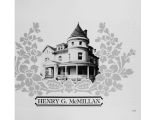
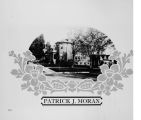
Show » ^ HENRY G. McMTLLAN^ r 137 H enry G. McMillan was one of the throng who came West where new ventures beckoned. His pursuits were not so much in the mining itself as in the opportunities afforded by a community that was suddenly emerging as an important mining center. McMillan's ancestors were natives of Scotland who came to America, then fought on the side of the colonists for their independence in the Revolutionary War. His father was a Presbyterian minister in Tennessee where Henry was born in 1850. Soon after, the family moved to Illinois where he grew up. The father enlisted in the Civil War as a chaplain and lost his life in the Battle of Atlanta. Henry, when sixteen years of age, found work with a wool manufacturing firm; and, later, he enrolled at Blackburn University, a Presbyterian school his father had helped found. There he studied business and manufacturing procedures. In 1875 McMillan and Emma Corn, his bride of two years, arrived in Utah. He worked as a court clerk for nineteen years, resigning in 1893 to pursue mining and other business interests. A recognized expert in mineral research, he was also involved in banking ( as a director of Walker Brothers Bank), real estate, and the brokerage business. He formed a partnership with Julian E. Bamberger under the name of Bamberger & McMillan, a general brokerage firm, handling ores on a large scale as agents of M. Guggenheim & Sons. It later merged with Guggenheim and American Smelting to become one of the largest smelting companies in the Intermountain region. McMillan was also manager of the Daly- West Mining Company and was affiliated with the Utah and Eastern Railroad which extended from Coalville to Park City. The McMillans built their home in 1897, and the family continued residency there until 1935. There were nine children, all born in Utah. During the housing shortage of World War II, several years after the McMillans had left, the house was made into one-room apartments outfitted with the cheapest of facilities, thus ruining the once splendid dwelling. Pigeons cooed, built their nests, and otherwise took over the tower room on the third floor, a room large enough to have been a useful part of the house. In 1966 the property was purchased by Fred A. Moreton who replaced the home with an insurance office. Perhaps the community was not quite ready to think in terms of historic preservation, it HENRY G. McMILLAN 649 East South Temple Built 1897 Architect: Frederick A. Hale Demolished 1966 138 Many of the homes on Brigham Street had personalized carriage stones, - ' ¥ " '•••- 139 |