| OCR Text |
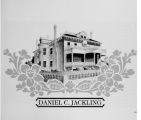
Show " If* % ENOSA. WAIX# 39 B ingham, Utah, was a typical young mining camp of wooden shacks pushed against the steep banks of the canyon when Enos Wall entered the scene in July 1887. The oldest of Utah's mining districts, Bingham Canyon had been the scene of more or less profitable mining since 1864, but these mountains were to yield a vast fortune to the man who stood there that day. Recognizing the signs of copper in the rocks, and with the assays confirming his suspicions, he staked two claims, the nucleus of what would become known as " Wall's Copper Properties." Twenty- seven years earlier, Enos A. Wall had begun his mining ventures at Pike's Peak in Colorado. Also in Colorado was a man named John Bozeman, who, in 1862, rounded up sixteen miners and moved on to Montana where he staked a claim called Pike's Peak Gulch. The reports of the claim reached the ears of the Colorado boys, and immediately five hundred of them, including Enos Wall, shouldered their gear to descend on the Montana find. There Wall and a fellow miner, Alexander Toponce, decided to scrape together what gold dust they could and set themselves up as freighters. The pair of twenty- four- year-olds were soon freighting goods between the Montana gold fields and the Mormon capital at Salt Lake City. Wall's ambitious nature, ingenuity, and strength of character seemed to mark him as a man of significance, and after a few years he was to move on to other scenes. The part played by Wall on the big stage was to cover many scenes from Colorado to Montana, then to Utah, north to Idaho, and ultimately back to Utah. Die scenes were similar: wooden shacks pocketed in the steep canyons or surrounding hills, towns overly populated with saloon keepers and enterprising gamblers. A general store, a supply house, and a black- 40 smith shop were necessary rudiments, but the towns were generally lacking in cultural halls. Vice and violence existed, often becoming rampant in the lawless camps. Men of God came to pray for the souls of the people, and, surprisingly, with the help of these " lost souls," the frontier priest sometimes would manage to build a small wooden church. Wall had that rare gift of being effective in any group whether it was in the raw life of a mining camp or in a more cosmopolitan setting. His firmness, tempered with a gentle quality, and his concern for his fellow workers, coupled with a rare sense of humor, gained him many friends. In the more metropolitan areas he contributed to the political life and advancement of the communities. When the mineral fever again took hold of Wall, he turned to the mountains of Utah. Mining ventures in several Utah camps brought him to Silver Reef in southwestern Utah where he at first developed the Dixie Mine east of Leeds and then acquired the Last Chance on Buckeye Reef. He sold Last Chance for thirty thousand dollars and purchased the Kinner Mine, one of the most promising in the area. In Silver Reef he was in his prime, popular and energetic. Sympathetic toward the laboring man and the objectives of the unions, he was convinced that good wages paid to good men would result in a more efficient operation. Although he put this creed into practice, ultimately it caused trouble for him. The racetrack at the Reef was the scene of sporting events and excitement. " The Colonel," a title placed upon Wall by his companions, was a good marksman. He often entered into rifle shooting contests and for those occasions was colorfully dressed in proper sportsman's clothing. One story concerning Wail's beneficent deeds at the Reef deals with a Chinese named Sam Wing. He was a merchant of Chinatown, a man of good character, and he enjoyed the friendship of some of the leading citizens. He was then in his declining years and desired to see his homeland but did not have the means to do so. Through the generosity of Colonel Wall, Wing was able to make the trip to China and return. In 1879 Wall's days at the Reef became numbered. Ill luck had temporarily overtaken him when he became involved in a losing litigation with the Christy Mining Company and when the rich vein of the Kinner was cut off by a fault. Forced into financial difficulty, he was not able to meet his payroll. When the second month passed and the men were still without their pay, Wall was reportedly taken captive and held under guard at the Harrison House, the town hotel. He defiantly declared that the time would come when he 41 would pay his men two dollars for every dollar he owed them, a declaration that he was later to fulfill. But for the moment, a friend by name of Shaughnessy tipped off the colonel that he would help him escape. Presently, Shaughnessy appeared driving a span of horses attached to a buckboard. As Shaughnessy covered the guard with a rifle, Wall was able to seize the lines and spring to the seat. With Shaughnessy at the rear still holding his rifle on the guard, he made his escape. How the colonel managed to ride off with Mary Frances Mayso is not clear, but driving north to Idaho he stopped in Salt Lake City to tie the matrimonial knot with his Silver Reef sweetheart. In Wood River, Idaho, near the present location ofKetchum, he continued his mining career, managing the operations of the Wood River Gold and Silver Mining Company. In the next seven years he successfully invented several pieces of mining machinery and was elected to the Idaho Territorial Legislature. He involved himself in its debates concerning polygamy among Idaho Mormons, a practice he considered abhorrent. The time came when Wall was again forced to move on. He had failed, in part, because he was too liberal with wages and because of other management problems. But the time Enos and Mary had spent in Idaho was pleasurable and fulfilling for both of them. It was reported that Mrs. Wall was " popular and enjoyed the dances, but was true to the Colonel." Six daughters were born to the Walls: Alice, Selma, Mary, Olive, Peggy, and Frances who died in infancy. Wall may have been contemplating his ultimate return to Utah at the time of his child's death in 1885, since he and Mary Frances drove the long distance to Salt Lake City to bury her. Two years later he and his family packed their possessions and traveled south. The Utah mines provided a good market for his ore-crushing machinery, and, further, he had great faith that much wealth yet remained to be brought out of the ranges surrounding Salt Lake Valley. When the Walls left Idaho the press paid tribute to the " best man this section has ever been blessed with." Wall had already worked both east and west ranges of Salt Lake Valley. He had patented the Hiawatha and Last Chance claims in Little Cottonwood Canyon. He had met with some success in Dry Canyon at Ophir and had acquired the Brickyard Mine in Mercur and the Yampa Mine near Highland Boy in Bingham. He later sold these properties at handsome profits. His ore- crushing machinery was used in distant Australia, Mexico, and throughout the Rocky Mountains. However, it was Wall's copper properties that netted him his vast fortune, although that venture was probably the most unpleasant in his fifty- 42 Additions and new design elements by architect Richard Kletting changed the Sharp home, right, into a French villa, below. 43 year mining career. He had experienced setbacks and disappointments before, but none was as frustrating as his association with Daniel C. Jackling and others at Utah Copper. Wall eventually sold his holdings, amounting to 90,000 shares, receiving 830 a share on the New York market. Colonel Wall first established his residence at 309 East South Temple. Later, in 1904, he bought the two- story adobe home at 411, which had originally been built in 1880 by Mormon Bishop James Sharp. Already, pretentious homes stood on Brigham Street and more were in the process of construction, a promise of this fashionable avenue's future. But it would be more than ten years before the completion of the Wall home that was being transformed by architect Richard Kletting into a palatial dwelling Wall covering and exquisite window treatment enhanced the drawing room. A number of Brigham Street homes boasted ballrooms. With the Wall's having five daughters, this one would have seen much use. 44 resembling a Renaissance villa. The home and real estate reportedly cost more than three hundred thousand dollars. An Otis electric elevator, a built- in vacuum cleaner, and a steam heating system were just a few of the luxuries of the period. There were fireplaces in each of the six bedrooms, a ballroom on the third floor, a game room, and several guest bedrooms opening onto the roof promenade. Polished The main hall extended north from the entry, giving direct access to several rooms. bronze grillwork, delicately gilded fresco work, marble, and handsome woodwork enhanced the interior. The heating plant, caretaker's quarters, carriage house, and greenhouse were in a separate building connected to the house by a tunnel. West of the home was a tennis court. The colonel had done well. He had contributed to the building of the Intermountain country, gaining many friends in the area, and he was recognized as one of the foremost mining men of the world. Active in the civic affairs of Salt Lake City, Wall was named chairman of the Board of Public Works, at which time he instigated the grading and improvement of city streets, including East South Temple. He was a Mason and served a term as president of the Alta Club. He and his wife were invited by President and Mrs. Theodore Roosevelt to a White House reception on January 23, 1908. The colonel's sense of humor had not become dull with the years. The story was told that one day two clergymen came to the home seeking contributions for a new roof for the church. Wall blustered about, scolding their inefficiency at not being able to manage the church funds without seeking added contributions: " If I couldn't run a business better than that, I'd close it down," he grumbled as he eased them down the hall to the door. When he returned to his 45 wife, he found her pacing the floor of the library. In mortified tones she demanded how dare he speak to the clergy in such a manner. He replied that he felt entitled to a little fun in return for his $ 1,500 contribution. As age advanced upon Colonel Wall, his face became drawn, his hair grayed, and the cancer at the base of his skull affected his hearing. He spent the remainder of his days in the palatial dwelling that epitomized his success. On June 29, 1920, at the age of eighty- one, he died. Three years later Mrs. Wall, too, passed away. The home was bought by the Jewish community to be used as a social center. Now the LDS Business College occupies the home and has added the surrounding buildings. The facade of the old home has been carefully preserved, leaving the passerby to wonder what fascinating stories lie hidden behind its enchanting walls.& ENOS A. WALL 411 East South Temple Remodeling completed ca. 1915 Architect: Richard K. A. Kletting Owner: Enos A. Wall Present status: LDS Business College 46 |