| OCR Text |
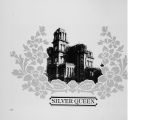
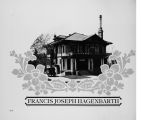
Show % JAMES DAVID WOOD 159 J ames David Wood was born in Mercer County, Missouri, August 27, 1841, and spent his early years on his parents' farm, attending school in a crude log cabin. His mother, Marcia Cassandra Fowler, was the daughter of a Tennessee lawyer. His father, Jeptha Wood, who once studied to become a surveyor, had turned to farming and stock raising. Under his father's tutelage David learned the rudiments of the business that would one day bring him fame as a western cattle and sheep king. His early efforts in that business centered around buying and shipping cattle from Missouri to Chicago and other stock centers in Illinois. But along with many young men of the time, David became interested in the quest for gold and in 1864 headed for the Montana gold fields. In order to make his way west, he contracted to drive a freight train across the plains to Montana, the outfit consisting of twenty- six wagons with six mules to draw each one. Arriving in Virginia City, Montana, in August, David tried placer mining. Within the next two years he went from Alder Gulch ( Virginia City) to several mining locations in Montana, eventually settling at Leesburg, Idaho, near Salmon City, where he opened a general retail store while continuing placer mining in the Leesburg Basin. He also engaged in the freighting business and raised cattle, establishing ranches in the Beaverhead and Snake River valleys. In 1878 he moved to the upper Salmon River country, where he was one of the organizers of the Salmon River Mining & Smelting Company. David Wood married the widow Catherine Murphy in 1882. She had been born Katrina Veit in Vienna, Austria, the daughter of an imperial judge. At eigh- J. D. Wood 160 teen she had set her eye on a dashing young officer, but her father had different plans for her. A marriage to a much older baron would have been an advantageous alliance. An unhappy situation was averted when an uncle intervened and whisked Catherine off to America. His business took him to Denver where he contacted some of his countrymen. Among them Catherine Wood was Frank Hagenbarth who operated a successful brewing business with locations in Denver, Salt Lake City, and Virginia City, Montana. The handsome Hagenbarth favored Catherine with his attentions and they were soon married. By 1867 the newlyweds were living in Leesburg, Idaho, where their son, Francis Joseph, was born on April 15, 1868. Hagenbarth died soon after, whereupon Catherine moved to Salt Lake City with her son and became manager of a small hotel. In Utah she met a Mr. Murphy, married him, and in 1874 gave birth to her second son. The following year found the Murphys in Challis, Idaho. Tragedy struck again for Catherine. Sometime in the next few years Murphy died, and it was necessary that she resume her career in the hotel business. David Wood had first met Catherine in Virginia City. When she was widowed the second time with two small sons to care for, David asked for her hand in marriage. The two sons grew up under the protection of their stepfather. They received their education in private schools in Salt Lake City and at Notre Dame University in Indiana. Subsequently, they were taken into the family business. David and Catherine later adopted a little girl whom they named Cassandra. Catherine was an excellent businesswoman and took a great interest in her husband's pursuits. They organized the Wood Live Stock Company, building up 161 one of the largest sheep ranching concerns in the United States. The company imported from England the best strains of sheep obtainable, resulting in a herd of pure registered Hampshires. Open range shearing of sheep in large numbers by the use of machinery was introduced by the Wood Live Stock Company. The Woods became foremost in the ranks of wealthy families in Idaho and Utah, and Mr. Wood's fame spread throughout the West as the Sheep King of Idaho. J. D. Wood was also the principal owner of one of the largest cattie ranches in the world, located in Chihuahua, Mexico, and was instrumental in the development of oil fields in southern California. He established the Wood Grocery & Produce Company and the Intermountain Ice Company in Salt Lake City in 1900, soon thereafter moving his headquarters to Utah. The Woods stayed in the Cullen Hotel while their chateauesque home in the heart of fashionable Brigham Street proceeded to completion under the capable supervision of Carl M. Neuhausen, who had just finished plans for the Thomas Kearns home and the Cathedral of the Madeleine a few doors east of Wood's newly acquired homesite. The house was designed after one Catherine had seen in Austria. Her dream had been to have one just like it. Constructed of cream- colored oolite stone, quarried in Manti Canyon, Utah, the three- story home was recorded as having twenty rooms. The tower corner provided curved alcoves that were beautifully decorated. Parquet floors in allover designs complemented the richness of the fine quality rugs. The third floor contained an attractive ballroom. The Woods were friendly, down- to- earth people who quickly became a part of the social life of the city. David transferred his membership in the Masonic order from Idaho to Salt Lake City. He became a member of the Alta Club where his associations with the mining men again expanded his interests. As a result, he became vice- president of the Daly- West Mining Company, at that time paying sixty thousand dollars a month to its stockholders. He was also a director or officer in several smaller mining companies. 162 Although David continued to manage his interests while in Salt Lake City, he found time to reminisce and write his memoirs, weaving tales of his exciting adventures during the many years he lived on the frontier. The West was young and wild and he was very much a part of it all. He had worked hard, fought hard, and had earned his success. In 1908 James David Wood was fatally injured at the Union Pacific Station in Salt Lake City when he stepped from behind a train into the path of an oncoming locomotive. Friends gathered from surrounding states to pay their last respects to the sixty-seven- year- old man whose face was lined and weatherbeaten from his long years of outdoor fife. Catherine, who had endeared herself to both family and friends, lived for twelve more years in the Brigham Street house before she, too, died. The magnificent Wood residence stood another forty years while once fine neighboring homes deteriorated, crumbled, and disappeared - one by one. Then in 1961 time ran out for the lonely house, and it, too, was crushed beneath the wrecking machines. & JAMES DAVID WOOD 307 East South Temple Built 1901 Architect: Carl M. Neuhausen Owner: James David Wood Demolished 1961 163 |