| OCR Text |
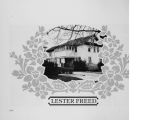
Show LESTER FREED. 194 I t was a small concern in the beginning. Lester Freed was buyer, salesman, deliveryman, and collector. He had come to Utah with his father in 1890 to open a furniture store. As time went on, business increased until the Freed Furniture Company occupied a fine building on Third South ( which would later house the Victory Theatre). Lester grew in importance. Besides being co- owner of the store, he also became a director of the Merchant's Bank of Salt Lake City. Liquidating the furniture business in 1922, he instituted Freed Finance. As most men did who had accumulated some degree of wealth, Lester had mining interests. He was a member of the Alta, Commercial, Rotary, and Country clubs, and was also a Shriner and grand ruler of Elks. His flair for capturing an audience with his quick wit and flow of words made him a popular toastmaster. Considered a confirmed bachelor by his friends, Freed was captivated and led to the altar by Jasmine Young whose father, Le Grande, was a lawyer and judge, and a nephew of Brigham Young. The Le Grande Youngs had taken up residence in Red Butte Hollow on a farm that extended east from Eleventh to Fifteenth East streets with the clear waters of the Red Butte Creek running through the property. Jasmine lamented that it was so far out in Lester Freed 195 the country that she felt completely isolated from her friends. ( It was between present- day Yale and Harvard avenues.) Nevertheless, she and Lester managed to meet each other. Jasmine and Lester made a handsome couple. Society notes in the newspapers said it was doubtful there were two more generally popular people in local society. They built their house on South Temple in 1910, and it served as the family home for thirty-eight years. A two- story frame dwelling, it contained nine very large rooms with the entry on the east side of the house. Pillars supported a sleeping porch that extended from the house, forming a portico over the entrance. Although the location of the sleeping porch was unusual, it was well situated away from the late afternoon sun where it could catch the evening breezes from the mountains. Lester and Jasmine admitted that their house was the least attractive on the street, although others may have differing opinions. The Freeds did not care about architects and fancy designs. There were more important things in life. They did care about four little boys who played hard, tracked dirt inside, always seemed to have dirty hands and overalls and scuffed-up shoes. Jasmine let her boys be boys. She considered it important to have warm family relationships - scrubtime could wail until just before going Jasmine Young Freed 196 to bed. Frequently, she would load David, Daniel, Robert, Peter, and their friends, all looking like little street urchins, into the automobile, and away they would go with Mrs. Freed at the wheel in her immaculate and well- groomed fashion. Die basement of the home contained a complete laundry as well as quarters for the cook and the chauffeur. Best of all, there was a stage complete with footlights. The children spent many hours making up plays with their friends and entertaining the neighborhood. Lester Freed, who died in 1937 at sixty- two years of age, was an enthusiast of the automobile. He reputedly owned more autos than anyone in Salt Lake City. On one memorable occasion the Freeds drove their automobile to New York City, loaded it onto the ship and sailed through the Isthmus of Panama and up to San Francisco, then returned in their machine to Utah and home. The Freed family today remains an integral part of Salt Lake City's business, social, and cultural circles.& LESTER FREED 1164 East South Temple Built 1910 Architect: Irving Goodfellow Present status: apartments 197 |